Tag: Stephenson Blake

  • Woodletter or Poster Types

    Woodletter or Poster Types

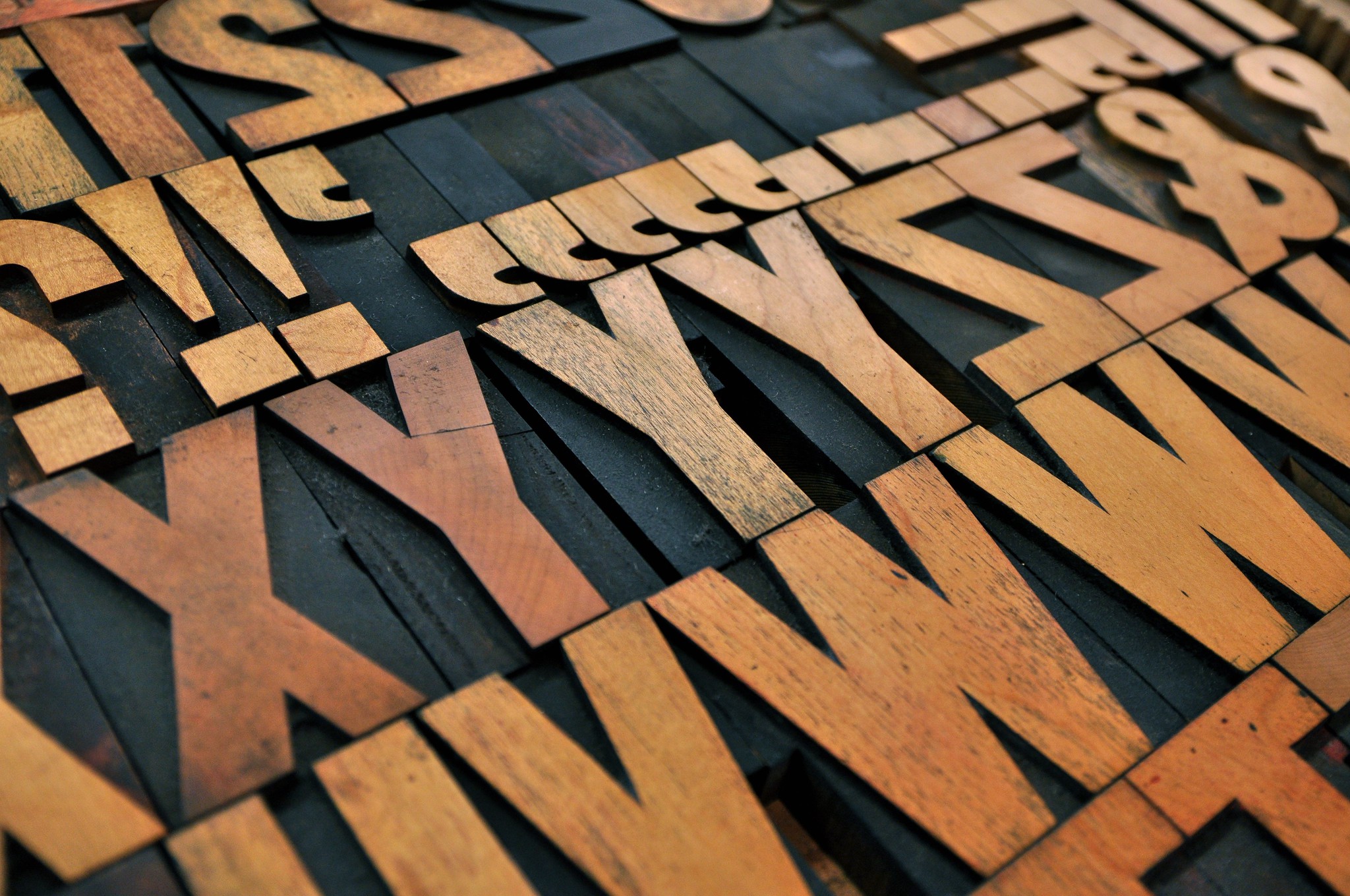
    Small print­ers would be asked to pro­duce all man­ner of work, and one part of their ser­vice would be to pro­duce posters.  Nat­u­ral­ly they need­ed much larg­er type than used for books or job­bing work and poster types emerged as a class of type of their own.  Beyond 72pt (1 inch) it was usu­al for type to be made of wood, and it was mea­sured in lines, 1 line being equal to 1 pica or 12 points.  So, wood let­ters 1 inch tall would be 72 points called 6 line.

    Woodlet­ter is tra­di­tion­al­ly stamped with the mak­er’s name on the top of the cap­i­tal A’.

    Poster Type Makers

    Robt. De Lit­tle of Vine Street, York are per­haps the most famous mak­ers of woodlet­ter.  Estab­lished in 1888 they ran until 1997 when demand fell to make the busi­ness unsus­tain­able.   Their equip­ment went to the Type Muse­um, Lon­don who pre­sum­ably have the equip­ment in store.  They were able to sup­ply plas­tic-faced woodlet­ter to improve the qual­i­ty of the print and wear.  Claire Bolton of the Alem­bic Press researched their his­to­ry and pub­lished accounts of their enter­prise.

    The famous met­al type­founder Stephen­son, Blake of Sheffield orig­i­nal­ly sup­plied wood­en type made by anoth­er firm.  In 1907 they estab­lished a Wood­work­ing Depart­ment and began pro­duc­ing woodlet­ter a year lat­er.  SB’s 1910 cat­a­logue was the first to include their own poster type.

    Both of these firms seemed to con­cen­trate on ser­vi­ca­ble types; rather than the exot­ic, mul­ti­ple-colour type that you could see on cir­cus or the­atre posters.

    Renovating Woodletter

    While today’s print­ers enjoy the unique effect that comes from slight­ly worn wood­en type, ear­li­er print­ers were keen to print a pris­tine image.  An arti­cle in the Small Print­er in the mid 1980s sug­gest­ed this –

    • Fill any cracks in the let­ter with a wood filler and allow this to dry
    • Place an emp­ty chase on a per­fect­ly flat sur­face.  Prop each cor­ner of the chase with two or three lay­ers of board.  This  thick­ness will be need­ed lat­er to be applied to the back of the let­ter.
    • Place the let­ter in the chase face down and lock it up.  The result should be a face-down let­ter with a slight gap between the chase edges and the sur­face
    • Using a very fine abra­sive paper, light­ly sand the face of the let­ter until the chase and the abra­sive paper meet: at this point you should have a smooth let­ter face, but not quite type high
    • Apply the same thick­ness of board to the back of the let­ter that you used to prop the chase up.  This should bring it back to type high

    I per­son­al­ly would pre­fer not to do this sort of thing, but the demands of the moment often made print­ers do strange things with woodlet­ter.  I’ve seen Vs become As by the addi­tion of a cross bar and being turned over; and also the backs of sel­dom-used let­ters (like Zs) become new let­ters through hand carv­ing.

    Buying and Selling Woodletter

    The mar­ket today is one area of let­ter­press where prices bear lit­tle rela­tion to the val­ue or orig­i­nal costs of the type.  There are three big con­sumers of woodlet­ter: ebay sell­ers who occa­sion­al­ly break up large founts to sell indi­vid­ual char­ac­ters; fur­ni­ture mak­ers who want to use it with­in pieces of fur­ni­ture, for exam­ple a cof­fee table; and small print­ers who are keen to use it for its orig­i­nal pur­pose.

    If you’re sell­ing poster type, con­sid­er using the British Let­ter­press Clas­si­fieds ser­vice to reach print­ers direct­ly; or con­tact me for spe­cif­ic advice.

    Current Practitioners

    There’s a won­der­ful charm to let­ter­press posters, and many con­tem­po­rary let­ter­press print­ers still enjoy work­ing with let­ter­press posters.  The grandee of woodlet­ter print­ing is Alan Kitch­ing who pro­duces ener­getic let­ter­press posters — I can almost guar­an­tee that you’ve seen them in pop­u­lar cir­cu­la­tion.  He claims to hold the largest col­lec­tion of wood let­ter in the UK after he took on the types from a the­atri­cal print­er poster.  Ian Mor­timer of IM Imprim­it also claims to have Britain’s largest col­lec­tion of woodlet­ter and prints ser­vi­ca­ble posters on his Albion press­es.  Also in Lon­don is Phil Abel at Hand & Eye cur­rent­ly sell­ing posters through his online shop.

    Justin Knop­p’s Typore­tum uses woodlet­ter to pro­duce excel­lent cards and posters.

    Robert Lee from Uni­corn Graph­ics in the US has been in touch to share his Amer­i­can Wood Type YouTube chan­nel.

  • Stephenson, Blake Today

    Stephenson, Blake Today

    The foundry bell rings no more at Stephen­son, Blake in Sheffield but at least part of the build­ing where Britain’s last great type­foundry oper­at­ed lives on.

    Flats are being cre­at­ed in a devel­op­ment called Impact, named after the sans-serif type­face designed by Geof­frey Lee for Stephen­son, Blake in 1965. The com­pa­ny, which in its hey­day was unmatched in the world of type­found­ing, left its Upper Allen Street home of near­ly 200 years in 2006.

    The his­toric build­ing, in the St Vin­cen­t’s con­ser­va­tion area with con­nec­tions stretch­ing back to William Cax­ton, Wynkyn de Worde and William Caslon, became a folorn sight. But today, as the con­ver­sion project moves on apace, the exte­ri­or is begin­ning to give off the swag­ger and con­fi­dence that it must have dis­played when near­ly 600 work­ers toiled to pro­duce met­al type as the firm, over five gen­er­a­tions, quashed its com­peti­tors to become dom­i­nant in Britain and the Com­mon­wealth. A sales office has opened on the large­ly 19th cen­tu­ry site offer­ing flats rang­ing in price from £115,000 to £228,000. When the scheme is fin­ished there will be a total of 152 pri­vate apart­ments, 36 with­in the old foundry, oth­ers new­ly-built on the site and with 50 neigh­bour­ing stu­dent flats already built. Matthew Hay­man, who is the lead­ing Sheffield city coun­cil regen­er­a­tion offi­cer for the area, told Small Print­er: The Stephen­son Blake devel­op­ment is very much wel­comed in con­tribut­ing to the suc­cess of a con­ser­va­tion area by retain­ing the char­ac­ter of the build­ing. With new devel­op­ments and those in the pipeline with plan­ning approval we could see up to 6,000 new res­i­dents in the next 10 years.” There are plans for the old foundry build­ing to be on a her­itage trail link­ing with oth­er indus­tri­al con­ser­va­tion areas in that part of the city.

    The younger peo­ple who will be the most like­ly inhab­i­tants of the Impact city cen­tre devel­op­ment may well appre­ci­ate the build­ing’s his­to­ry as the Impact type­face is a stan­dard fount on near­ly every per­son­al com­put­er in the world.

    The Stephen­son, Blake build­ing, though less than half the size of the orig­i­nal as a result of demo­li­tion to save crip­pling busi­ness rates when the let­ter­press trade was strug­gling, is still impres­sive. Though not a list­ed build­ing, Sheffield city coun­cil recog­nised its his­tor­i­cal impor­tance and asked for an archae­o­log­i­cal sur­vey to be under­tak­en by the Uni­ver­si­ty of Sheffield before any con­ver­sion work went ahead. The sur­vey team pro­duced a pho­to­graph­ic record of the foundry, includ­ing pic­tures of cast­ing machines and the foundry’s then still-intact bell in the court­yard. The com­pa­ny was steeped in tra­di­tion and when it acquired HW Caslon in 1937, the Sheffield site was renamed the Caslon Let­ter Foundry to pre­serve the pres­ti­gious Caslon name.

    It is remark­able that the com­pa­ny was still found­ing type for hand com­po­si­tion into the 1990s giv­en that Ottmar Mer­gen­thaler devel­oped the first line-cast­ing machine, the Merg”, or Lino­type, in 1886 in the Unit­ed States. The more ver­sa­tile Mono­type machine fol­lowed. By 1915 33,000 Lino­type machines had been man­u­fac­tured. Nev­er­the­less, Stephen­son, Blake sur­vived a cen­tu­ry of strong com­pe­ti­tion with its old adver­saries Lino­type, Mono­type and Inter­type but all were final­ly beat­en by the new print­ing tech­nol­o­gy.

    Stephen­son, Blake had become the last sur­viv­ing big foundry in Britain after a series of takeovers and had diver­si­fied, know­ing that demand for foundry type would fall. In the 1950s it expand­ed its wood­work­ing depart­ment to pro­vide a bespoke com­pos­ing room ser­vice, win­ning big Fleet Street con­tracts which includ­ed the relo­ca­tion and re-equip­ping of the Finan­cial Times in 1959 and in 1973 the com­pa­ny’s last big com­mis­sion: a new com­pos­ing room for the Sun­day Times and Times in Gray’s Inn Road. The com­pa­ny also joined a pho­to-set­ting con­sor­tium in Lon­don which served the adver­tis­ing indus­try and type­set the Dai­ly Telegraph’s then week­ly colour sup­ple­ment.

    By the 1970s there had been a huge drop in demand for foundry type but there were still sub­stan­tial orders com­ing in from nation­al news­pa­pers into the 1980s where hot met­al sur­vived as unions resist­ed the new tech­nol­o­gy. Stephen­son, Blake sup­plied type for the finan­cial prices pages of nation­al news­pa­pers in Lon­don and Man­ches­ter where com­pos­i­tors with tweez­ers would night­ly change the share prices with foundry type, an oper­a­tion deemed more effi­cient for chang­ing the share prices than using mechan­i­cal set­ting. But by the 1990s, as com­put­erised dig­i­tal com­po­si­tion dom­i­nat­ed, let­ter­press was all but dead. It was time for the major­i­ty of the two found­ing Stephen­son, Blake fam­i­lies to quit. The his­toric punch­es, matri­ces, spec­i­men books and oth­er records were sold to the Type Muse­um in Lon­don in 1996. But the ven­er­a­ble firm was still not fin­ished. In 2000 Tom Blake, of the fifth gen­er­a­tion of the fam­i­ly, relaunched the com­pa­ny, cast­ing the hard zinc-alloyed Mazak type for hot foil block­ing and pro­duc­ing brass rule and asso­ci­at­ed mate­ri­als for the soft plas­tics indus­try. The wood work­ing depart­ment con­tin­ued, mak­ing muse­um cab­i­nets and humi­dors.

    When Tom Blake retired in 2004 the busi­ness serv­ing the plas­tics indus­try was sold to busi­ness part­ners Ter­ry Lee and Steven Bond and Neville Buck­le, who had been with Stephen­son, Blake for more than 50 years, was their man­ag­er until his retire­ment two years ago. The wood­work­ing depart­ment was sold to Sheffield cab­i­net mak­er Har­ry Spur and in 2006 the new own­ers moved the plas­tics indus­try sup­ply oper­a­tion to anoth­er part of the city, Atter­cliffe, keep­ing the com­pa­ny name with a slight change: Stephen­son & Blake. Thus near­ly two cen­turies of Upper Allen Street his­to­ry came to an end. The com­pa­ny had been found­ed in 1818 by John Stephen­son, James Blake join­ing lat­er in the year to invest his £600 invest­ment from a lega­cy in his moth­er’s will.

    Now the name of Impact will keep the foundry’s lega­cy to the print­ing world alive. And Geof­frey Lee’s cre­ation is still seen to have impact: the type­face has been adopt­ed for the logo of St Pan­cras Inter­na­tion­al, the new Eurostar ter­mi­nal in Lon­don.

    Geof­frey Lee start­ed work on Impact, Stephen­son, Blake’s penul­ti­mate new type­face, in the sum­mer of 1963 when he was a design exec­u­tive with the Pem­ber­ton adver­tis­ing agency in Lon­don. The first appear­ance of the type, which has been likened to Hel­veti­ca Inser­at, was in the Letraset trans­fer for­mat from black ink draw­ings about 4cms deep. For the foundry, char­ac­ters were pro­ject­ed up to 7 inch­es deep from which trac­ings were made on card and for the first few batch­es of the new fount, cut-out pat­terns were sent to Upper Allen Street . Lat­er on the card cut­ting was done at the foundry from Mr Lee’s draw­ings in 6H pen­cil. The card pat­terns were pan­tographed to pro­duce a mas­ter met­al pat­tern which pro­duced mas­ter type. Mr Lee said in a post­ing on the Typophile web­site only months before his death in 2005: Although Impact size range was not large, this still required the grow­ing, jus­ti­fy­ing, and prepar­ing for the cast­ing box of 616 sep­a­rate matri­ces. The final stage was the cast­ing, dress­ing and sort­ing into founts for sale and prepar­ing sales lit­er­a­ture. For a foundry busy with every­day busi­ness the pro­duc­tion time was very good. Inci­den­tal­ly, the price in 1965 of a 60 point 3A 6a fount was £11.16s.11d.

    So I have had the lux­u­ry of met­al type pro­duc­tion by draw­ing, pho­tog­ra­phy, and pan­to­graph, and dig­i­tal type­faces through the com­put­er. It leaves me with intense respect and admi­ra­tion for ear­li­er gen­er­a­tions of type-mak­ers’ skill and ded­i­ca­tion. Hope­ful­ly many of today’s type design­ers are aware that many of their their pre­de­ces­sors had to carve, in steel, a punch for every char­ac­ter in every size of type. Sub­se­quent­ly these punch­es were struck into brass blocks to make the matrix.”

    Whether Stephen­son Blake’s his­toric matri­ces like Caslon Old Face, Baskerville, Bell, Fry’s Orna­ment­ed and Mole Foli­ate, will sur­vive is in ques­tion. The Type Muse­um, where they are kept, closed two years ago for lack of funds and its future, if any, is still not known. There are hopes that the Sci­ence Muse­um will save the day. The Sci­ence Muse­um owns the Mono­type col­lec­tion which is on loan” to the Type Muse­um while the Stephen­son, Blake col­lec­tion has a slight­ly dif­fer­ent sta­tus in that the terms of acqui­si­tion by the Type Muse­um say that should the Type Muse­um cease to exist the col­lec­tion would pass to the V&A. Before the Type Muse­um bought the Stephen­son, Blake col­lec­tion there had been hopes in Sheffield that the col­lec­tion would go to the city’s uni­ver­si­ty.

    Tim Mar­tin, of the Type Muse­um Soci­ety, which is cam­paign­ing for the muse­um to be saved, told Small Print­er: The muse­um is still poten­tial­ly one of the best edu­ca­tion­al resources for under­stand­ing the his­to­ry and evo­lu­tion of type pro­duc­tion, design and devel­op­ment any­where in the world. That it has now been inac­ces­si­ble to stu­dents for two whole years with no strat­e­gy or state­ment of intent, to return it even to its pre­vi­ous lim­it­ed access, has cre­at­ed a numbed frus­tra­tion amongst its hun­dreds of active sup­port­ers who three years ago were see­ing real progress, in the vol­ume of vis­i­tors, the organ­i­sa­tion and dis­play of the col­lec­tions and the devel­op­ment of a strat­e­gy which held out excit­ing prospects for those inter­est­ed in type com­mu­ni­ca­tion.”

    Any­one wish­ing to learn more about Stephen­son, Blake can do so by read­ing Roy Milling­ton’s excel­lent book, Stephen­son Blake, the Last of the Old Eng­lish Type­founders (Oak Knoll Press/the British Library, 2002).

    Writ­ten by Rob Firth, this arti­cle first appeared in the British Print­ing Soci­ety’s Small Print­er mag­a­zine

  • Upper Allen Street, Sheffield

    Upper Allen Street, Sheffield

    Stephen­son, Blake were based around Upper Allen Street for many years. The site closed in 2005 and is in the process of being rede­vel­oped for hous­ing.

    The first image below shows the devel­op­ment today (embed­ded Apil 2009) and the sec­ond shows the map of the site.

    [wpv-map-ren­der map_id=‘map‑2’ map_type_control=‘off’ street_view_control=‘off’]
    [wpv-map-mark­er map_id=‘map‑2′ marker_id=‘marker‑2’ marker_field=‘wpcf-location’][/wpv-map-marker]

  • Stephenson, Blake

    Stephenson, Blake

    This arti­cle is about the tra­di­tion­al type-found­ing activ­i­ties of Stephen­son, Blake. In late 2005 Thomas Blake sold the orig­i­nal site and a new firm, Stephen­son and Blake Lim­it­ed, con­tin­ue the brass rule and oth­er brass prod­ucts from Eff­in­g­ham Road, Sheffield

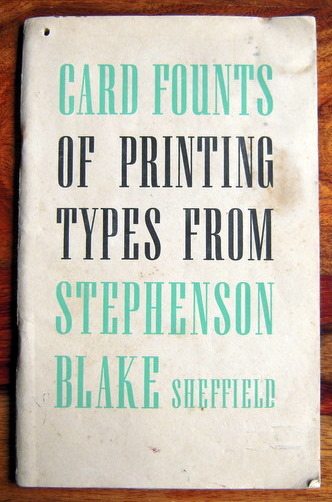
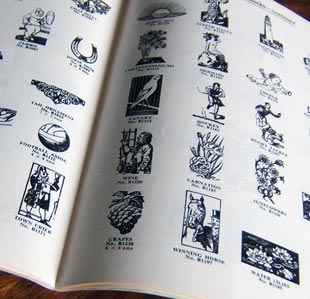
    Stephenson, Blake Card Fount Catalogue
    Stephen­son, Blake Card Fount Cat­a­logue

    The now defunct, but still famous name of Stephen­son, Blake (SB) was cre­at­ed when James Blake and John Stephen­son signed a part­ner­ship agree­ment on 25 Sep­tem­ber 1830 to last until 1840. The agree­ment was renewed, and the name per­sist­ed, absorb­ing many oth­er type foundries in the inter­ven­ing years. The foundry had always been based around Upper Allen Street in Sheffield

    The foundry had been in Sheffield in one form or anoth­er since around 1797 when a local book­seller (John Slater) and a book­seller-print­er (William Bow­er) joined forces with a print­er (Clay Bacon) to cast type, issu­ing their first spec­i­men in 1809. That found­ing work had per­sist­ed under many names until tak­en on by Gar­nett and Blake, and then becom­ing Stephen­son, Blake.

    Since the ear­li­est times SB had worked to 1/5000th of an inch as a mat­ter of course: the type they found­ed was con­sid­ered the most pre­cise in the UK.

    A Lon­don ware­house was opened in 1865 to sup­ply the demands of Fleet Street news­pa­pers. Busi­ness was so good that they removed to larg­er Lon­don premis­es on Alder­s­gate Street in 1871.

    The next major change was the move to the Amer­i­can Point sys­tem which had been adopt­ed by Amer­i­ca in 1886. Some firms in the UK were quick to adopt this change-like Cax­ton in 1895-it was a fur­ther four years before SB renewed their moulds and matri­ces to work on the point sys­tem. A key advan­tage for cus­tomers was that type and spac­ing was now inter­change­able between sup­pli­ers: print­ers hav­ing a uni­form sys­tem to mea­sure size.

    A rival founder, Lon­don-based Charles Reed and Sons hit finan­cial dif­fi­cul­ties and was sold in 1905 to Stephen­son, Blake who offered £5,000 for the foundry, matri­ces and the 82 tons of stock. The pur­chase was effec­tive from 1 Jan­u­ary 1906 and the firm was known for a time as Stephen­son, Blake and Com­pa­ny and Sir Charles Reed and Sons’. The work of the Reed foundry and some equip­ment was shipped to Sheffield where an almost self-con­tained foundry exist­ed along­side the SB equip­ment.

    In Jan­u­ary 1907 a Wood­work­ing Depart­ment was estab­lished over the road from the foundry to make fur­ni­ture for com­pos­ing rooms and type cas­es. A year lat­er the pro­duc­tion of wood let­ter was brought in-house and exam­ples first appeared in the spec­i­men books of 1910.

    All type founders were affect­ed by the Great War of 19141918 and this led to fur­ther ratio­nal­i­sa­tion in the indus­try. Dis­cus­sions began with H W Caslon about an amal­ga­ma­tion, but this did not reach a suc­cess­ful con­clu­sion at this time. Caslon’s fac­to­ry had been used to man­u­fac­ture items need­ed for war, and this pro­vid­ed finan­cial help to take them out of the finan­cial prob­lems. Build­ing on this, Caslon issued a book­let called Two Cen­turies of Type Found­ing which the wider indus­try admired.

    Stephen­son, Blake react­ed by engag­ing Robert Fishen­den to pro­duce the most ambi­tious spec­i­men book ever devised. Sev­en hun­dred pages were hand-set in Lon­don, shipped to Stephen­son Blake and then to West Street where the printer‑J W Northend Ltd-had the task of tak­ing proofs. These were inspect­ed by H K Stephen­son and R G Blake before being com­mit­ted to print on two hand fed quad-demy Miehle machines. The qual­i­ty of the result was high­light­ed when the book was reviewed by the Times Edu­ca­tion­al Sup­ple­ment. J W Northend was told that SB would take their busi­ness else­where if they moved to mechan­i­cal com­po­si­tion, and Northend resist­ed this until the 1970s.

    In 1936 SBs main competitor‑H W Caslon-had again met finan­cial dif­fi­cul­ties and went in to vol­un­tary liq­ui­da­tion. Stephen­son, Blake bought the good­will, assets and punch­es of Caslon, and retained the name by call­ing their Sheffield premis­es The Caslon Let­ter Foundry.

    World War II had a great effect on the foundry: not only because many men were called up, but air raids dis­rupt­ed the busi­ness. In Decem­ber 1940 air raids meant that gas, elec­tric­i­ty and water were lost to the foundry in Sheffield. R G Blake had ensured that cast­ing machines were ready for work at his home, and these were used for cast­ing until mains ser­vices returned in Jan­u­ary 1942.

    Post 1950 the Wood­work­ing Depart­ment had expand­ed to pro­vide a full ser­vice to com­pos­ing rooms and many pres­ti­gious orders were exe­cut­ed includ­ing the Sun­day Times’ com­pos­ing room in 1973.

    Fol­low­ing the trends of the indus­try Stephen­son, Blake found it dif­fi­cult to remain a let­ter­press busi­ness in face of com­pe­ti­tion from litho machines. They diver­si­fied by offer­ing the Let­ter­phot’ sys­tem of pho­to type­set­ting; and turn­ing the wood oper­a­tions to the man­u­fac­ture of pre­ci­sion instru­ment cas­es. The fir­m’s pre­ci­sion engi­neer­ing team was used by Rolls-Royce Olym­pus to pro­duce moulds for parts for Con­corde.

    The firm found it dif­fi­cult to pay busi­ness rates on the sprawl­ing col­lec­tion of build­ings around Upper Allen street and began to divest them­selves of them, includ­ing knock­ing some down. Re-loca­tion was con­sid­ered to Der­byshire to avoid this over­head.

    Just before 2000 the firm sold its non-print­ing busi­ness­es and Thomas James Blake looked to re-launch the firm. For a time the firm remained pro­duc­ing relat­ed items for the non-print­ing mar­ket: brass rule for plas­tics firms; Mazak type for hot-foil­ing and cab­i­net mak­ing for muse­ums. The col­lec­tion of his­tor­i­cal matri­ces and punch­es went to the Type Muse­um in Lon­don with assis­tance from the Sci­ence Muse­um.

    By Decem­ber 2004 this final ele­ment of the busi­ness had ceased, although the fir­m’s web­site ran until March 2005. The site is cur­rent­ly being re-devel­oped with the his­tor­i­cal build­ing being turned to flats. The scheme will be called Impact after SBs 1965 face designed by Geof­frey Lee.

    Further Information

  • Type and Typography

    Type and Typography

    Let­ter­press print­ing depends on a raised image, it’s known as a relief pro­cess. Mov­able type was the break­through that allowed print­ers to use and re-use indi­vidual char­ac­ters. When you prac­tice let­ter­press print­ing it’s easy to for­get just how dif­fi­cult it must be for type founders to cre­ate tiny pieces of cast met­al hard enough to with­stand a tre­mend­ous force that are made to tol­er­ances of less than one thou­sandth of an inch.

    Guten­berg of Ger­many is cred­ited with the inven­tion of move­able type around 1450; but records show that both Chi­nese and Kore­an invent­ors had used the idea before the time. Gutenberg’s inven­tion was the first to be exploit­ed and the idea spread rap­idly. There are three key stages in found­ing type –

    • Punch­cut­ting: cre­at­ing a three-dimen­sion­al rep­res­ent­a­tion of the let­ter in the end of a bar of met­al. This skilled work requires a num­ber of oth­er punch­es and tools to be used to cre­ate the punch, and then it be sub­ject to harden­ing. Mod­ern-day equi­val­ents of punch­es can be seen in DIY stores to mark met­al equip­ment with ini­tials.
    • Cre­at­ing the Mat­rix: this step takes the punch, and strikes it in a soft­er met­al to make a neg­at­ive mould. The met­al is usu­ally brass
    • Cast­ing: this is fill­ing the mould with mol­ten type met­al and remov­ing the cast type

    Type Found­ing in the Print­ing Eco­nomy in the UK

    Type found­ing is a spe­cial­ist indus­try need­ing artis­tic and design skills in equal meas­ure with engin­eer­ing prowess and abil­ity to work in some of the very heavy aspects of indus­try. The indus­try was cen­tred around the demand in Fleet Street, Lon­don; but oth­er sig­ni­fic­ant type founders worked where tech­nical expert­ise was great­est-for exam­ple Steph­en­son, Blake of Shef­field.

    The key con­straint for print­ers was that type from a foundry had to be assem­bled by hand before print­ing could begin. This com­pos­i­tion activ­ity took a great deal of time and tied up cap­ital in the type need­ed. As the 19th cen­tury grew to a close peo­ple we very keen to auto­mate this part of the process-work began to look at pro­du­cing type in the order it was need­ed. That’s to say go dir­ectly from the copy to the met­al type with no sort­ing or com­pos­ing pro­cess in between.

    There became two fam­il­ies of type: foundry type (gen­er­ally hard­er qual­ity) that was pro­duced in the great foundries; and com­pos­i­tion type (slight­ly soft­er qual­ity) that was pro­duced from copy either by a spe­cial­ist firm, or even by the print­er him­self.

    UK Type Foundries

    The UK had a num­ber of very influ­en­tial foundries. While ear­ly met­al type from the con­tin­ent (in par­tic­u­lar Dutch type) was con­sidered super­ior, the UK caught up and great names like Caslon, Fig­gins and Steph­en­son, Blake were estab­lished. The large num­ber of small foundries gave way to a smal­ler num­ber of large foundries. The last of the Eng­lish Foundries, Steph­en­son, Blake of Shef­field stopped trad­ing in Decem­ber 2004. That foundry alone had acquired Charles Reed and Sons in 1905, and H. W. Caslon and Co in 1937.

    Com­pos­i­tion Type

    Allow­ing print­ers to cast their own type was a key dri­ver behind devel­op­ments in com­pos­i­tion type. There were two broad approach­es: build a com­plete line of type from a machine; or build indi­vidual char­ac­ters in the cor­rect order from the machine.

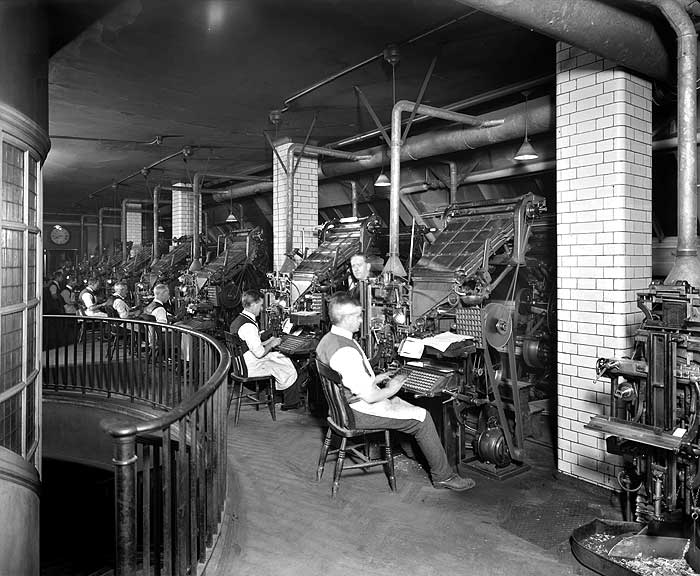
    Lino­type and Inter­type took a sim­ilar approach: the oper­ator sat at a key­board and typed the copy. While copy was being typed the matri­ces (type moulds) were assem­bled with­in the machine. Once a line was com­pleted the moulds were filled with hot type met­al and the res­ult­ing slug’ was forced from the machine, being trimmed and shaped in the pro­cess. The Lud­low Typo­graph was sim­ilar, but the matri­ces were assem­bled by hand.

    Mono­type adop­ted a dif­fer­ent tack. They split the oper­a­tion between key­ing the copy and cast­ing the type. Copy was typed on a Mono­type Key­board pow­ered by com­pressed air which punched holes in a paper tape. The tape was then tak­en to a cast­ing machine  which used the paper tape to pos­i­tion a case of matri­ces and cast a sin­gle piece of type for each key­stroke on the paper tape. The advant­age of this approach was to allow for cor­rec­tion after com­pos­i­tion had been pro­duced by the machine.

    In mod­ern times, Mono­type machines can be con­trolled by com­puter–allow­ing the dir­ect pro­duc­tion of met­al type from a com­puter key­board.

    Fur­ther Information