Tag: woodletter

  • DeLittle

    DeLittle

    Origins of Manufactured Woodletter

    Wood was prob­a­bly the first mate­r­i­al used to cre­ate print­ing sur­faces. In the mov­able type era, wood tem­plates were impressed in sand, and filled with hot met­al to cre­ate the largest let­ters need­ed by print­ers. Eng­lish let­ter foundries were offer­ing up to 18 line (3″) types cast in this way, but the char­ac­ters were heavy and prone to break. Indi­vid­ual let­ters could be cut by hand in wood, but this was a very slow and expen­sive process.

    The inven­tion of the router for cut­ting woodlet­ter in the US opened up the pos­si­bil­i­ty of stan­dard faces, cut in mul­ti­ple sizes a lot more quick­ly than had been pos­si­ble ear­li­er. The mate­ri­als were less expen­sive and the fin­ished prod­uct had a bet­ter and more even sur­face than met­al equiv­a­lents. In 1828, Dar­ius Wells of New York issued the first cat­a­logue of woodlet­ter.

    The first UK woodlet­ter mak­er looks to be Egling­ton of Lon­don, sup­pli­er to the Caslon Let­ter Foundry around 1870.

    DeLittle in the UK

    letterpress---delittle-eboracum-wood-type_12522066445_o
    “Ebo­racum” White Let­ter, embed­ded from Flickr.

    Robert Dun­can DeLit­tle was born in York in April 1868. While work­ing in Ade­laide, Aus­tralia between 1885 and 1887, he devel­oped a new way of cut­ting ​‘white let­ter’. This is a spe­cialised form of woodlet­ter cre­at­ing a ban­ner effect where the let­ters are white against a print­ed back­ground. The prob­lem with white let­ter was that the joins in each char­ac­ter had a ten­den­cy to show because the joins fol­lowed the edge of each let­ter. DeLit­tle’s inno­va­tion was to move the joins to with­in the white space. This made the assem­bly more com­plex, because now dif­fer­ent com­po­nents were need­ed for each com­bi­na­tion of let­ters (like a U and an M) rather than for each let­ter. That said, the result was much neater.

    DeLit­tle’s 1888 US Patent show­ing the way com­bi­na­tions of let­ters are used as the basis for each com­po­nent of the type.

    In June 1888 Robert returned to the UK and took premis­es near his father’s print­ing works to man­u­fac­ture his white let­ter in York. His first order, in Feb­ru­ary 1889 was sent back to F T Wim­ble in Aus­tralia. Much of his 1889 cus­tom was sell­ing to oth­er print­ers’ sup­pli­ers in the UK and some for anoth­er woodlet­ter man­u­fac­tur­er, Day & Collins.

    In June 1889, Robert bought stocks of hard­wood — birch and sycamore — and print­ed the first spec­i­men sheets a month lat­er.

    As the busi­ness grew, Robert became aware that the focus on white let­ter might be sup­ple­ment­ed with more ​‘usu­al’ styles of woodlet­ter. Some more usu­al types were cre­at­ed, ref­er­ences № 51, 52 and 53 in 1892.

    “HORSE SHOW HIPPODROME” flickr pho­to by Nick Sher­man shared under a Cre­ative Com­mons (BY-NC-SA) license

    In 1899 the firm moved to their pur­pose-built fac­to­ry at Vine Street in York.

    By 1900 the firm offered 42 faces. DeLit­tle nev­er employed their own sales force: sell­ing either though agents who were paid on com­mis­sion or through oth­er print­ers’ sup­pli­ers.

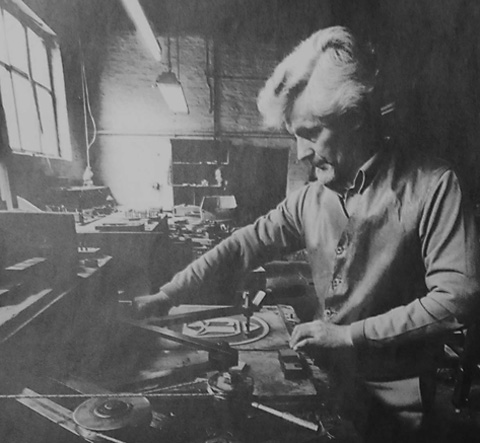
    By the 1980s, DeLit­tle became Britain’s only woodlet­ter mak­er, the firm being run by Jim DeLit­tle, Robert’s grand­son. By this point DeLit­tle was offer­ing 300 faces, includ­ing in mul­ti­ple scripts.

    Jim DeLit­tle, from the York Press.

    With no-one able to car­ry on the busi­ness, DeLit­tle’s closed. The machin­ery, includ­ing pan­tographs and the pat­terns for each face went to the Type Muse­um in Lon­don in 1996.

    Jim DeLit­tle passed away in 2014.

    The Woodletter Business

    “Delit­tle Wood Type Spec­i­men” flickr pho­to by LarsS­chwarz shared under a Cre­ative Com­mons (BY-NC-SA) license

    The process of going from design to woodlet­ter is painstak­ing. Draw­ings are devel­oped, and from these wood­en tem­plates. Tem­plates are ​‘mas­ters’ and a pan­to­graph is used to scale these up or down accord­ing­ly. At their ear­ly premis­es, DeLit­tle had a fire­proof room like­ly to store these tem­plates.

    Ear­ly wood pur­chas­es were birch and sycamore. By the 1980s French horn­beam or Cana­di­an maple were being used. The wood was cut to 1¼″ thick sheets and allowed to mature for five years. One face of the wood was fin­ished to take the cut­ting of the char­ac­ter.

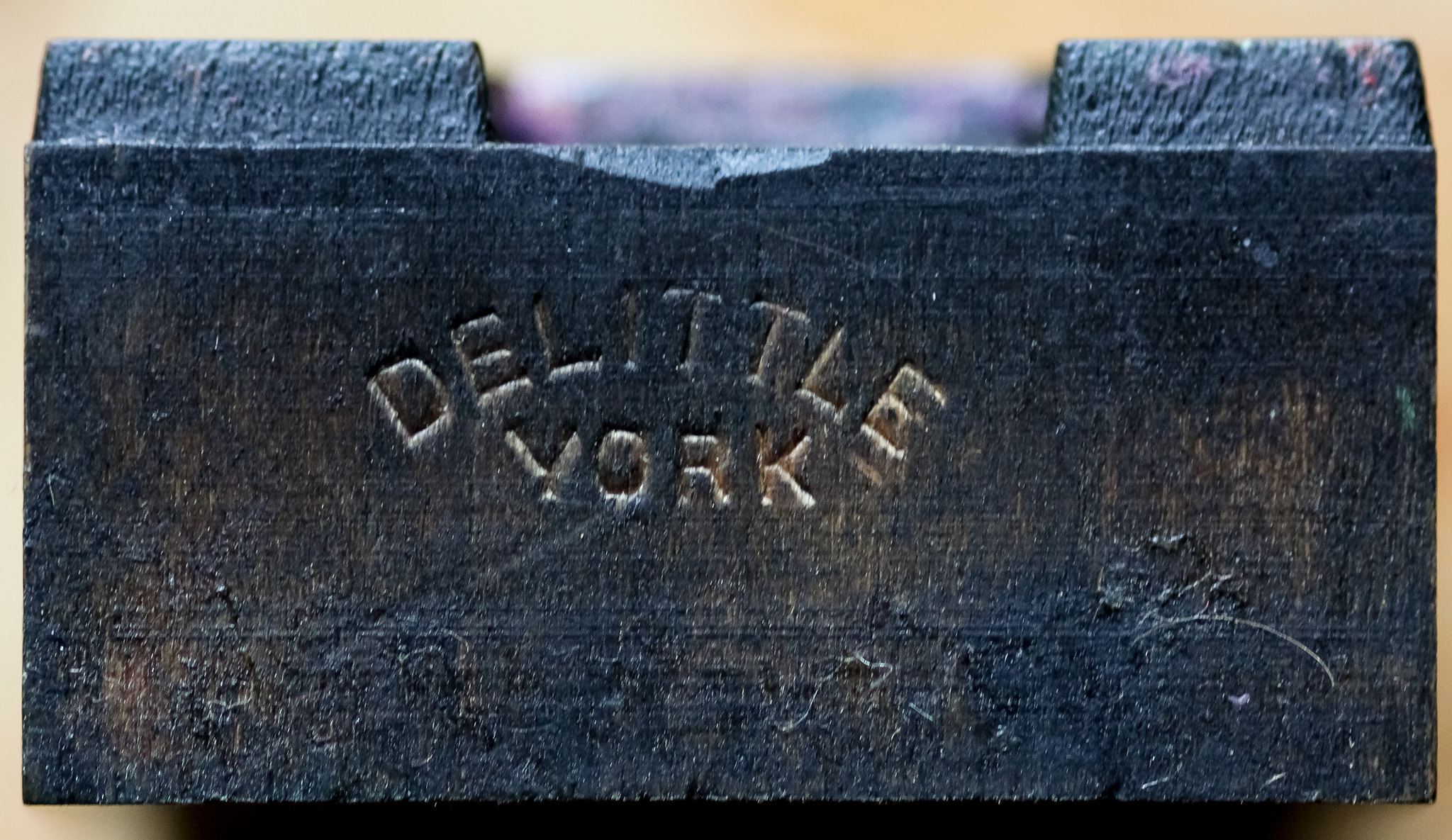
    The com­bi­na­tion of the tem­plate, the pan­to­graph and the carv­ing of wood gives a basic char­ac­ter. This has to be planed to type-high and then fin­ished by hand, for exam­ple, to carve out or deep­en the coun­ters. This is then soaked in lin­seed oil, and proofed on an Albion press using car­bon paper to avoid ink­ing the type. The mak­ers mark is applied to the ​“A” char­ac­ter of each fount.

    Type was sold in ​‘dozens’, and char­ac­ter height is expressed in lines, one line equal to 12pt. DeLit­tle man­u­fac­tured types from 1 line (12pt) to 180 line (2​′6″).

    Spec­i­men books were pro­duced by print­ing sheets of spec­i­mens and assem­bling these peri­od­i­cal­ly in to books. This makes dat­ing books espe­cial­ly dif­fi­cult as a sin­gle book issued in, say, 1950 might include spec­i­men sheets dat­ing from the 1930s as well as more mod­ern faces. An exam­ple spec­i­men book is avail­able through type.org.uk.

    Perspex-Faced Woodletter

    Exam­ple here from friends at St Bride Library:

    Woodletter Makers Today

    While DeLit­tle’s col­lec­tion cur­rent­ly is host­ed by the under-threat Type Muse­um in Lon­don, there are mod­ern UK mak­ers of woodlet­ter. I can hap­pi­ly vouch for each!


    Year and Era

    1888 / Mass Pro­duc­tion

    Object Type

    Types and Cast­ing

    Location

    Vine Street, York as the man­u­fac­to­ry for Delit­tle.


    Sources and More Information

    • British Print­ing Soci­ety, Small Print­er branch report 1988
    • Var­ney, Jim, Last of His Type from Dales­man mag­a­zine
    • Bolton, Claire, DeLit­tle, 1888–1988, 1988
    • Bolton, Claire, DeLit­tle: An Eng­lish Woodlet­ter Man­u­fac­tur­er, 1981
    • Kel­ly, Rob Roy, Amer­i­can Wood Type 1828–1900

    An Appeal

    If you have some­thing linked to this object, please get in touch.


    Head­er Image: ​“Mar­que Delit­tle York” flickr pho­to by Amper­sand Press Lab https://flickr.com/photos/ampersandpresslab/32993285306 shared under a Cre­ative Com­mons (BY-NC) license

  • I Love Typography: The Evolution of Chromatic Type

    I Love Typography: The Evolution of Chromatic Type

    Friends at I Love Typog­ra­phy have a delight­ful arti­cle about chro­mat­ic type.  Like oth­er let­ter­press print­ers I fetishise these types, includ­ing the new­ly-pro­duced woodlet­ter.

  • Alan Kitching: Suffolk and Glasgow

    Alan Kitching: Suffolk and Glasgow

    More Alan Kitch­ing exhi­bi­tions — Snape in Suf­folk from 03 June to 20 August; and The Light­house in Glas­gow from the end of this year.

    – via. Cre­ative Review’s Review of the Exhi­bi­tion

  • Typoretum, Colchester

    Typoretum, Colchester

    As well as being an excel­lent let­ter­press print­er, Justin Knopp runs a num­ber of short let­ter­press cours­es in Essex.  I endorse Justin as a great let­ter­press sup­porter and am cer­tain that print­ers at all lev­els of under­stand­ing would enjoy his work­shops.


    Justin’s Profile

    My first prac­tical intro­duc­tion to let­ter­press print­ing came whilst study­ing BA (Hons) Graph­ic Design at Cent­ral Saint Mar­tins Col­lege of Art & Design (1991–1994). After spend­ing two days in the College’s Com­pos­ing Room — a 1950s time cap­sule deep down in the bow­els of the build­ing — I quick­ly became fas­cin­ated by the cre­at­ive poten­tial of the pro­cess and by the ancient skills and ingeni­ous machines employed to make it all hap­pen.

    Since gradu­at­ing, my involve­ment with let­ter­press print­ing has deep­ened and I have acquired a sub­stan­tial col­lec­tion of lead and wood­en types, print­ing machines and oth­er para­pher­na­lia — much of which I have res­cued and restored to work­ing order.

    After hav­ing spent many years design­ing and print­ing let­ter­press cards for friends, fam­ily, fel­low print­makers and the occa­sional com­mis­sion, I decid­ed to intro­duce my designs to a wider audi­ence. After four­teen years of act­ive let­ter­press print­ing and two years of ded­ic­ated plan­ning, TYPORETUM was launched in August 2008 and all of our let­ter­press prod­ucts are avail­able for view­ing and pur­chase via our web­site at www.typoretum.co.uk. TYPORETUM oper­ates with the sup­port of my wife, Cecil­ia, and occa­sional artis­tic input from our two year-old daugh­ter!

  • Chromatic (Multiple Colour) Woodletter Specimen

    Chromatic (Multiple Colour) Woodletter Specimen

    A real­ly splen­did spec­i­men of mul­ti-colour woodlet­ter, host­ed by Archive.org

    Hat tip:

  • Woodletter or Poster Types

    Woodletter or Poster Types

    Small print­ers would be asked to pro­duce all man­ner of work, and one part of their ser­vice would be to pro­duce posters.  Nat­u­ral­ly they need­ed much larg­er type than used for books or job­bing work and poster types emerged as a class of type of their own.  Beyond 72pt (1 inch) it was usu­al for type to be made of wood, and it was mea­sured in lines, 1 line being equal to 1 pica or 12 points.  So, wood let­ters 1 inch tall would be 72 points called 6 line.

    Woodlet­ter is tra­di­tion­al­ly stamped with the mak­er’s name on the top of the cap­i­tal ​‘A’.

    Poster Type Makers

    Robt. De Lit­tle of Vine Street, York are per­haps the most famous mak­ers of woodlet­ter.  Estab­lished in 1888 they ran until 1997 when demand fell to make the busi­ness unsus­tain­able.   Their equip­ment went to the Type Muse­um, Lon­don who pre­sum­ably have the equip­ment in store.  They were able to sup­ply plas­tic-faced woodlet­ter to improve the qual­i­ty of the print and wear.  Claire Bolton of the Alem­bic Press researched their his­to­ry and pub­lished accounts of their enter­prise.

    The famous met­al type­founder Stephen­son, Blake of Sheffield orig­i­nal­ly sup­plied wood­en type made by anoth­er firm.  In 1907 they estab­lished a Wood­work­ing Depart­ment and began pro­duc­ing woodlet­ter a year lat­er.  SB’s 1910 cat­a­logue was the first to include their own poster type.

    Both of these firms seemed to con­cen­trate on ser­vi­ca­ble types; rather than the exot­ic, mul­ti­ple-colour type that you could see on cir­cus or the­atre posters.

    Renovating Woodletter

    While today’s print­ers enjoy the unique effect that comes from slight­ly worn wood­en type, ear­li­er print­ers were keen to print a pris­tine image.  An arti­cle in the Small Print­er in the mid 1980s sug­gest­ed this –

    • Fill any cracks in the let­ter with a wood filler and allow this to dry
    • Place an emp­ty chase on a per­fect­ly flat sur­face.  Prop each cor­ner of the chase with two or three lay­ers of board.  This  thick­ness will be need­ed lat­er to be applied to the back of the let­ter.
    • Place the let­ter in the chase face down and lock it up.  The result should be a face-down let­ter with a slight gap between the chase edges and the sur­face
    • Using a very fine abra­sive paper, light­ly sand the face of the let­ter until the chase and the abra­sive paper meet: at this point you should have a smooth let­ter face, but not quite type high
    • Apply the same thick­ness of board to the back of the let­ter that you used to prop the chase up.  This should bring it back to type high

    I per­son­al­ly would pre­fer not to do this sort of thing, but the demands of the moment often made print­ers do strange things with woodlet­ter.  I’ve seen Vs become As by the addi­tion of a cross bar and being turned over; and also the backs of sel­dom-used let­ters (like Zs) become new let­ters through hand carv­ing.

    Buying and Selling Woodletter

    The mar­ket today is one area of let­ter­press where prices bear lit­tle rela­tion to the val­ue or orig­i­nal costs of the type.  There are three big con­sumers of woodlet­ter: ebay sell­ers who occa­sion­al­ly break up large founts to sell indi­vid­ual char­ac­ters; fur­ni­ture mak­ers who want to use it with­in pieces of fur­ni­ture, for exam­ple a cof­fee table; and small print­ers who are keen to use it for its orig­i­nal pur­pose.

    If you’re sell­ing poster type, con­sid­er using the British Let­ter­press Clas­si­fieds ser­vice to reach print­ers direct­ly; or con­tact me for spe­cif­ic advice.

    Current Practitioners

    There’s a won­der­ful charm to let­ter­press posters, and many con­tem­po­rary let­ter­press print­ers still enjoy work­ing with let­ter­press posters.  The grandee of woodlet­ter print­ing is Alan Kitch­ing who pro­duces ener­getic let­ter­press posters — I can almost guar­an­tee that you’ve seen them in pop­u­lar cir­cu­la­tion.  He claims to hold the largest col­lec­tion of wood let­ter in the UK after he took on the types from a the­atri­cal print­er poster.  Ian Mor­timer of IM Imprim­it also claims to have Britain’s largest col­lec­tion of woodlet­ter and prints ser­vi­ca­ble posters on his Albion press­es.  Also in Lon­don is Phil Abel at Hand & Eye cur­rent­ly sell­ing posters through his online shop.

    Justin Knop­p’s Typore­tum uses woodlet­ter to pro­duce excel­lent cards and posters.

    Robert Lee from Uni­corn Graph­ics in the US has been in touch to share his Amer­i­can Wood Type YouTube chan­nel.