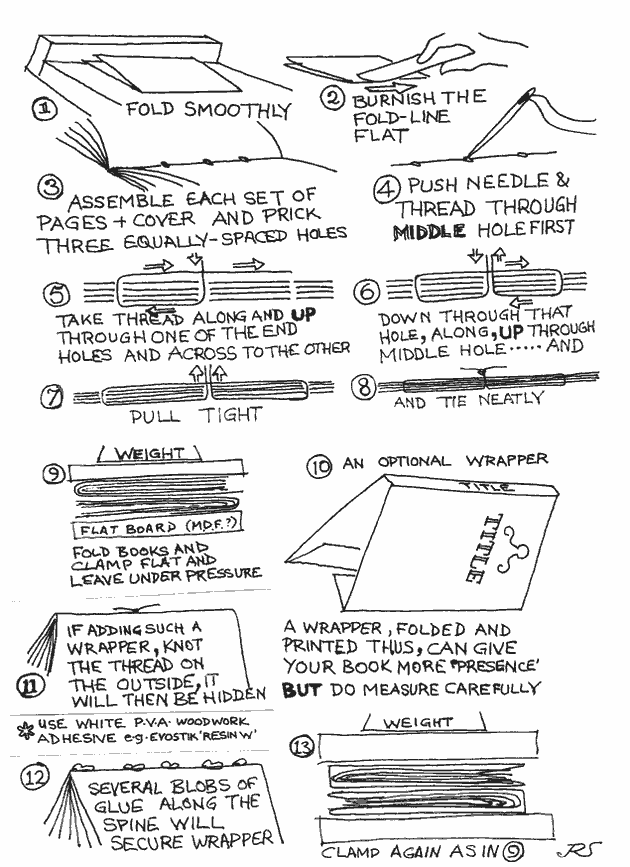
Tag: Binding

  • Simple Bookbinding

    Simple Bookbinding

    If you are think­ing of assem­bling your fold­ed pages using a domes­tic or office sta­pler, think again. Such machines use clum­sy rec­tan­gu­lar-sec­tion mild steel sta­ples which are prone to rust. Bindery wire stitch­ers use slim­mer wire, which for pub­li­ca­tions meant to last can be cop­per or stain­less steel — much less like­ly to cor­rode and rot the paper. We should there­fore learn and apply sim­ple skills no longer prac­tised by the mass-pro­duc­ers

    This will be suf­fi­cient to deal with a con­tri­bu­tion to the Jubilee project [An OGP ini­tia­tive]. A mul­ti-sec­tion bind­ing is not real­ly more demand­ing — it just takes longer — and there are help­ful books, new or sec­ond-hand; recre­ation­al class­es at cer­tain local adult edu­ca­tion cen­tres will take you fur­ther.

    Notes on Binding
    Notes on Bind­ing

    This arti­cle by John R Smith of the Old Forge Press

  • Binding

    Binding

    Bind­ing is itself an art — peo­ple absorb them­selves in the act of bind­ing and it’s a sphere that’s as reward­ing as print­ing itself.  We can only touch the sur­face here with guides to more- and less-com­plex bind­ings.

  • Other Arts

    Other Arts

    Going from idea to print­ed page is a com­plex process that wraps in a large num­ber of oth­er dis­ci­plines. Some are pret­ty obvi­ous: the need to bind work into books, or to wrap pack­ages well.

    It’s strange to think of some of the oth­er arts attached to print­ing: the man­age­ment and lay­out of a print­ing office; the union and staff rela­tions were all spe­cial­ist areas in let­ter­press print­ing, and this sec­tion sheds a lit­tle light on them.