Historically, the imposing stone was a slab of slate, ground flat, as was the type-bed of a wooden hand-press. Latterly the stone was generally a precisely machined iron casting, similar to an engineers’ surface-plate. A piece of plate glass, an offcut from a genuine marble or granite kitchen work-surface or a truly flat tile of similar material will prove ideal.
For small presses such as Adanas, it should be at least twice the size of the chase and the bigger the better. Type slid from the composing stick should be assembled and surrounded with strips of wooden or plastic reglet or metal girder furniture as in one or other of the above diagrams. Note, in either chase, the gaps left which allow the type to be firmly locked in two planes. For a small clamshell platen the rectangle of type must always be centred in the chase, otherwise it will not print with an even impression. If the type is to be printed to one side of a largish sheet, most such small machines will allow the paper to overhang on two or three sides.
Quoins are essentially expanding wedges; those illustrated are tightened with a square-end key and are the easiest to use. They come in different sizes and narrow-margin quoins take up less space in the assembled forme. If using an Adana with locking-screws built into the chase, ensure that the screws bear on steel strips rather than on the softer, easily damaged furniture.
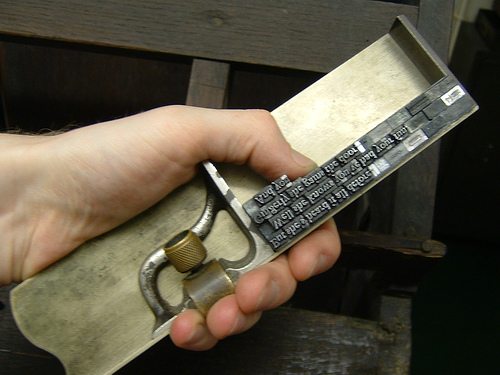
Take care also to slide the assembled forme close enough to the edge of your stone to keep your screwdriver properly aligned to avoid damaging the threads in the chase. With the quoins tightened evenly, lift one edge of the chase about a centimetre clear of the stone (put a spare quoin or length of reglet under it) and test the forme for tightness by gently patting the type with your fingers. After remedying any loose lines with hair-spaces, etc. try again. When satisfied it is tight, loosen the quoins until the type is almost loose and plane the forme by placing a planer, (a small, flat piece of MDF or birch plywood will do) on the type and pressing down hard or gently tapping it down with a leather mallet. Tighten the quoins evenly and, after checking again for loose type, mount the forme on the press and you are almost ready to print.
This guide kindly contributed by John R Smith of the Old Forge Press. Originally appeared in the newsletter of the Oxford Guild of Printers