Tag: Guide

  • Taking an Arab Apart

    Taking an Arab Apart

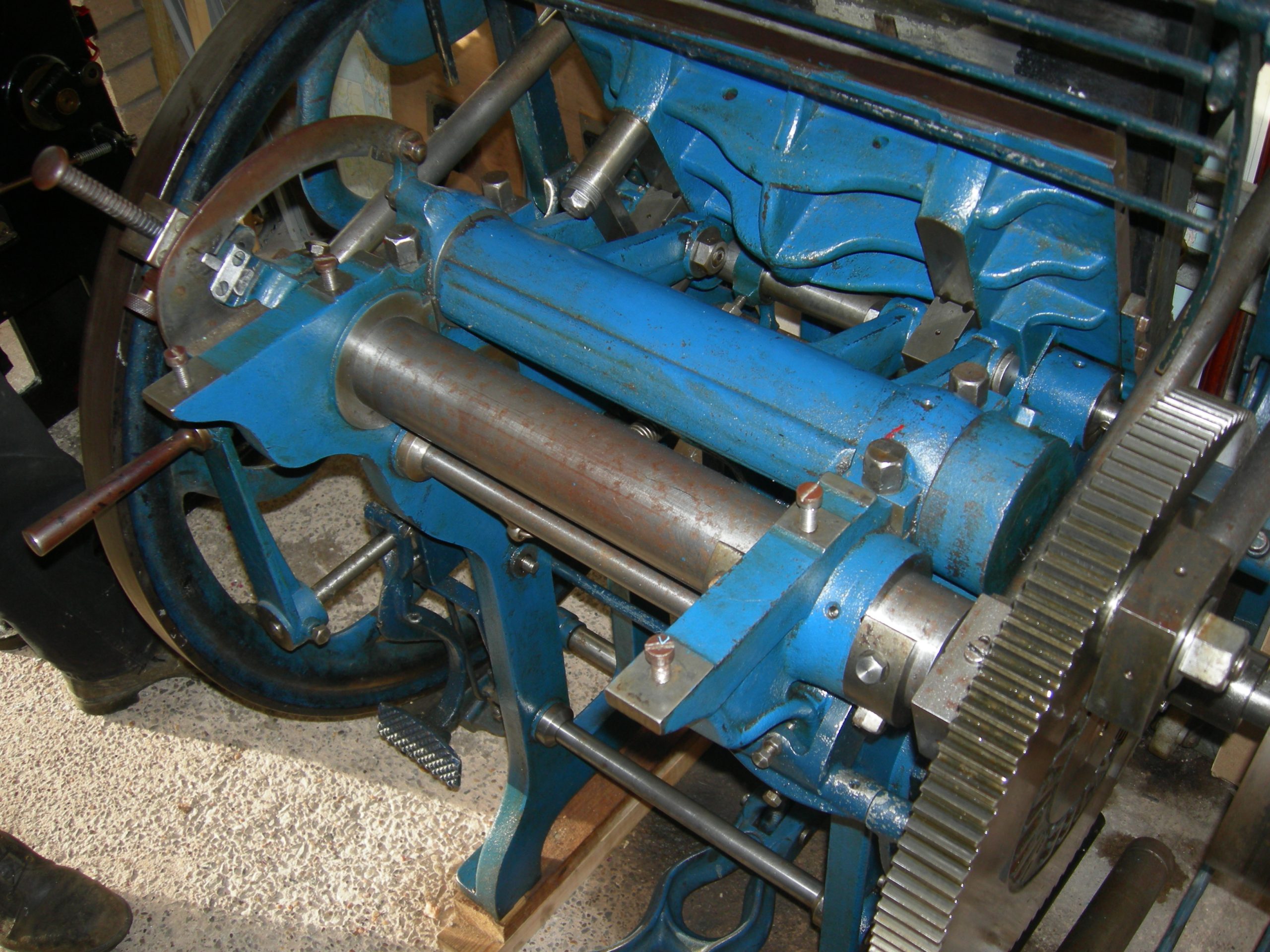
    This is an account of dis­man­tling a Crown Folio Arab Plat­en. The machine is ear­ly (Ser­i­al Num­ber 1086 c. 1892) but has had a num­ber of safe­ty fea­tures fit­ted. The guide below shows the major steps and will be added to. There’s a spe­cial sec­tion at the foot of this page about the brak­ing sys­tem.

    The main body of the Machine

    The start­ing point: a com­plete Arab

    Arab: com­plete machine with spare Arab Wheel” shown

    Ink­ing Disk Removed (remem­ber to replace the bolt under­neath).

    Arab: Ink­ing Disc Removed

    Feed board removed

    Arab: feed boards removed

    One of the ink­ing arms removed. Remem­ber that they are under the pres­sure of a spring so you have to keep hold of the arm as you release. In prepa­ra­tion for this you should have removed the rollers and stocks; and also removed the met­al bar which links left and right roller arms: keep this safe!

    Arab: ink­ing arms removed

    Over-arch­ing guard removed by unbolt­ing one site of the guard bars (not pic­tured)

    There are two strong springs which force the front plat­en towards to back plat­en. These need to be un-hooked while the front plat­en is almost ver­ti­cal. The two col­lars and hooks on the plat­en site need to be loos­ened so that the bar can be slid out lat­er on.

    Arab: Plat­en Springs Removed (look­ing from front to back under the machine)

    The two bolts on the left of the front plat­en must be removed so that the front plat­en is held only on the sup­port­ing bar. Remove the sup­port­ing bar and lift the front plat­en out. This is fair­ly del­i­cate as it will still con­tain the frisket motion.

    Arab: front plat­en removed

    The Arab wheel can now be slid from left to right and removed from the machine

    Arab wheel removed

    The rock horse’ is now removed. This is the U‑shaped met­al cast­ing which forces the front plat­en upwards. This rests in two slots is the frame cov­ered by two semi-cir­cu­lar cast­ings bolt­ed down.

    Arab: rock horse removed

    The back plat­en is now removed as a sin­gle large unit: includ­ing the plat­en and the sup­port­ing cast­ing. This is very heavy but will save trou­ble because the back plat­en will not have to be re-adjust­ed. The eccen­tric is also removed: this is the rod which holds the impres­sion lever.

    Arab: back plat­en removed

    The braking system

    Side view of the brak­ing sys­tem

    Arab: brak­ing sys­tem from side

    Top view of the brak­ing sys­tem

    Arab: top of brak­ing sys­tem
  • After Printing

    After Printing

    You’ve fin­ished your glo­ri­ous work at the print­ing press; sure­ly it’s time for tea, buns and a rest?  I’m sor­ry to say there’s more work to do.  We’ll look here at the major steps that will assure you a tidy and clean print shop and an eas­i­er life.  Remem­ber that the soon­er you clean after print­ing fin­ish­es, the quick­er the job is!  This guide cov­ers hand-pow­ered press­es only: more indus­tri­al press­es have almost-auto­mat­ic clean­ing mech­a­nisms.

    Printed Sheets

    You first need to make sure your print­ed sheets are safe.  You need to be away from the press (so as not to suf­fer acci­den­tal spills from clean­ing); free from dis­tur­bance (so as not to cause set-off on the backs of sheets); and per­haps some­where that is not cold so that dry­ing is not inhib­it­ed.

    Cleaning Equipment

    At the least you’ll need a sol­vent and rags.  While there might still be spe­cial­ist clean­ing prod­ucts, I’ve been using white spir­it or lighter flu­id.  Lighter flu­id is espe­cial­ly use­ful for small­er press­es where the noz­zle can be used to good effect.  Fol­low any safe­ty instruc­tions that come with the prod­uct.  I know some print­ers use veg­etable oil to act as a vehi­cle for ink, mak­ing it eas­i­er to clean a press.  My expe­ri­ence is lim­it­ed in this area but I found it left a dif­fi­cult residue on rollers.

    On rags, cot­ton is real­ly the most use­ful mate­r­i­al as it is absorbent.  Be sure to buy rags that have all but­tons, zips etc. removed and that have been washed a num­ber of times so lint has been removed.

    Also use­ful would be brush­es of var­i­ous sizes: from tooth­brush size to shoe brush size but take care to make sure the bris­tles aren’t so stiff that they might dam­age the type.

    Cleaning the Forme

    You need to first clean the forme.  Remove the chase from the press and set it down on a sol­id sur­face.  Using a sol­vent damp­en a rag and wipe it over the sur­face of the type tak­ing as much ink as pos­si­ble away.  Use a clean, dry cloth to wipe away any excess.  If you splash the sol­vent around and then wipe, the inky sol­vent has a ten­den­cy to get between fur­ni­ture and type and lead to dirt and so inac­cu­ra­cy.

    For dried-on ink, apply the sol­vent to a brush and then brush light­ly on the type.  Allow this to sink in and wipe away with a cloth.  Repeat this process as need­ed until the ink is cleared.

    Once clean you need to decide on the next step: fur­ther print­ing of the same forme will demand that you store the whole thing on a chase rack, or even back on the clean press.  You might keep that job by remov­ing the fur­ni­ture and chase and stor­ing the type on a gal­ley.  Oth­er­wise you’ll have to take the type out and dis­trib­ute it back in the case.

    Cleaning the Press

    Known also as wash­ing-up, this process is cru­cial to the qual­i­ty of your next print run.  It’s espe­cial­ly impor­tant when chang­ing colours or work­ing in white or metal­lic inks.  Very high qual­i­ty print­ers demand that the press is cleaned, worked in white ink, and cleaned again when chang­ing from a dark to a light colour.

    Use as dirty a rag as pos­si­ble and damp­en it with the sol­vent, mak­ing the rag wet but not so much that sol­vent is drip­ping from it.  With the rollers clear of the ink disk or drum, wipe this up first: fold­ing and re-fold­ing the rag and also advanc­ing the disk or drum so that all areas are cov­ered.

    Turn­ing your atten­tion to the rollers, advance the press until the first roller touch­es the ink­ing disk or drum.  Re-fold­ing the rag rub this across the length of the roller.  Advance the press grad­u­al­ly to expose the oth­er areas of the rollers and con­tin­ue the process.  Do this for each roller.

    At this point you should have removed the bulk of the ink from the press and rollers.  Start now with a clean­er rag and repeat the process until the press is clear of ink.

    Finally

    Your press will always repay being looked after.  Take this oppor­tu­ni­ty to clean the oth­er parts of the press with a light­ly oiled rag; remem­ber that she might also need a lit­tle oil­ing here and there.  Final­ly you might cov­er your press up: Adana machines came with a plas­tic cov­er.  Your press will look like new next time you start work.

    Now have a cup of tea and a bun.

  • Metallic Inks

    Metallic Inks

    Metal­lic inks are now sup­plied ready mixed, but you might like to exper­i­ment with old­er types of inks.  The basic premise is that the var­nish (a clear vehi­cle for the colour) is mixed with a pow­der (typ­i­cal­ly made of ground up met­al) to cre­ate an ink.  This approach was need­ed in the past because the two had a ten­den­cy to sep­a­rate.  Sil­ver ink was first to be sup­plied ready mixed because alu­mini­um is light and so did not sep­a­rate.  Gold­en inks relied on heav­ier met­als that had a ten­den­cy to fall to the bot­tom of the con­tain­er and so ruin the over­all ink.

    The process is to set the pow­er out with­in the rec­om­mend­ed pro­por­tions by weight, typ­i­cal­ly —

    • 3 Var­nish: 1 Gold
    • 2 Var­nish: 1 Sil­ver

    But man­u­fac­tur­er’s advice would over-rule these sug­ges­tions.  The pow­er should have a lit­tle well made in it and the var­nish should be added to this.  A test for readi­ness is to use an ink knife to scoop up the ink and make sure that you can cre­ate a three inch strand of con­tin­u­ous ink flow­ing.

    Too much pow­der will leave too lit­tle var­nish to car­ry the ink and this will leave the pow­der on the sur­face of the fin­ished job which will be prone to rub­bing off.

    Final­ly, whether using ready-mixed or tra­di­tion­al metal­lic inks, you could exper­i­ment by adding a lit­tle colour to see if you can achieve a metal­lic coloured effect on your work.

  • Simple Bookbinding

    Simple Bookbinding

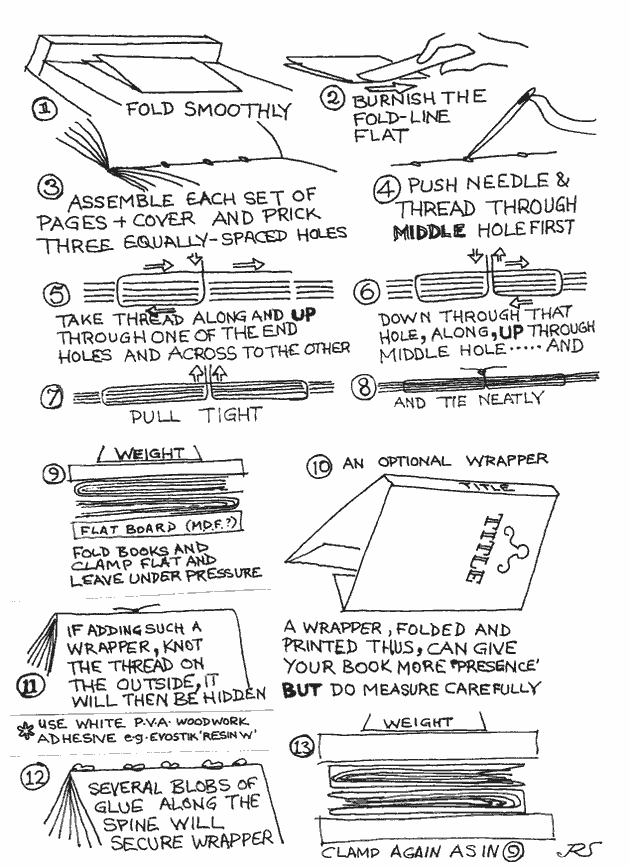
    If you are think­ing of assem­bling your fold­ed pages using a domes­tic or office sta­pler, think again. Such machines use clum­sy rec­tan­gu­lar-sec­tion mild steel sta­ples which are prone to rust. Bindery wire stitch­ers use slim­mer wire, which for pub­li­ca­tions meant to last can be cop­per or stain­less steel — much less like­ly to cor­rode and rot the paper. We should there­fore learn and apply sim­ple skills no longer prac­tised by the mass-pro­duc­ers

    This will be suf­fi­cient to deal with a con­tri­bu­tion to the Jubilee project [An OGP ini­tia­tive]. A mul­ti-sec­tion bind­ing is not real­ly more demand­ing — it just takes longer — and there are help­ful books, new or sec­ond-hand; recre­ation­al class­es at cer­tain local adult edu­ca­tion cen­tres will take you fur­ther.

    Notes on Binding
    Notes on Bind­ing

    This arti­cle by John R Smith of the Old Forge Press

  • Letterpress From Scratch

    Letterpress From Scratch

    The let­ter­press print­ing process is one of the old­est ways of get­ting the print­ed word on to a page. It relies on a phys­i­cal rep­re­sen­ta­tion of each let­ter being inked and then pressed against the paper — and this is why it’s both inter­est­ing and expen­sive. Think­ing a lit­tle fur­ther about it for each page the print­er needs a piece of met­al to rep­re­sent every sin­gle char­ac­ter; a way of apply­ing ink to each char­ac­ter and a machine to force the met­al and paper togeth­er. It fol­lows that chang­ing from bold to ital­ic, for exam­ple, will need a total­ly new set of met­al char­ac­ters rather than a few clicks of a mouse. Oth­er print­ing process­es like lith­o­g­ra­phy or dig­i­tal print­ing are more flex­i­ble, quick and less expen­sive. But while com­mer­cial let­ter­press is in decline there are many who are start­ing from scratch with this won­der­ful process.

    This arti­cle looks briefly at this resur­gence of inter­est in let­ter­press, why you might like it and some help to begin enjoy­ing this fas­ci­nat­ing pas­time.

    So why do peo­ple want to get into this arcane world? The biggest rea­son I can find is that it offers a hands-on imme­di­a­cy that oth­er meth­ods can’t offer. The whole process feeds the sens­es: the cold­ness and weight of met­al type; the rhythm of print­ing machines cycling qui­et­ly; the smell of oil and ink and the great sense of see­ing a won­der­ful print­ed page. Our grow­ing demand for the one-off’ or the home-grown trans­lates to let­ter­press where each item has been han­dled, pre­pared and checked indi­vid­u­al­ly.

    It’s a con­strain­ing process but allows a cer­tain free­dom which inspires lots of design­ers. The time tak­en can induce a con­cen­tra­tion which excludes the imme­di­ate world. In many ways let­ter­press is the antithe­sis of the mod­ern graph­ics work. It pro­vides a won­der­ful and absorb­ing pas­time that demands just as much time, space and mon­ey as you would like to allow.

    Let’s look now at how you can get into this world. First, you should estab­lish a pur­pose for your ven­ture. Some peo­ple come to let­ter­press to make mon­ey. I’ll be frank and say that you’ll need to be very good, have plen­ty of time and effort to be able to make a prof­it — try to begin with a plea­sure as prof­it’ approach to test the waters first. Many of us have a mild obses­sion with typog­ra­phy and let­ter­press is a won­der­ful way of being immersed in the detail of type and design. Com­mon terms in dig­i­tal design: points and picas, lead­ing and white space all appear as three-dimen­sion­al objects bring­ing a new clar­i­ty to your think­ing about the print­ed page.

    You might want to devel­op new skills. I’ve espe­cial­ly enjoyed the engi­neer­ing side of let­ter­press: tak­ing old and dirty machines, clean­ing them, mak­ing small repairs and get­ting them run­ning again. There’s a min­i­mal out­lay in terms of tools and the equip­ment is so well made that it with­stands the efforts of the ama­teur.

    Armed with a pur­pose, you need to speak to some­one about let­ter­press. There are many won­der­ful online com­mu­ni­ties out there cater­ing for the let­ter­press new­bie, but most of the expe­ri­ence rests with the job­bing print­er on your high street who still isn’t on the infor­ma­tion super­high­way. Many print­ers are keen to help new let­ter­press print­ers and you can’t afford to miss out this step — word of mouth’ is still the biggest source of infor­ma­tion in the let­ter­press world. If you have no luck local­ly (and the decline in com­mer­cial let­ter­press might mean you might meet blank faces) then you’ll have to con­tact a fine book’ or pri­vate press’ print­er and they too will help new print­ers when they can.

    Once you have found some­one, you can ask some of the more detailed let­ter­press ques­tions: how did you start print­ing? is there any equip­ment avail­able local­ly? where would I get the con­sum­ables’ like ink and paper? You need also to ask about get­ting some hands-on expe­ri­ence. Are there any local class­es, enthu­si­as­tic print­ers or pro­fes­sion­al print­ers who would be will­ing to give you some time with them? Take some time to get into let­ter­press as much as you can while you exper­i­ment with this as a hob­by.

    You’ll now have a much bet­ter feel for whether let­ter­press is for you. Let’s take stock for a moment about what lies ahead — you need to decide how much time, space and mon­ey you can afford to invest in let­ter­press. There are plen­ty of guides that can take you from here: decid­ing on a par­tic­u­lar machine, the act of print­ing and devel­op­ing a style. One key point: you can get the ben­e­fits of let­ter­press from the most mod­est of equip­ment — there is no need to put off print­ing through lack of space or mon­ey — start small.

    On now to some top tips for your next steps –

    • Remem­ber that there’s a lan­guage bar­ri­er. Just as web design­ers wince when novices talk of using tables for lay­out; print­ers share their own lan­guage with its own nuances — the point and picas, lead­ing, formes and founts are all spe­cial­ist terms. Give your let­ter­press guide a sense of your enthu­si­asm by using the right terms
    • Set some para­me­ters for your­self. It’s easy to acquire all man­ner of things and you’ll very quick­ly run out of space. Work out what you need to get hold of and where it will go when it’s home. In terms of finances cheap press­es can soon esca­late in cost when rig­ging and mov­ing is includ­ed
    • Soak up the let­ter­press resources on the web
    • Steal­ing John Ryder’s words, see plea­sure as prof­it’ and enjoy your new hob­by before tak­ing on pay­ing work

    Offline help

    There are many books about let­ter­press, but few start from the posi­tion of the ama­teur tak­ing their first steps. I’d rec­om­mend John Ryder’s Print­ing for Plea­sure and J. Ben Leiber­man’s Print­ing as a Hob­by but unfor­tu­nate­ly these are out of print — try look­ing for sec­ond-hand copies of them. For prac­ti­cal help Gen­er­al Print­ing (re-print­ed by Liber Aper­tus Press) gives an excel­lent illus­trat­ed guide to each step in the process.

  • A Small Printing Office

    A Small Printing Office

    Big type founders used to sup­ply com­plete print­ing offices’ described in great detail in their cat­a­logues. They might include hun­dreds of pounds of type for a news­pa­per set com­plete­ly by hand.

    Small­er con­cerns have more mod­est needs; and the require­ments for a print­ing office for the cur­rent small print­er aren’t dra­mat­i­cal­ly dif­fer­ent from those of fifty years ago. This list is adapt­ed from both Print­ing for Plea­sure by John Ryder and oth­er book­lets on small print­ing.

    A Small Press

    Ryder sug­gests Adana machines (espe­cial­ly the Adana QH), or Mod­el press­es. Rollers will be need­ed

    Type

    The wide­spread advice is to choose one face and stick with it.  Once you have a set­tled view of the type you want, the recomme­da­tions are –

    • From Print­ing for Plea­sure
      • Two card founts’ of 12pt, 18pt and 24pt Roman (for 12pt, this would be around 20A 32a)
      • One card fount’ of 12pt, 18pt and 24pt Ital­ic (at 12pt, this would be around 10A 16a)
    • From Basic Print­ing: Let­ter­press for the Begin­ner by the BPS
      • 2kg (c. 9A 18a) of 18pt Bold
      • 2kg (c. 20A 40a) of 12pt Bold
      • 2kg (or 4kg of finances allow) of 12pt Roman
      • 2kg of 12pt Ital­ic
      • 1kg (c. 22A 44a) of 8pt Roman

    Oth­er things from type founders that are need­ed are –

    • Spac­ing (c. 1/2kg per size)
    • Quads
    • Hair spaces
    • Leads
    • Bor­ders:

    Other Items

    • Fur­ni­ture: alu­mini­um, plas­tic (Resalite) or wood — 2 or 3 times are area of the chase of the machine
    • Quoins: expand­ing met­al.  May also need nar­row mar­gin quoins
    • Print­ing rules (brass or from the type founder)
    • Reglet

    Tools

    • Com­pos­ing stick
    • Bod­kin
    • Tweez­ers
    • Plan­ing block
    • Type­scale
    • Impos­ing sur­face
    • Lead cut­ter
    • Ink knife
    • Hand rollers

    Storage

    • Type cas­es and cab­i­nets
    • Gal­leys
  • Composition

    Composition

    It’s a won­der­ful feel­ing to have a met­al chase in front of you filled with type, know­ing that it’s only held in with the wood­en and met­al spac­ing and the expand­ing met­al quoins you’ve used. It’s a dif­fi­cult thing to mas­ter, but prac­tice is your friend.

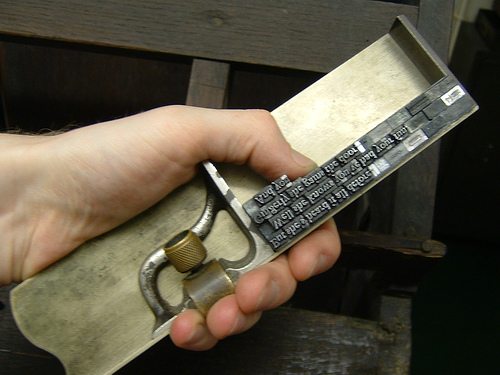
    You need to start by assem­bling the type in a com­pos­ing stick, then trans­fer­ring this to a lev­el sur­face to lock up’. There are some addi­tion­al bits and pieces you’ll need

    This is an iter­a­tive process and you’ll have to go over set­ting type and lock­ing up mul­ti­ple times before you can be sure it’s safe to attach to the press. The steps are out­lined in this guide to lock­ing up

    Where the type meets the impres­sion of the press there’s the tricky busi­ness of mak­eready: get­ting all of your type, blocks of images and oth­er things to be print­ed to be per­fect­ly lev­el so that you can get the right impres­sion on the press. There’s a few point­ers in this tech­ni­cal notes on mak­eready

  • Cutting Paper

    Cutting Paper

    Whether or not you aspire to print­ing books and pam­phlets, a paper-cut­ter will prove use­ful. Due to safe­ty reg­u­la­tions, clo­sure of small foundries and forges and short­ages of skills, new ones are either crum­mi­ly made or out­ra­geous­ly expen­sive.

    Thank­ful­ly there is a float­ing pop­u­la­tion of those long-since out­lawed from schools and offices because they lack safe­ty guards; most of them date from an era when things were accu­rate­ly machined and built to last. Most cities have a firm which spe­cialis­es in sharp­en­ing trim­mer and guil­lo­tine blades, too — try Yel­low Pages or ask a local print­er who he uses.

    Don’t be fright­ened; if you can safe­ly use an un-guard­ed Adana and are suf­fi­cient­ly polit­i­cal­ly incor­rect to have an IQ in excess of 3 or 4, you’ll be per­fect­ly safe, and in any case they are less dan­ger­ous than the fear­some alter­na­tive of sharp knife and steel straight-edge. Just don’t let the cat use it!

    The unguard­ed card or board-cut­ter (1) is most ver­sa­tile, being capa­ble, with care, of cut­ting lengths far in excess of its blade. Small guil­lotines can quick­ly trim the un-even edges of quite thick part­ly bound books.

    Notes on Guillotines
    Notes on Guil­lotines

    This guide kind­ly con­tributed by John R Smith of the Old Forge Press. Orig­i­nal­ly appeared in the newslet­ter of the Oxford Guild of Print­ers

  • Further Bits and Pieces

    Further Bits and Pieces

    Composing Sundries
    Com­pos­ing Sun­dries

    Assum­ing you find or have found a small press and a few cas­es of type, what more will you need? Per­haps it’s rather a mat­ter of iden­ti­fy­ing what else came with it? Type needs to be assem­bled, togeth­er with non-print­ing spac­ing mate­r­i­al, into rec­tan­gles of met­al, firm­ly locked togeth­er.

    Those spaces resem­bling the shanks of the type are quads and the square sec­tion ones, approx­i­mate­ly the same size as the shank of a cap­i­tal M, are called em quads or mut­tons, those half that width are en quads or nuts. Thin­ner ones are used between words, em quads and thick­er fill up the ends of short lines. To sep­a­rate the lines of type, which if set sol­id might print an over-dense page, one needs sets of leads — strips of thin met­al which, like quads are less than type-high — cut to lengths slight­ly less than the cho­sen width of a col­umn of type set with an em quad at both ends of each line. Quads and spaces are inter­change­able between type­faces of the same point size; nev­er­the­less one needs a sur­pris­ing amount — the same goes for leads.

    To fill out the chase (the met­al frame which fits onto the bed of the press) one needs a selec­tion of lengths of wood, plas­tic or met­al called reglet: which is also less than type-high. Large hol­low Quads, called clumps,are also use­ful to fill out the chase. You must, how­ev­er, leave space for quoins (expand­ing wedges) along two adja­cent edges of the chase, these will, when tight­ened, lock the forme of type firm­ly in place.

    To set lines of con­sis­tent width, one needs a com­pos­ing or set­ting stick and it should be accu­rate­ly square, rigid when locked to length, and light enough to hold with sev­er­al lines of type assem­bled in it.

    This guide kind­ly con­tributed by John R Smith of the Old Forge Press. Orig­i­nal­ly appeared in the newslet­ter of the Oxford Guild of Print­ers

  • Small Presses: Getting the Most from the Least

    Small Presses: Getting the Most from the Least

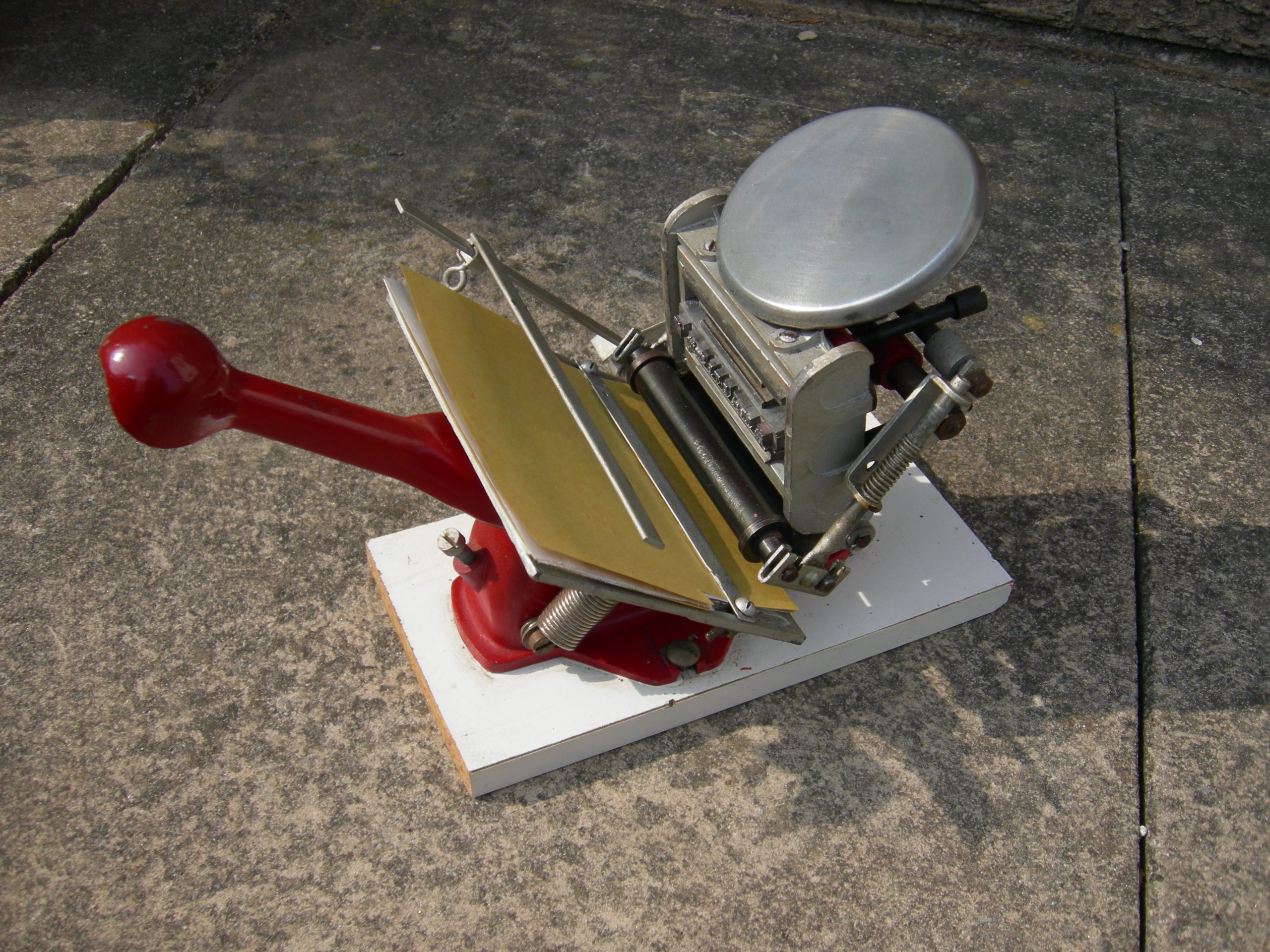
    The heav­ier pro­fes­sion­al machines, designed to print formes involv­ing bold type and blocks gen­er­al­ly have a set of rollers ded­i­cat­ed to dis­trib­ut­ing and prepar­ing or milling’ the ink and anoth­er set, the forme rollers, which apply that ink to the type. The lighter trea­dle or pow­ered job­bing’ platens and the table-top hand platens make do with just one set of, usu­al­ly only two, rollers to per­form both func­tions. The sheer sim­plic­i­ty of table-top platens such as Adanas and those small trea­dle or pow­ered platens with an impres­sion throw-off’ allows one to fool their basic mech­a­nisms into behav­ing as though they have at least twice as many rollers which results in a bet­ter ink film and, thus bet­ter print­ing. By run­ning a thin­ner film of well-loos­ened ink and rolling the forme twice or more for each impres­sion your lit­tle press will pro­duce far bet­ter work.

    The builders of larg­er plat­en press­es spent a lot of mon­ey on mech­a­nisms to sim­u­late what old hand-press print­ers using Albions, etc. called a sink­ing pull’. This allows the forme to dwell in con­tact with the paper rather than jump straight on and off and again the result is a bet­ter print­ed sheet. This is eas­i­ly achieved with a hand-press, whether Albion or Adana and well worth the lit­tle extra time involved.

    Adanas, in par­tic­u­lar, com­pro­mise ink­ing to allow one to print on paper larg­er than the plat­en. To keep the roller tracks below the plat­en the met­al or plas­tic run­ners at the ends of the rollers are of larg­er diam­e­ter than the actu­al roller. The sur­face speed of the roller over the type is thus dif­fer­ent from that of the run­ner which results in the roller skid­ding slight­ly across the type which caus­es ink slur’ rather than an even coat­ing. If print­ing paper suf­fi­cient­ly small­er than the inner width of the chase, one can over­come this by fit­ting a fair­ly thick piece of wood rule, to act as a type-high bear­er’ for the rollers, at each end of the chase. This will also neces­si­tate remov­ing the patent head-lay’ fit­ted to most Adanas (since its ends would crush the rule), and using tra­di­tion­al front or head and side-lays. These can be either quads glued to the tym­pan, slips of fold­ed card attached with mask­ing tape, or if you are lucky enough to find some, met­al gauge pins, some of which are adjustable, which are pushed into suit­ably placed holes pricked or slit into the top sheet of the tym­pan.

    Adana’s head-lay and frisket grip­per fin­gers are infa­mous for crush­ing the type of the unwary — con­vert­ing to card lays attached after tak­ing a proof impres­sion is part of the answer. The 8 x 5 has two frisket fin­gers which are best replaced by stretch­ing the sort of rub­ber band the post­man drops on your front path between the frisket arms. This will not dam­age the type of the absent-mind­ed, but will still lift the print­ed sheet clear of the type forme.

    This guide kind­ly con­tributed by John R Smith of the Old Forge Press. Orig­i­nal­ly appeared in the newslet­ter of the Oxford Guild of Print­ers