Tag: Guide

  • Ink

    Ink

    You will need two small palette knives with springy blades around 150mm long, one with a round end, one a push-knife (with a flat end like a a high-class dec­o­ra­tors scraper). Also a small hand-roller, say 75mm wide x 25mm diam­e­ter, a flat ink slab 300 x 300mm or larg­er, turps and clean­ing rags-or kitchen roll. Some might pre­fer to work in rub­ber gloves.

    Most print­ing ink comes in cans, of a size which many com­mer­cial print­ers use up in one job! Nev­er­the­less, such cans gen­er­al­ly have a close-fit­ting lid-don’t dam­age it! Inside a fresh can the ink is cov­ered by an air­tight’ waxed-paper or plas­tic disc, care­ful­ly peel this back and skim a suit­able amount from the sur­face, using the push-knife with­out dig­ging down. A blob the size of half a golf-ball is suf­fi­cient for sev­er­al hun­dred cards or let­ter­heads. Smooth the air­tight disc back: be care­ful to avoid trap­ping any pock­ets of air. The air­tight disc restricts oxi­da­tion to a thin ring of ink around the wall of the can. If you’ve inher­it­ed a care­less­ly used can you’ll waste, not only time, but more ink than you can use, in try­ing to pick out bits of oxi­dised ink skin’-hard insol­u­ble chips-well worth avoid­ing.

    Even in warm con­di­tions, ink needs work­ing’ to make it usable. Don’t spread ink beyond a patch the width of your hand-roller but, with the round-end knife, pum­mel, lift, fold and beat it vig­or­ous­ly. Fric­tion between the gran­ules of pig­ment and medi­um will warm and loosen the ink. Test occa­sion­al­ly by lift­ing the knife until the strand of ink con­nect­ing knife to slab breaks; each time you’ll notice the strand length­en before break­ing. When you can draw up a 100150mm strand, the ink is use­able-con­sis­ten­cy sim­i­lar to gold­en syrup — how deli­cious­ly un-healthy!

    Scrape most of the ink into a blob and push it out of the way to be your reserve. Roll your hand-roller back and forth over the remain­ing patch of ink, lift­ing the roller between strokes to ensure all of its cir­cum­fer­ence is even­ly coat­ed. Trans­fer, with the hand-roller, a coat­ing of ink to the ink-plate or disc of your press and, before clip­ping in the forme, work the press-rollers to and fro until they and the disc are even­ly coat­ed. Clip in the forme and, with grip­pers, etc. well clear of the type, work the rollers across ink disc and type forme sev­er­al times with­out actu­al­ly ful­ly clos­ing plat­en to bed. Now press down ful­ly and take a tri­al pull on the tym­pan (the card pack­ing on the plat­en) and exam­ine it care­ful­ly.

    If the impres­sion is even, but under-impressed and under-inked, the thick­ness of a sheet of paper or card will improve it. Care­ful­ly posi­tion lay-gauges and grip­pers to locate the paper with­out hit­ting the type and try a sheet. If still under-inked, add a lit­tle more and try anoth­er pull; don’t over-ink, build up grad­u­al­ly.

    An un-even impres­sion demands local pres­sure adjust­ment; weak at the hinge end of the plat­en requires more tym­pan pack­ing, weak at the open end requires less. One cor­ner weak, or heavy demands care­ful adjust­ment of the pres­sure screws behind the bed. If indi­vid­ual let­ters print too strong or too weak, check for and replace worn let­ters, plane it (again?) on a clean impos­ing sur­face and try again.

    This guide kind­ly con­tributed by John R Smith of the Old Forge Press. Orig­i­nal­ly appeared in the newslet­ter of the Oxford Guild of Print­ers

    Ink Additives

    White Ink
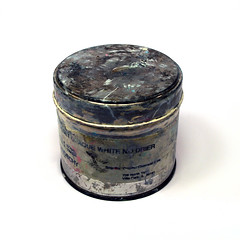
    White Ink (from Flickr)

    Com­mer­cial print­ers used a myr­i­ad of addi­tion­al ingre­di­ents to make a dif­fer­ence to their inks.  When print­ers were using a great mass of ink the unit price was very impor­tant, and so cheap ink was com­mon.  A sur­vey of com­mer­cial print­ers showed that com­mon addi­tions at one time were —

    • French chalk
    • Paraf­fin wax
    • Lard
    • Coconut oil
    • Beeswax
    • Lubri­cat­ing oil

    Work was done to reduce the num­ber of addi­tives (known as dopes) to a real­is­tic num­ber.  The list below should cov­er almost all changes need­ed to inks —

    • Heavy Var­nish
      will stiff­en the ink and also make it dry a lit­tle quick­er
    • Medi­um Var­nish
      will soft­en the ink, use­ful for print­ing on a soft­er paper
    • Reduc­er (‘Num­ber 1’ from a com­mer­cial sup­pli­er)
      this will slow dry­ing but reduces pick­ing: the action of the ink pulling the sur­face of the paper away from the main body of the paper
    • Super­mat­ting
      this addi­tive will help ink to dry when over­print­ing on a sur­face that will not allow ink to be absorbed, like plas­tic or met­al foil
    • Reduc­er (‘Num­ber 2’ from a com­mer­cial sup­pli­er)
      This helps ink soak in to the paper

    While some print­ers had a ten­den­cy to add dopes to every ink, the rec­om­men­da­tion of the experts was clear: ink mak­er pro­duce inks that should work direct from the can.  Seek advice from your ink man­u­fac­tur­er about what is best for a par­tic­u­lar job and paper.

  • Locking Up

    Locking Up

    His­tor­i­cal­ly, the impos­ing stone was a slab of slate, ground flat, as was the type-bed of a wood­en hand-press. Lat­ter­ly the stone was gen­er­al­ly a pre­cise­ly machined iron cast­ing, sim­i­lar to an engi­neers’ sur­face-plate. A piece of plate glass, an off­cut from a gen­uine mar­ble or gran­ite kitchen work-sur­face or a tru­ly flat tile of sim­i­lar mate­r­i­al will prove ide­al.

    For small press­es such as Adanas, it should be at least twice the size of the chase and the big­ger the bet­ter. Type slid from the com­pos­ing stick should be assem­bled and sur­round­ed with strips of wood­en or plas­tic reglet or met­al gird­er fur­ni­ture as in one or oth­er of the above dia­grams. Note, in either chase, the gaps left which allow the type to be firm­ly locked in two planes. For a small clamshell plat­en the rec­tan­gle of type must always be cen­tred in the chase, oth­er­wise it will not print with an even impres­sion. If the type is to be print­ed to one side of a lar­gish sheet, most such small machines will allow the paper to over­hang on two or three sides.

    Quoins are essen­tial­ly expand­ing wedges; those illus­trat­ed are tight­ened with a square-end key and are the eas­i­est to use. They come in dif­fer­ent sizes and nar­row-mar­gin quoins take up less space in the assem­bled forme. If using an Adana with lock­ing-screws built into the chase, ensure that the screws bear on steel strips rather than on the soft­er, eas­i­ly dam­aged fur­ni­ture.

    Take care also to slide the assem­bled forme close enough to the edge of your stone to keep your screw­driv­er prop­er­ly aligned to avoid dam­ag­ing the threads in the chase. With the quoins tight­ened even­ly, lift one edge of the chase about a cen­time­tre clear of the stone (put a spare quoin or length of reglet under it) and test the forme for tight­ness by gen­tly pat­ting the type with your fin­gers. After rem­e­dy­ing any loose lines with hair-spaces, etc. try again. When sat­is­fied it is tight, loosen the quoins until the type is almost loose and plane the forme by plac­ing a plan­er, (a small, flat piece of MDF or birch ply­wood will do) on the type and press­ing down hard or gen­tly tap­ping it down with a leather mal­let. Tight­en the quoins even­ly and, after check­ing again for loose type, mount the forme on the press and you are almost ready to print.

    This guide kind­ly con­tributed by John R Smith of the Old Forge Press. Orig­i­nal­ly appeared in the newslet­ter of the Oxford Guild of Print­ers

  • Makeready

    Makeready

    If it still won’t print even­ly you must learn skills requir­ing more patience than any part of let­ter­press you’ve so far tack­led. In its crud­est form, make-ready involves putting more pres­sure on the bits that are weak or don’t print at all, thus mak­ing the low bits type-high.

    A line of per­haps rather worn bold type and a few worn let­ters in a text can-when iden­ti­fied and their feet locat­ed on the under­side of the forme-be raised by stick­ing on scraps of pre­cise­ly cut tis­sue. In extreme cas­es a length of mask­ing tape cut to width makes the job very easy, but as ever, start with a lit­tle and you can always add more! Beware of type which is off its feet’, how­ev­er. Areas or lines of type in which let­ters each print heavy on one side and weak on the oth­er indi­cate loose set­ting and need this to be cor­rect­ed on the stone’ or by being put through the stick again — was your stick prop­er­ly tight?

    More cor­rect­ly, mak­eready is the process of ensur­ing that each part of the forme receives suf­fi­cient ink and pres­sure to sat­is­fy its indi­vid­ual require­ment. Bold, sol­id areas of type or blocks need more ink-and more pres­sure-than do light, del­i­cate areas. In a let­ter­press book-print­ing house a skilled press-man — as opposed to a mere machine-min­der — would spend hours build­ing up a care­ful­ly adjust­ed con­tour map’ of onion-skin’ and an extreme­ly thin tis­sue paper. In a forme of type this might be on two lev­els, under­lay to build up type starved of ink, over­lay on the tym­pan or cylin­der pack­ing to increase pres­sure on areas suf­fi­cient­ly inked but under-impressed.

    With mount­ed blocks, espe­cial­ly half-tones, in the forme, a third lev­el, known as inter­lay might be nec­es­sary to rein­force dense shad­ows with­out fill­ing-in the detail in the high-lights. The met­al plate bear­ing the etched or engraved image was removed from its base or mount and to which it was gen­er­al­ly fixed with tacks around the edge-and a pair of cal­lipers used to care­ful­ly fol­low around the weak shad­ow areas iden­ti­fied at proof­ing, care being tak­en to avoid harm­ing the face of the plate whilst scratch­ing guide-lines on the back. With suf­fi­cient care­ful­ly torn con­toured lay­ers of tis­sue in place, the plate and its mount would be re-assem­bled and replaced in the forme.

    Pho­tog­ra­phers will recog­nise a sim­i­lar­i­ty between this process and the selec­tive bleach­ing or inten­si­fy­ing of neg­a­tives, fol­lowed by dodg­ing and burn­ing in areas of the print, which dif­fer­en­ti­ate a mean­ing­ful pho­to­graph from a trade-processed snap­shot. Sim­i­lar­ly, the skills and judge­ment involved in make-ready are not learn’t from books, but by patient tri­al and error-expe­ri­ence. When you mar­vel at the immense tonal range and sheer sparkle of pho­tographs repro­duced as let­ter­press half-tones with kiss impres­sion on glossy art’ paper in a real­ly well print­ed book from the 1950s or 60s — or ear­li­er — you’ll now have an idea of how it was achieved.

    With patience, it’s quite pos­si­ble to restore much of the visu­al qual­i­ty of a dent­ed, bat­tered block bought from a junk shop, more impor­tant, it’s good prac­tice for get­ting the best per­for­mance out of your sec­ond-hand type and your Adana or what­ev­er. Give your­self time and have a go!

    This guide kind­ly con­tributed by John R Smith of the Old Forge Press. Orig­i­nal­ly appeared in the newslet­ter of the Oxford Guild of Print­ers

  • Disposing or Selling Letterpress Equipment

    Disposing or Selling Letterpress Equipment

    You might have vis­ited this site look­ing for help to get rid of let­ter­press equip­ment. You’ll find that there are peo­ple always start­ing let­ter­press and so a steady stream of poten­tial recip­i­ents for what you have. If you encounter a par­tic­u­lar prob­lem, or would like more spe­cific help in dis­pos­ing of type and equip­ment, feel free to con­tact me

    Tak­ing Stock

    The first step is to estab­lish what you have. You might have a press, type and some oth­er bits and pieces. It would be wise to make a note of every­thing and decide what you want to keep, what you want to pass on what you want to throw away.  Print­ers will always want to know what’s on the front of your type cas­es.

    A Strategy

    You’ll need to decide how you will dis­pose and what you want from it. On the ques­tion of how’, you need to decide whether to dis­pose in one lump — get rid of every­thing at once — or if you can afford the time and space to allow peo­ple to be selec­tive.

    The biggest ques­tion is what do I want from this?, and this falls in to some groups –

    • I want to make mon­ey: you should look to list your equip­ment on the web, on a site like eBay or Bri­ar­Press. This will attract the biggest audi­ence and dri­ve prices up
    • I want it to be used by some­one start­ing let­ter­press: I’d sug­gest con­tact­ing one of the organ­isa­tions allied to print­ing and its pre­ser­va­tion to get the word-of-mouth con­tacts
    • I want it to be pre­served: unfor­tu­nat­ley print­ing equip­ment is not a fash­ion­able arte­fact for many muse­ums and few will accept it. Start with your local Council’s muse­um ser­vice

    Execut­ing the Strategy

    Regard­less of the path you take, there are key things any­one will want to know about what you have –

    • What’s includ­ed?
    • How much room does it take up?
    • If type is avail­able, the faces and sizes (nor­mally shown on the front of the type case)
    • How access­ible the things are (is it in a damp shed at the end of a dirt track; or in an awk­ward door­way?)
    • If a press is involved be pre­pared to give an estim­ate of weight and the con­di­tion of the rollers
  • Finding a Press

    Finding a Press

    For those wish­ing to print let­ter­press, the choice is wide-but it’s all sec­ond-hand, nowa­days. Ads in news-sheets such as the Oxford Guild of Print­ers and that of the British Print­ing Soci­ety, local auc­tions and eBay pro­vide leads. All the type you are like­ly to be offered is of a stan­dard height, so inter­change­able between machines of dif­fer­ing size and make. Prices are essen­tial­ly nego­tiable, there being no book’ or offi­cial’ scale it is sim­ply a mat­ter of arriv­ing at a fig­ure accept­able to both par­ties.

    Small press­es requir­ing lit­tle space, which can be lift­ed by one or two peo­ple and car­ried in a pri­vate car are more in demand and thus cost more. That includes most bench-mount­ed hand-press­es, small­er trea­dle-platens and small­er gal­ley press­es. Nev­er intend­ed to print more than rough­ly-inked read­ers’ proofs, few gal­ley press­es incor­po­rate any means of accu­rate­ly posi­tion­ing paper and are best suit­ed to short run posters, small­ish lino-cuts, etc. Some, such as the lat­er Far­ley series, with adjustable impres­sion height, auto­lift, grip­pers and feed-board, and occa­sion­al­ly with a prim­i­tive self-ink­ing sys­tem can, with great care, pro­duce con­sis­tent high-qual­i­ty results; rel­a­tive­ly light and com­pact, these are worth seek­ing. Super­fi­cial rust is eas­i­ly cleaned but the resilient cloth­ing’ of the impres­sion cylin­der should be sound. This rub­ber coat­ing’ can be replaced, but mea­sure up and get a quote.

    Appear­ance can affect price, the more dec­o­ra­tive machines fetch­ing more than their aus­tere coun­ter­parts. The first gen­er­a­tion of iron hand-press­es, with hor­i­zon­tal platens — Albions, Columbians, Impe­ri­als, etc. are much sought after, in their small­er sizes, as ikons of inte­ri­or dec­o­ra­tion and tend to pass a gen­teel retire­ment in car­pet­ed print­ing works foy­ers or enthu­si­asts’ draw­ing rooms. Their cur­rent val­ue is thus around 500 times what they were deemed worth 50 years ago. Like pro­fes­sion­al view-cam­eras, they are capa­ble, in well-informed sen­si­tive hands, of high qual­i­ty work of amaz­ing ver­sa­til­i­ty, but demand a well-planned almost cer­e­mo­ni­al approach. For texts they def­i­nite­ly con­sti­tute the long way round’ — if you reg­u­lar­ly make cof­fee in a Cona you will prob­a­bly enjoy using one; if the des­ti­na­tion is more impor­tant than the jour­ney’, stick with self-ink­ing ver­ti­cal plat­en and cylin­der press­es.

    The prices of most oth­er press­es bulki­er than the small­est trea­dle platens reflect the space required to house them and, per­haps more impor­tant, the cost of hir­ing spe­cial equip­ment — or pro­fes­sion­al help — to car­ry them. Awk­ward loca­tions neces­si­tat­ing hoists and some dis­man­tling to get a machine out of its cur­rent home can reduce its val­ue to zero, irre­spec­tive of con­di­tion. Once you have learn’t your way around them, larg­er pro­fes­sion­al machines can more eas­i­ly deliv­er high qual­i­ty print­ing than their small cheap­ly built coun­ter­parts. Some, when new cost the price of a decent car when a small Adana cost the price of a wheel­bar­row! If you have space, a machine which owes lit­tle more than the cost of trans­port can thus prove a good bar­gain.

    How­ev­er, few of us require high speed — even by 1950s stan­dards — the abil­i­ty to hand-feed paper of awk­ward shape and sub­stance being our pri­or­i­ty. So the mechan­i­cal com­plex­i­ty of fast pro­duc­tion machines requir­ing expert main­te­nance might be best avoid­ed. The bet­ter-class hand-fed platens to con­sid­er include the Arab, trea­dle or pow­er-dri­ven and the much heav­ier, pow­ered Vicobold and sim­i­lar art-platens. But using an trea­dle plat­en demands good co-ordi­na­tion of hands and foot; oper­a­tors of un-guard­ed platens fre­quent­ly lost a fin­ger or two in the bad old days!

    Per­haps the most ver­sa­tile-and eas­i­est to use and main­tain are the pre­ci­sion repro. press­es of the 1950s and 60s. Most com­mon are those by Van­der­cook, their British copies by West­ern (lat­er re-badged as S.B. Pre-Press), FAG and Lit­tle­john.

    All fea­ture a dress­able cylin­der, allow­ing pre­cise make-ready, sin­gle-phase pow­er ink­ing which is eas­i­ly dis-con­nect­ed to allow hand-ink­ing when required, and pre­ci­sion hair­line reg­is­ter with microm­e­ter adjust­ment. The small­er ones, print­ing around 15 x 22 inch have a hand-wound impres­sion cylin­der, larg­er ones, up to four times that size have pow­er-dri­ven cylin­ders, usu­al­ly 3‑phase; con­vert­ers are avail­able.

    The small­er ones, occu­py­ing a 67 x 3 foot space, weigh around 12cwt. and can be loaded via the pow­ered tail-lift of cer­tain hire-firms’ vans or pick-up trucks. They can be rolled over hard sur­faces using suit­able lengths of scaf­fold pole or hired machin­ery skates and will pass through domes­tic door­ways (with han­dles of machine and door removed). Two peo­ple can, with a lit­tle thought move, install and lev­el them with­out prob­lems — the larg­er ones require more of every­thing-oth­er than cash! Sev­er­al firms can re-clothe the ink rollers. Most of the more pre­cise wear­ing parts are obtain­able new, as Van­der­cook spares, from the USA, most oth­er bits and pieces can be repaired by black­smith’ tech­nol­o­gy or found in engi­neer­ing sup­pli­ers or motor­cy­cle shops — again, try Yel­low Pages.

    As with all things…caveat emp­tor!

    Additional Notes

  • Beginning Bookbinding

    Beginning Bookbinding

    It may seem com­pli­cat­ed, but it’s a great feel­ing to see your new­ly attached boards close soft­ly onto the fresh­ly print­ed pages you’ve just sewn togeth­er. And in fact it’s not real­ly as com­pli­cat­ed as it may appear. Whilst full leather goatskin bind­ings with intri­cate gold tool­ing may look intim­i­dat­ing, beau­ti­ful books can be pro­duced with good qual­i­ty cloth or a mix­ture of cloth and tough papers. Many fine press books are pro­duced this way. You could spend a for­tune buy­ing top qual­i­ty leather, but the good news is that you can begin book­bind­ing with a kit that will cost a frac­tion of the price of a 5 sq. ft. goatskin hide.

    The fol­low­ing kits are avail­able –

    • Hewits Book­binders starter pack
      This con­tains every­thing you need to get going (except paper). With VAT and deliv­ery it costs rough­ly £60. The qual­i­ty of the items is not as high as most of the things that Hewits sell, but there again, since mis­takes are going to be made at least you’re not going to be wast­ing expen­sive stuff. The quan­ti­ties are quite gen­er­ous, so you can make lots of books with­out have to reorder imme­di­ate­ly after your first attempt. They have a link on their site to mak­ing a sin­gle sig­na­ture book to begin with, but after that you’ll have to buy a begin­ner’s book­bind­ing guide.
    • As well as these two sup­pli­ers, the oth­er main one in the UK is Shepherds/Falkiners They have a good range of tools, cloths, leather etc., plus a wide range of paper.

    Other Items You’ll Need

    As well as the basic items avail­able in the starter kits you’ll need some sort of a press. Before invest­ing in a prop­er book press, there are oth­er options. I use a flip-top work­bench for hold­ing books whilst work­ing on them (this folds up to 90 degrees to hold wood for plan­ing, but will hold a book well enough). These cost from £15. To press a book you need quite a lot of pres­sure. Heavy weights will do, but a press is more con­ve­nient and effi­cient! I made one from two wood planks, lined with hard­board and the pres­sure comes from some wide diam­e­ter thread­ed rod, lock­ing nuts, wash­ers and wing nuts. The whole thing cost less than £10, a good stop gap until you want to fork out for an authen­tic nip­ping press. If you have to sew up books with a lot of sig­na­tures or you are sewing many copies of one book, then you’ll def­i­nite­ly need a sewing frame. But to start with you can get by with­out one.

    There is infor­ma­tion about mak­ing a frame at the first link below.

    Useful links

    • Evil­roost­er Book­web con­tains lots of use­ful infor­ma­tion for begin­ners, includ­ing all the tools you need and how to make basic tools, good books, how-to guides etc.
    • Christo­pher Swing­ley’s Pages These con­tain more help­ful infor­ma­tion for the begin­ner, includ­ing mak­ing tools.
    • Book Bind­ing Cours­es Eden Work­shops has a list of avail­able cours­es in the U.K.

    This guide writ­ten by Jonathan Coop­er of the Riv­er Sev­en Press