Background
In 1878 Thomas Yendall took over a printing business started by John Taylor eight years earlier. The firm became a limited company in 1911. By 1925 type casting had started under the name ‘Riscatype’. Ten years later printing stopped and Yendall concentrated on the manufacture of type. In 1984 Yendall and Co. went into voluntary liquidation.
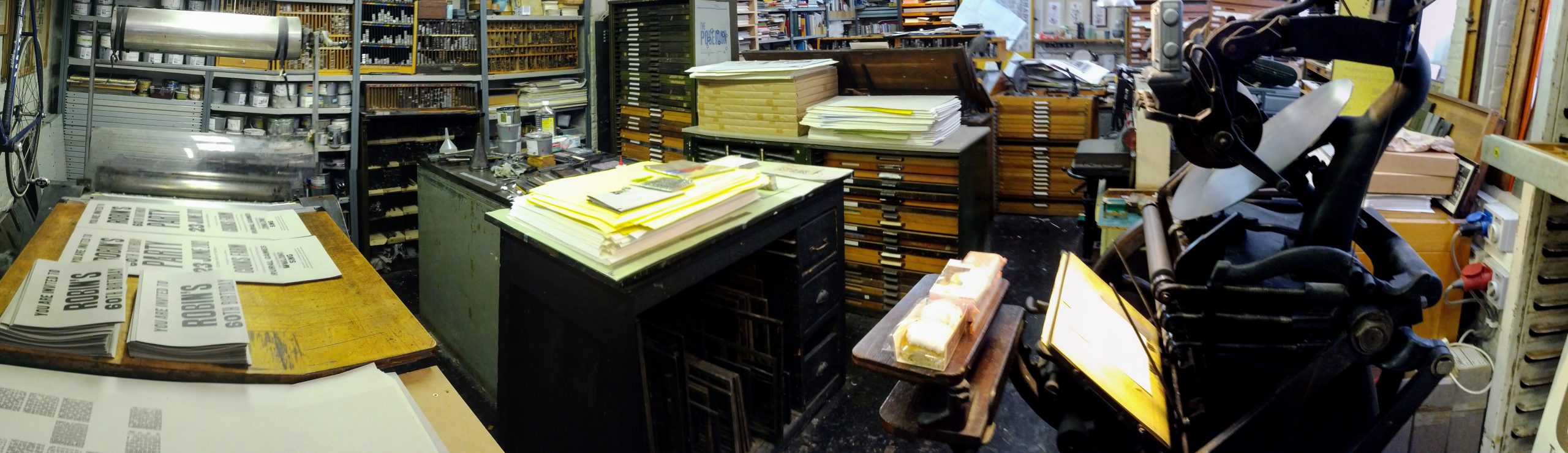
The firm had cast type using Monotype machines, housed in a cramped green metal building in Risca, South Wales. Mr Williams — at one time an apprentice at Riscatype — let me know that theirs was one of the largest foundries in the world with 11 Monotype Supercasters and 20 Monotype Composition casters. Only Mouldtype could match their quality.
Steve Nash Recollections
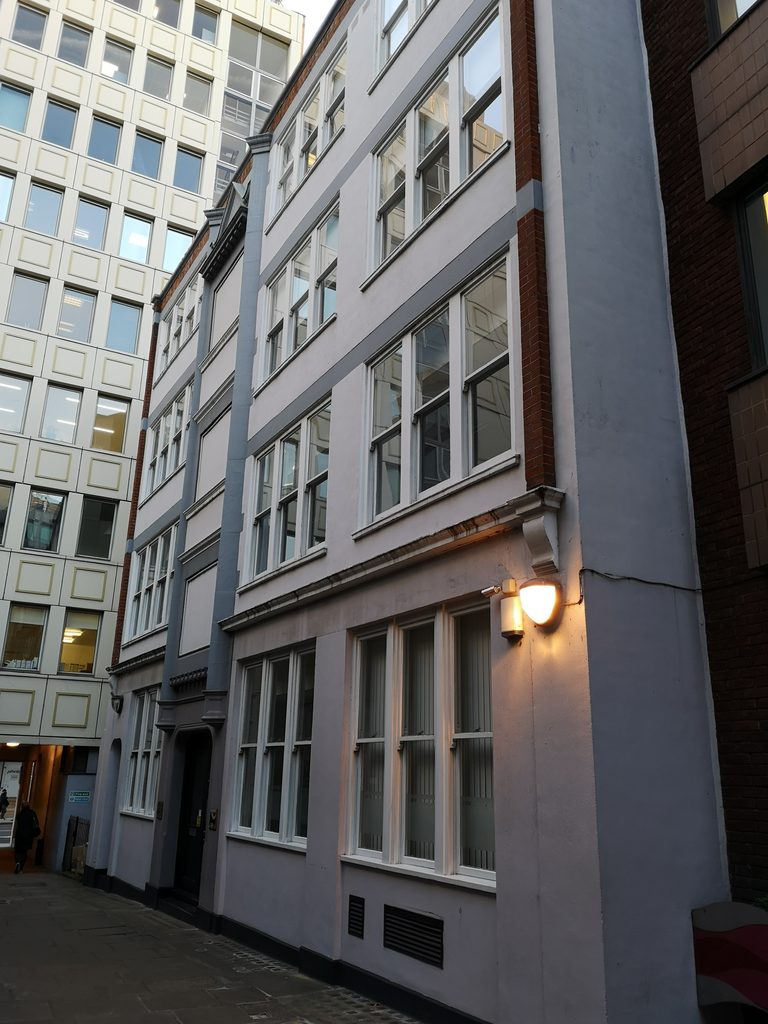
Your photo [above] is indeed the entrance to the London Office. Red Lion Court EC4.
The ground floor entrance led to a “Trade Counter” manned by Joe Pegg, Charlie someone and Joe Beaumont, who handled the orders which included the famous “sorts” service — maybe a ref to “liquorice allsorts” as the requests came in thick and fast (inc an all night service obviously supplying to national newspaper deadlines) for orders large and small of type that was either needed simply because they’d run out of a particular fount; maybe just a Cap H, an accented character, maybe just some ‘screamers’ (exclamation marks!) or for whole blocks of founts.
These piles of heavy metal type filled the stock room next door manned by Peter Braithwaite. Next to that was the Despatch Department run by John Redding, another ridiculously busy area full to the ceiling with Postage and Rail (BRS) packages and shipments to and from the foundry in Risca, “Newport Mon” as it was known. Van drivers coming and going as well — anyway you get the picture. It was the heyday of the printing era of London and Fleet Street, and great old pubs and characters.
In your photo you’ll see the floors above — they housed the typesetting on one floor and the “casters” (typecasters that I recall were really loud in operation and you could hardly hear anyone above the constant din) on another floor above that.
For one day a week I was the most popular person in the whole of the building, as I toured the many departments with the wage packets (cash of course) having myself done all the calculations as official wages clerk. I was in trouble though if I got someone’s overtime wrong or overlooked their holiday pay! It was a useful manually calculated skill and long before computers, taught to me by “old man” Williams, father of the David I mentioned earlier. He was the London “big boss”, in his own plush office (with padded walls for soundproofing for board meetings) which opened out into the much smarter area of Crane Court, which today still runs parallel to Red Lion Court. Yendalls occupied the whole building front to back.
The Printing & Estimating manager who gave me my first job (as his assistant) was Peter Broughton, to whom I am eternally grateful and without whom I wouldn’t be typing this. Starting salary: Thirteen pounds, ten shillings per week. I was there from 1969–1973, when my brother lured me away by starting an advertising studio in the West End which needed an Office manager/Costing & Estimator — so it was a “no brainer” to carry my Yendalls experience forward, albeit sorry to leave Fleet Street and my workmates.
I often still visit the area and see the old offices, even if the local watering hole The Red Lion, long since demolished, is now just a memory of Friday nights.
I was saddened to read that Riscatype/Yendall And Co went into liquidation in 1984. On reflection, my guess on the source of your Mr Williams quote may have been Bryn Williams, who for many years was the Sales Director or possibly MD of the Risca foundry. I dealt with him via teleprinter* direct link between the Wales and London Offices along with another ‘big boss’ Jack Yendall. When “Mr Jack” as he was known got on the phone, or paid a visit to London, we all had to be on our absolutely best behaviour.
I’ll have a look to see if I can find my old book of typefaces. A collector’s item according to Google/AI. Hold my memories for now, I’d love to track down that book first…
*Teleprinter (now called a Vidiprinter or videprinter): They still as I’m sure you know use these on football scores being punched in live on TV from Press Offices/Agencies. It was always a nervy job having live chats with Risca as my every typing error (and obvious lack of speed) was cruelly exposed. That’s where I recall Bryn Williams, as he used it quite a lot (much cheaper than phone calls back then) and was miles faster than me and every time I had to reply, usually because our trained touch typist/receptionist was on her lunch break, I knew he was sitting there in South Wales thinking he should put the kettle on waiting for my message to finally arrive.
Credits
Thanks to Steve Nash for sharing his memories to publish here.
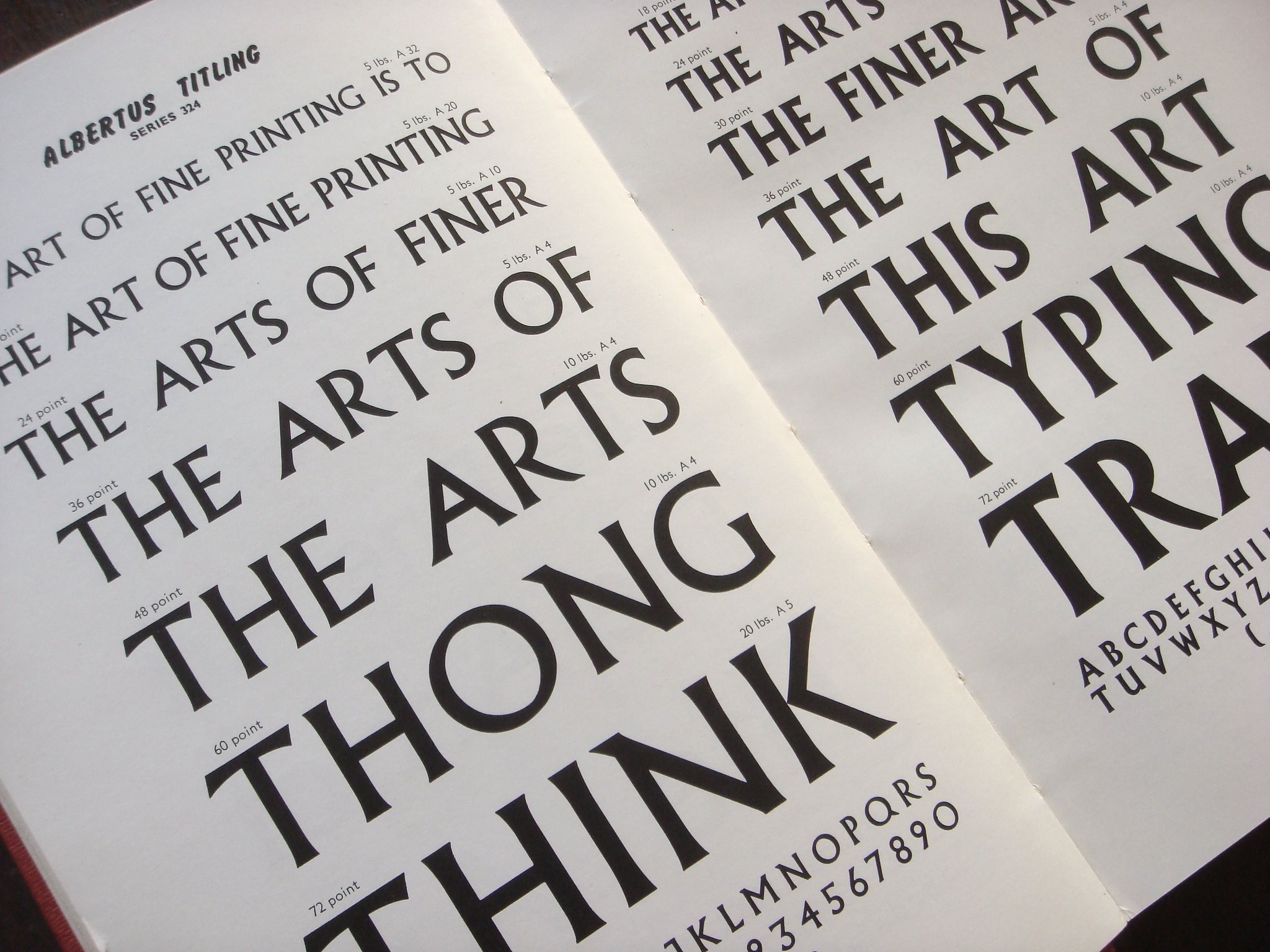
Header Image: “Riscatype type specimen book” flickr photo by Nick Sherman https://flickr.com/photos/nicksherman/8271679053 shared under a Creative Commons (BY-NC-SA 2.0) license