
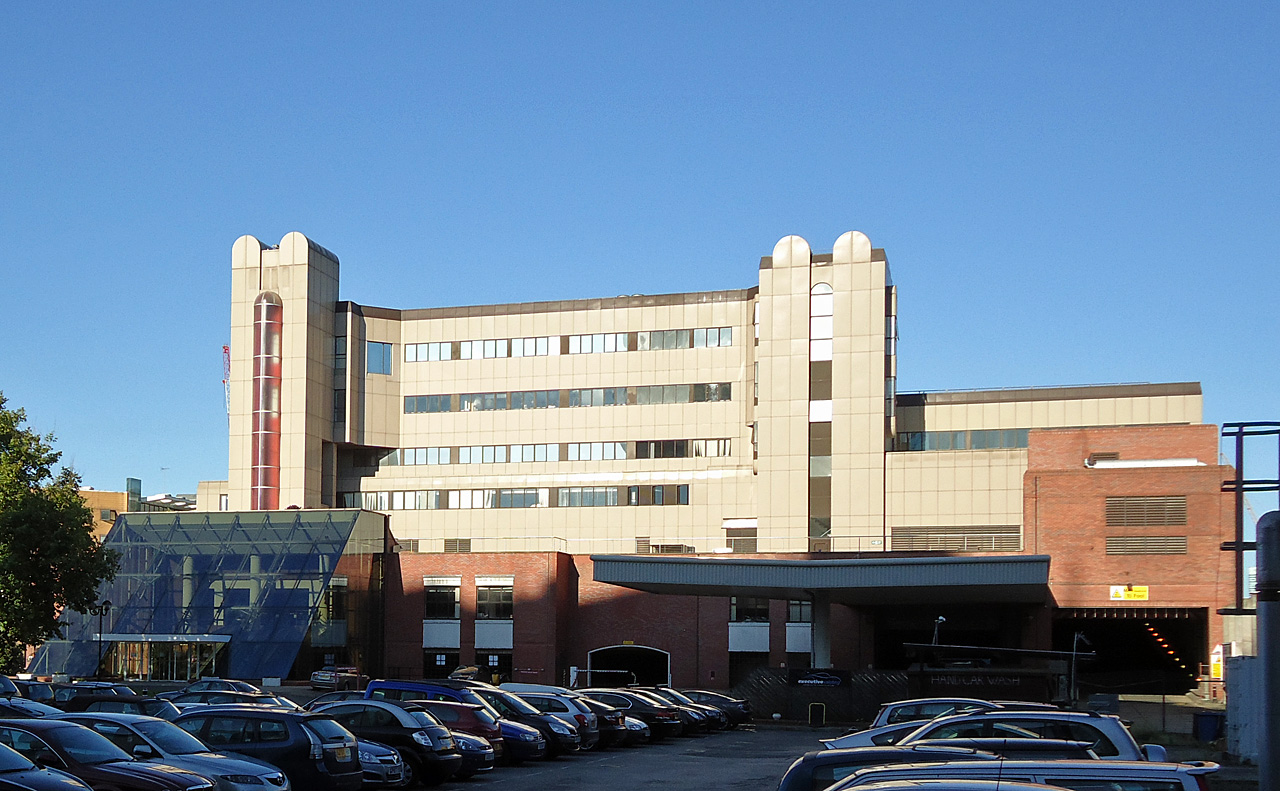
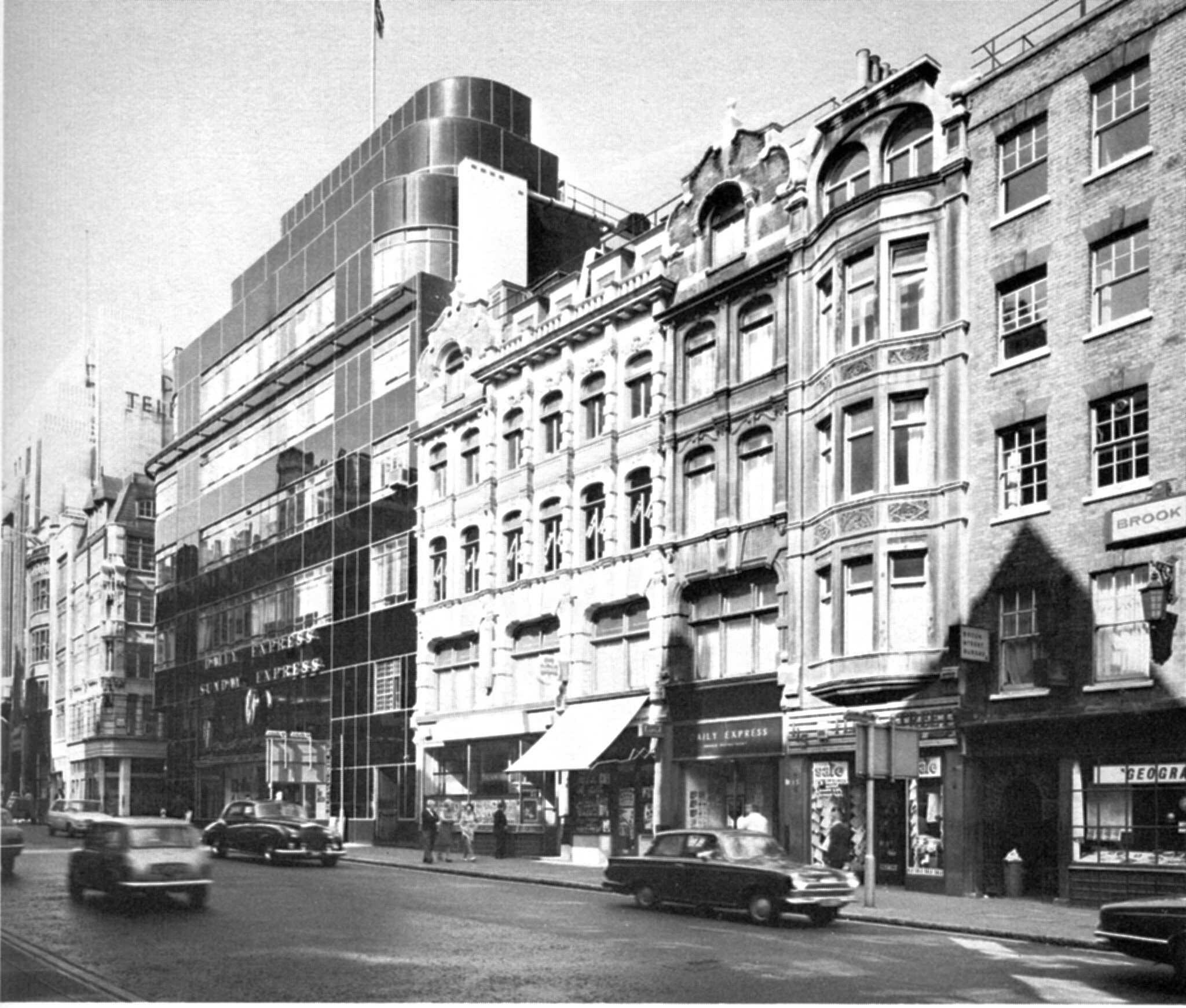
Fleet Street had always been the home of Britain’s newspaper industry. The emerging technology and anti-union government, combined with restrictive and unproductive union practices all came together in the mid 1980s. That recipe changed the face of Britain’s newspapers and Fleet Street forever.
Earnings and 1960s and 1970s Practices
Earnings for some trades in Fleet Street had been artificially inflated. When the Sunday Times moved to be printed at Thomson House in 1961, increasing circulation would have meant an additional machine — and men — were needed had they stayed where they were. As the newer presses could accommodate this extra work an agreement was reached that the Sunday Times would pay the equivalent of the extra crew to the Father of the Chapel to distribute among existing printers. In the early 1960s the Telegraph had an official manning figure of 306, and the 252 men who worked shared the other 54 pay packets between themselves.
Over at the Sunday Mirror, an agreed system of breaks for warehouse work was developed with one hour break per three hours worked. This was enforced through one-off, two-on principles. To meet peak demand the ‘off’ man could be asked back and paid at the overtime rates. This was called blow.
Restrictions on admittance to a Union and demand for workers meant some papers were employing craftsmen casually that might also be employed elsewhere — double working, was especially prevalent on Sunday titles for those men working on daily newspapers.
Finally, fat, was the practice of paying compositors for setting work for which customers had supplied their own blocks. Management had been able to ‘negotiate’ that to allow plates to be sent direct to the newspaper, compositors should not be disadvantaged and so they would be paid as if they had set those advertisements themselves.
Strong unions, keen to preserve their craft and limit the supply of qualified workers (usually limited to sons of members) were pitted against poor management unable to negotiate well for the commercial benefit of their newspapers.
Wapping Dispute
By the early 1980s technology had advanced to allow for electronic composition of newspapers and more flexible printing. This had a commercial upside of allowing journalists to enter copy electronically and head to the press with minimal intervention, rather than through the myriad trades and traditional printing practices then in use.
Murdoch was keen to capitalise on Margaret Thatcher’s anti-Union laws and take advantage of these technologies so built and equipped a brand new plant at Wapping under the cover story that it would be used for a new newspaper, The London Post. This fit-out work was completed by members of the Electrical, Electronic, Telecommunications and Plumbing Union (EETPU) — this became the AEEU, Amicus and finally merged in to Unite.
Murdoch offered traditional trades redundancy payments to move to modern methods of production, and unions would not accept the offer. On 24 January 1986 the unions went on strike. News International issued dismissal notices for the 6,800 employees involved content that the Wapping plant would be used for the production of their titles — the London Post was a cover for the move of this work.
At the new plant in Wapping, some 670 employees were used to publish and print what had been produced by 6,800 people at Fleet Street.
Print union demonstrations were large with 1,200 arrests during the year-long dispute. Police were used to maintain access to the premises as strikers filled Pennington Street and installed themselves at Virginia Street and The Highway. Drawing in other unions, British Rail union members were encouraged not to ship newspapers. Murdoch responded by switching distribution from rail to TNT. Unions were keen to stress their anti-violence stance, but police ended up using riot shields at some points.
No days of production were lost at Wapping and the dispute ended on 5 February 1987.
Summary of Trades and Unions
Management: exist to make money, not necessarily the people who direct other to work.
Content [‘Copy’]: is usually created by National Union of Journalist (NUJ) members. If this was delivered by telephone, this was transcribed by National Society of Operative Printers and Assistants (NATSOPA) members. If the copy arrives by scanner or telegraph, the National Graphical Association (NGA) members would handle this.
Editing is completed by NUJ members, but any darkroom work is done by NATSOPA members. Except if those photos were received by wire or radio, then NGA members develop those.
Composition was completed by the NGA. This was checked by readers, also in the NGA, supported by assistants [‘copy holders’] who were in NATSOPA. The person pulling the proofs from type for the readers would have been a member of the Society of Graphical and Allied Trade (SOGAT). Where printing blocks were needed, these were done by members of the Society of Lithographic Artists, Designers and Engravers (SLADE).
The NGA and NUJ come together at the stone, with the NUJ member, a stone-sub, standing on one side, and the NGA member on the other assembling pages. These pages were turned in to stereotypes by MGA members who were formerly in the National Society of Electrotypers and Engravers.
Printers would belong to either NGA or NATSOPA, which was formed from the London Machine Managers Society. Distribution would be by SOGAT members.
Supporting the whole enterprise would have been members of electrical and engineering staff, electricians belonging to the Electrical Trades Union (ETU) and engineering staff being member of the Amalgamated Union of Engineering Workers.
Union Organisation
Each union in each newspaper forms a ‘Chapel’, with an elected ‘Father of the Chapel’ (or Mother as NATSOPA and NUJ admitted women). This role is akin to a Shop Steward. The senior Father of the Chapel at the newspaper is title ‘Imperial Father’.
Year and Era
1986 / Modern
Object Type
Other Objects
Location
Pennington Street, Wapping
Sources and More Information
- Cleverley, Graham, The Fleet Street Disaster, 1976
An Appeal
If you have something linked to this object, please get in touch.
Header Image: News International Building, Wapping cc-by-sa/2.0 — © Roger Jones — geograph.org.uk/p/2478979