
Beginnings
Miller and Richard were once such a force in UK typefounding that Stephenson, Blake were concerned that they could become a significant threat to them should they merge with Caslon. Whether it’s their closure more than seventy years ago, or their size, M&R are not quite as well represented on the web as other UK founders.
The firm was founded in 1809 by William Miller, formerly works manager of Alexander Wilson’s foundry. The first specimen of types was issued in 1809 with a further specimen of 28 pages being issued in 1813. When Miller’s son-in-law, joined the firm as a partner in 1832 the firm became ‘William Miller & Co.’ for a period, but reflecting Mr Richard’s role, it became ‘Miller & Richard’ in 1838.
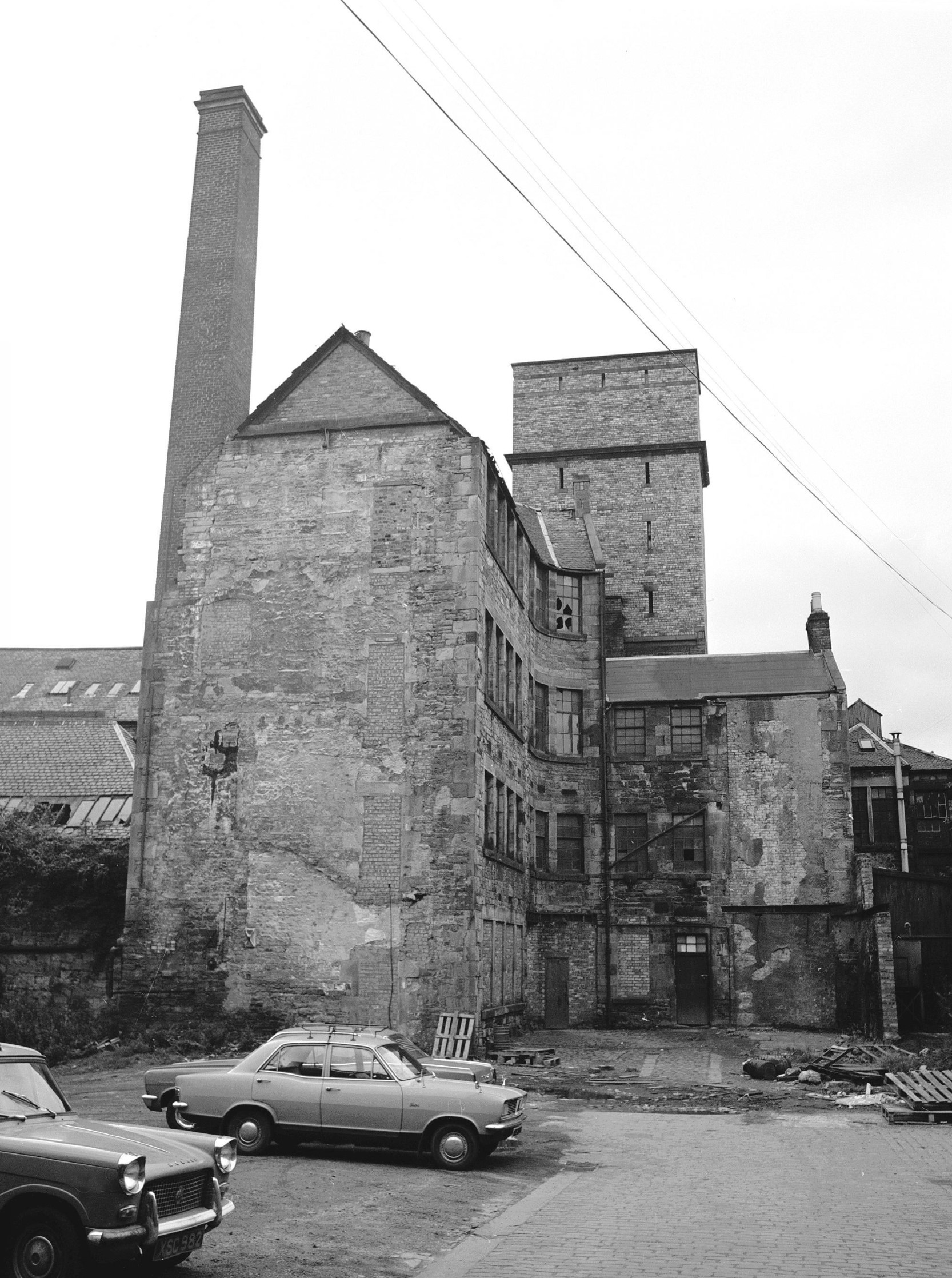
The firm was based in Reikie’s Court, a collection of buildings off 65 Nicholson Street, Edinburgh. As the firm grew their footprint grew, and took in other buildings adjoining the court.
M&R adopted the 1838-invented Bruce Pivotal Type Caster in 18491. They also supplied a portion of the massive amount of type needed for the Official Catalogue of the Great Exhibition of 1851. This type was the smallest cut in England at the time being ‘Brilliant’, or 4pt.
Three-hundred and thirty-eight tons of paper supplied by Spicer Bros nearly forty-eight tons of new type cast by Besley, Caslon, Clowes, Figgins and Miller & Richard in six weeks and nearly three tons of Shackell and Edwards’ printing inks were consumed in the production of what must have been the largest printing job of the century, the thirty or so official publications on the Great Exhibition.
Hasler, Charles, Penrose Annual, No. 45, 1951, The Official Catalogues of the Great Exhibition of 1851.
Incidentally, Miller and Richard’s Egyptian was one of the resurrected block faces used for the Festival of Britain in 1951.
Typographical Influence
Modern or Scotch Roman
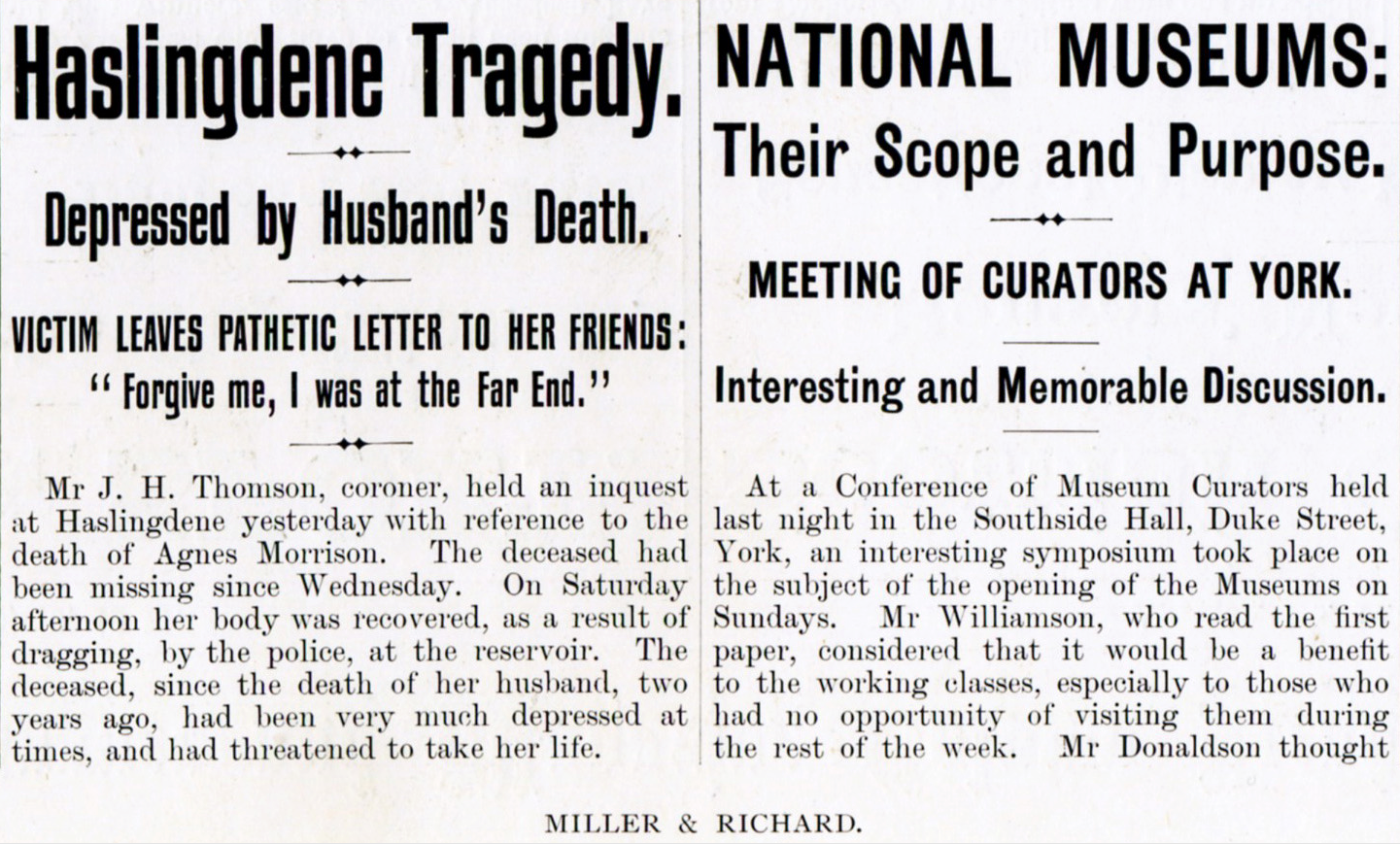
Richard Austin cut early and distinctive types first shown in William Miller’s specimen books from 1813. These typically had a strong vertical axis, and a contrast between strokes. Unlike Bodoni, for example, they also had bracketed serifs, rather than sharp lines.
This style of type was the dominant look for newspaper and book composition for a long period, with M&R themselves providing the relief from these Scotch Romans with their ‘Old Styles’ from about 1860.
Such was their domination in newspaper types, that it was 1929 before The Times looked to refresh the face they used. This was an 1850 Miller and Richard face that had been re-cut by Monotype (as Monotype Series No. 7) in 1908. The lead for this re-work, Stanley Morison, was determined to keep the retain the proportions of this M&R design2.
Old Style
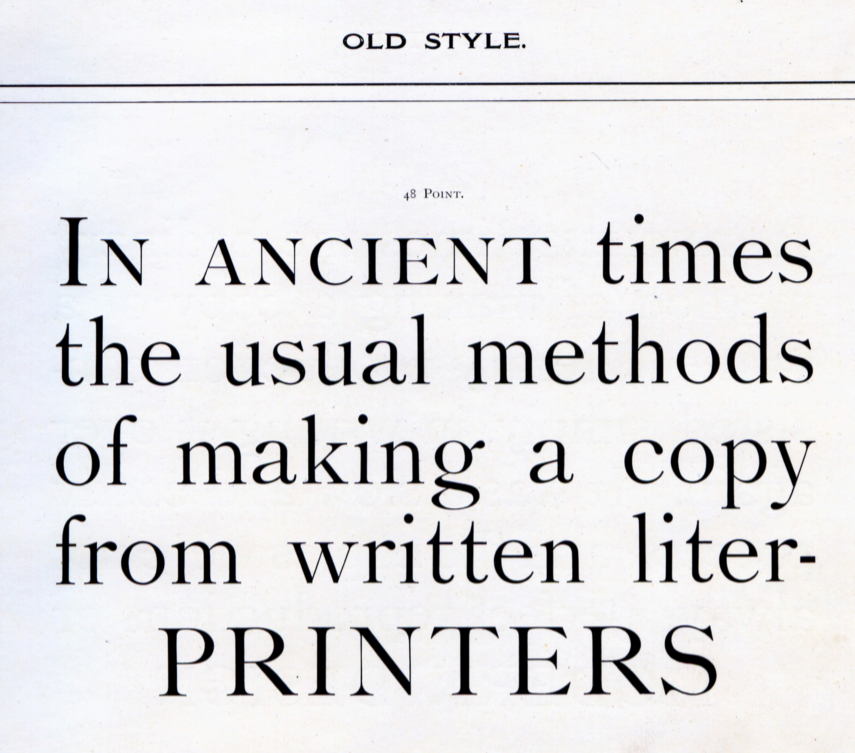
In 1860 Miller and Richard issued Old Style. It had been cut by Alexander Phemister and was shown in eight sizes from pearl (5pt) to great primer (18pt). The Miller and Richard Old Style was a great success. As other founders saw the demand this was driving, they each cut their own particular versions.
“they [Miller & Richard] have endeavoured to avoid the objectionable peculiarities, whilst retaining the distinctive characteristics of the mediæval letters”
Quoted in Monotype Recorder, September — December 1931
Recent/20th Century
Having made a significant typographic impact on the face of Britain’s printing, M&R, in common with other British typefounders, struggled with competition from increasing mechanisation as the linecasting and Monotype machines took the place of metal types cast individually and assembled by hand.
The firm changed shape in 1926 when they approached Stephenson, Blake of Sheffield to ask them to cut woodletter in their Sheffield woodworking shop that had been established in 1907. Just over ten years later, Miller and Richard closed their London warehouse in Water Lane, Ludgate Hill. This had been their London base since 1885.
Roy Millington suggests3 that “[M&R] gradually transferred their casting operations to Sheffield” from 1938, so I am unsure as to what specifically was being made in Edinburgh in these 14 years between 1938 and final closure.
On Sunday 9th of December, 1951, Alan Richard Miller, the sole remaining partner of the Miller & Richard business passed away at a nursing home in Edinburgh. Miller had served with the 10th Royal Scots in the first World War with whom he had been gassed, and he was noted as a proficient farmer, fisher and shot.
The small woodworking items, reglet and furniture remained with a local firm, but Stephenson, Blake took delivery of most of the M&R matrices in 1952. Only a few of Miller and Richard’s faces were issued by Stephenson, Blake and it is reported that most of the mats were unusable4.
References
- Wallis, L W, (1999) Journal of the Printing Historical Society: Legros and Grant: The Typographical Connection
- Monotype Recorder, (Spring 1936)
- Millington, Roy, Stephenson Blake, Last of the Old English Typefounders
- Jones Holt, Nicholas, (1973) Letter in Small Printer
Year and Era
1832 / Craft
Object Type
Types and Casting
Location
Reikie’s Court off Nicolson Street, Edinburgh
Sources and More Information
An Appeal
If you have something linked to this object, please get in touch.
Header Image: “Miller & Richard” flickr photo by LarsSchwarz https://flickr.com/photos/bitrocker/9506458645 shared under a Creative Commons (BY-NC-SA) license