Tag: Newspaper

  • The Oxford Gazette

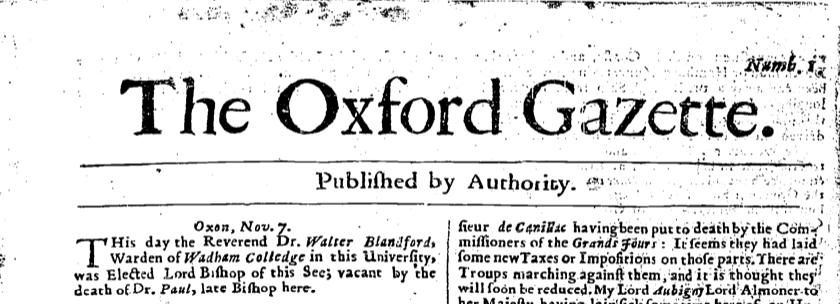
    The Oxford Gazette

    Lon­don in 1665 was an unhap­py place. Bubon­ic place was sweep­ing Lon­don killing 100,000 peo­ple — then a quar­ter of Lon­don’s pop­u­la­tion — over 18 months. King Charles II fled Lon­don for Sails­bury, but when cas­es of the Plague were found in Sail­bury the King, his Court and fam­i­ly moved to Oxford in Sep­tem­ber 1665.

    “Bring Out Your Dead” This image comes from Well­come Images, a web­site oper­at­ed by Well­come Trust, a glob­al char­i­ta­ble foun­da­tion based in the Unit­ed King­dom, CC BY 4.0

    News sheets could come from Lon­don but Charles was keen not to han­dle papers that had come from the plague-rid­den city. He ordered that a new­pa­per be print­ed at the Uni­ver­si­ty Press.

    The paper was print­ed under the author­i­ty of Lord Arling­ton, a states­man who had fought for Charles and, in 1665 was the Sec­re­tary of State for the South­ern Depart­ment. This role was respon­si­ble for South­ern Eng­land, Wales, Ire­land, but also the US Colonies and Roman Catholic and Mus­lim coun­tries of Europe. While print­ed under Arling­ton’s author­i­ty, the effort of the enter­prise was del­e­gat­ed to Joseph Williamson, one of Arling­ton’s under-Sec­re­taries.

    This day the first of the Oxford Gazettes come out, which is very pret­ty, full of newes, and no fol­ly in it. Wrote by Williamson.

    Diary of Samuel Pepys, 22 Novem­ber 1665

    The paper was a sheet 11″ × 6″ print­ed on both sides, with the back page of that first issue was print­ed by Leonard Litch­field who was Print­er to the Uni­ver­si­ty, but pre-dat­ing the first cen­tral­ly-pro­vi­sioned print­ing works for the Oxford Uni­ver­si­ty Press. It was pub­lished twice a week on Mon­days and Thurs­days.

    The Gazette was nev­er intend­ed for gen­er­al cir­cu­la­tion and with a tar­get of offi­cials, the legal pro­fes­sion and mer­chants. Cir­cu­la­tion was around 6,000 by 1704 and copies pur­chased for Gov­ern­ment use out-num­bered those sold to the pub­lic.

    The Gazette drew its con­tents from gen­tle­men, trades­men, provin­cial offi­cials, and lat­er from the Privy Coun­cil, the Trea­sury, the Admi­ral­ty and the War Office. Although news came from many quar­ters, it some­times was doc­tored or ​‘masked’.

    James Thomas, The Local His­to­ri­an, 1982

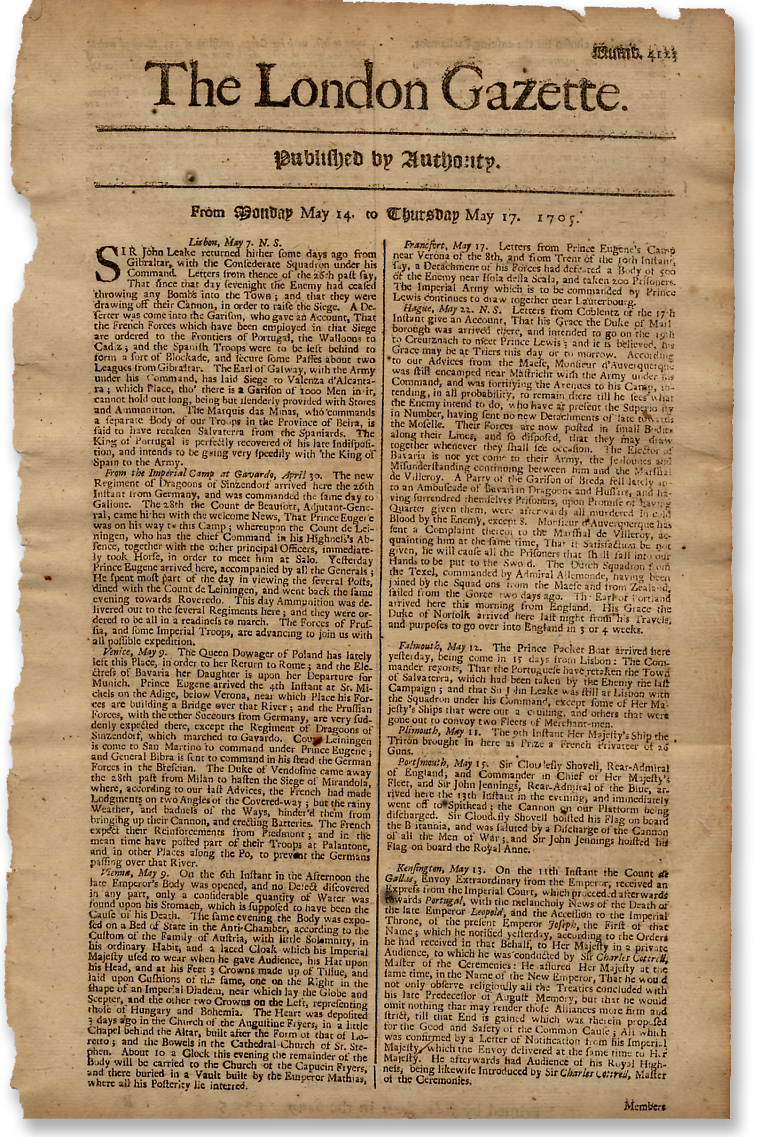
    By Feb­ru­ary 1666, the name had changed to the Lon­don Gazette for issue 24 onwards.

    The Lon­don Gazette, 1705, Pub­lic domain, via Wiki­me­dia Com­mons

    The Lon­don Gazette is still pub­lished today as the offi­cial jour­nal of record, with a require­ment for over 450 types of notice to be record­ed in the Gazette. The Gazette makes the claim that theirs is the old­est con­tin­u­ous­ly pub­lished news­pa­per in the UK, with Berrow’s Worces­ter Jour­nal being the next-rel­a­tive new­com­er from 1690.

    Year and Era

    1665 / Craft

    First pub­lished 7 Novem­ber 1665

    Object Type

    Pub­li­ca­tion

    Location

    Oxford


    Sources and More Information

    • Thomas, James (Novem­ber 1982), The Local His­to­ri­an, British Asso­ci­a­tion for Local His­to­ry
    • Lon­don Gazette site

    An Appeal

    If you have some­thing linked to this object, please get in touch.
  • Times Mobile Printing Unit

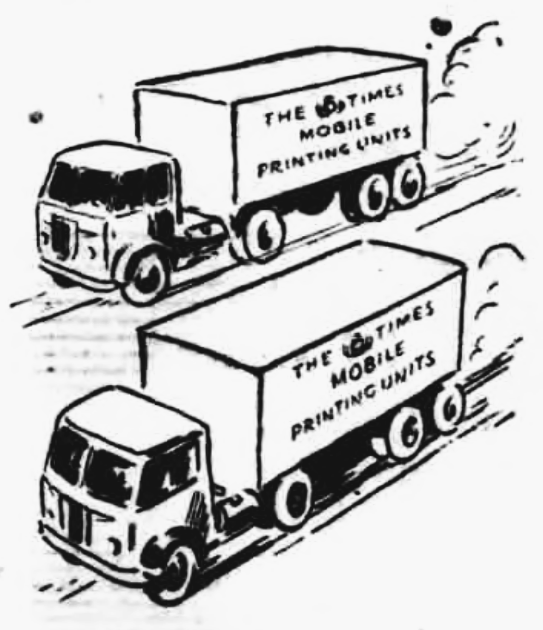
    Times Mobile Printing Unit

    Fol­low­ing World War II, the spec­tre of nuclear attack faced the UK and civ­il defence organ­i­sa­tions were estab­lished with a changed focus of the after­math of such an attack. It seems fair to assume the The Times’ devel­op­ment of a mobile print­ing unit was dri­ven in part by the need to main­tain con­ti­nu­ity of even a small part of their work, just as the BBC and oth­ers were devel­op­ing wartime broad­cast­ing ser­vices.

    From a print­ers point of view, the way they approached the chal­lenge, the equip­ment select­ed and the way it was test­ed is fas­ci­nat­ing.

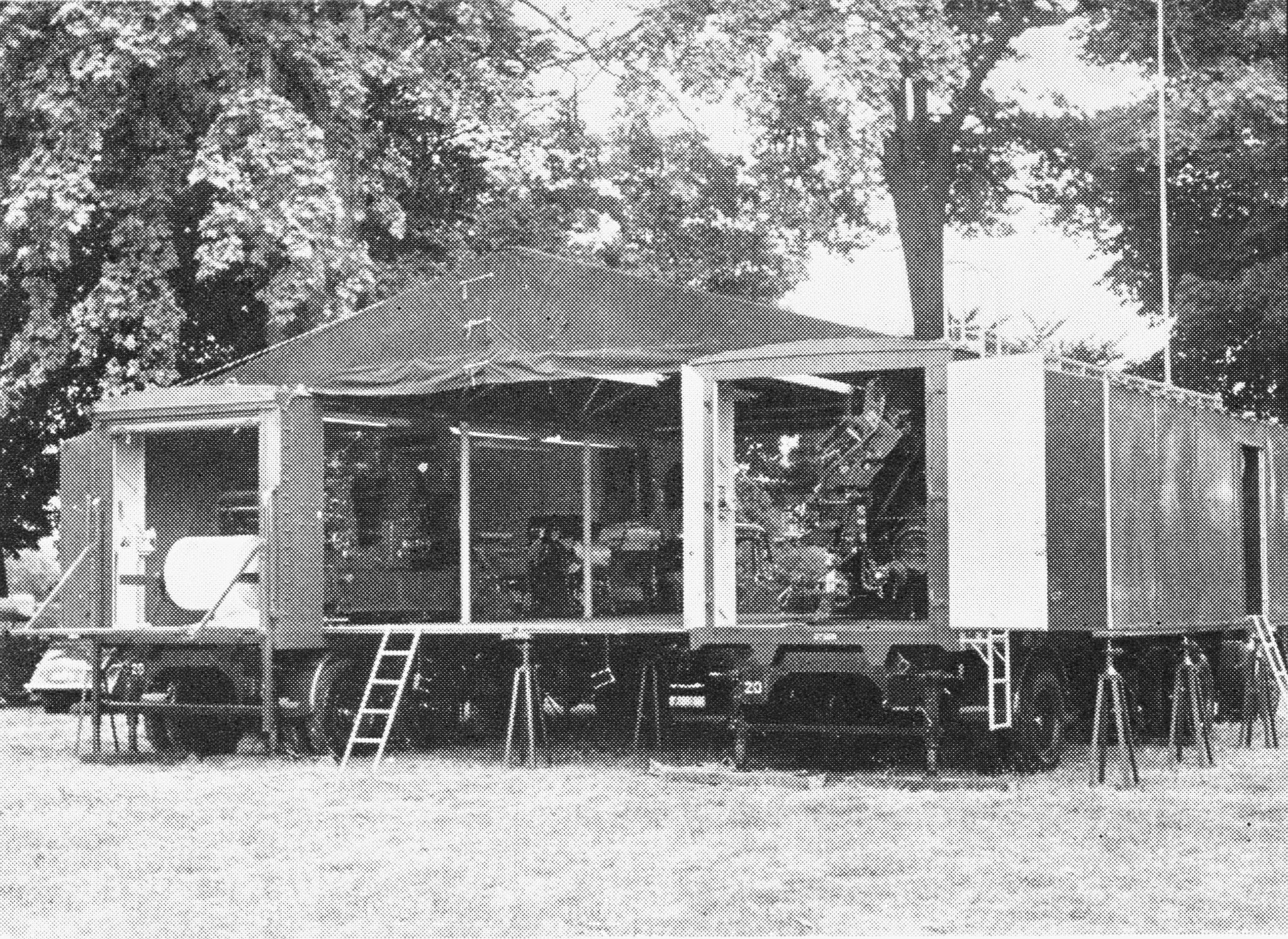
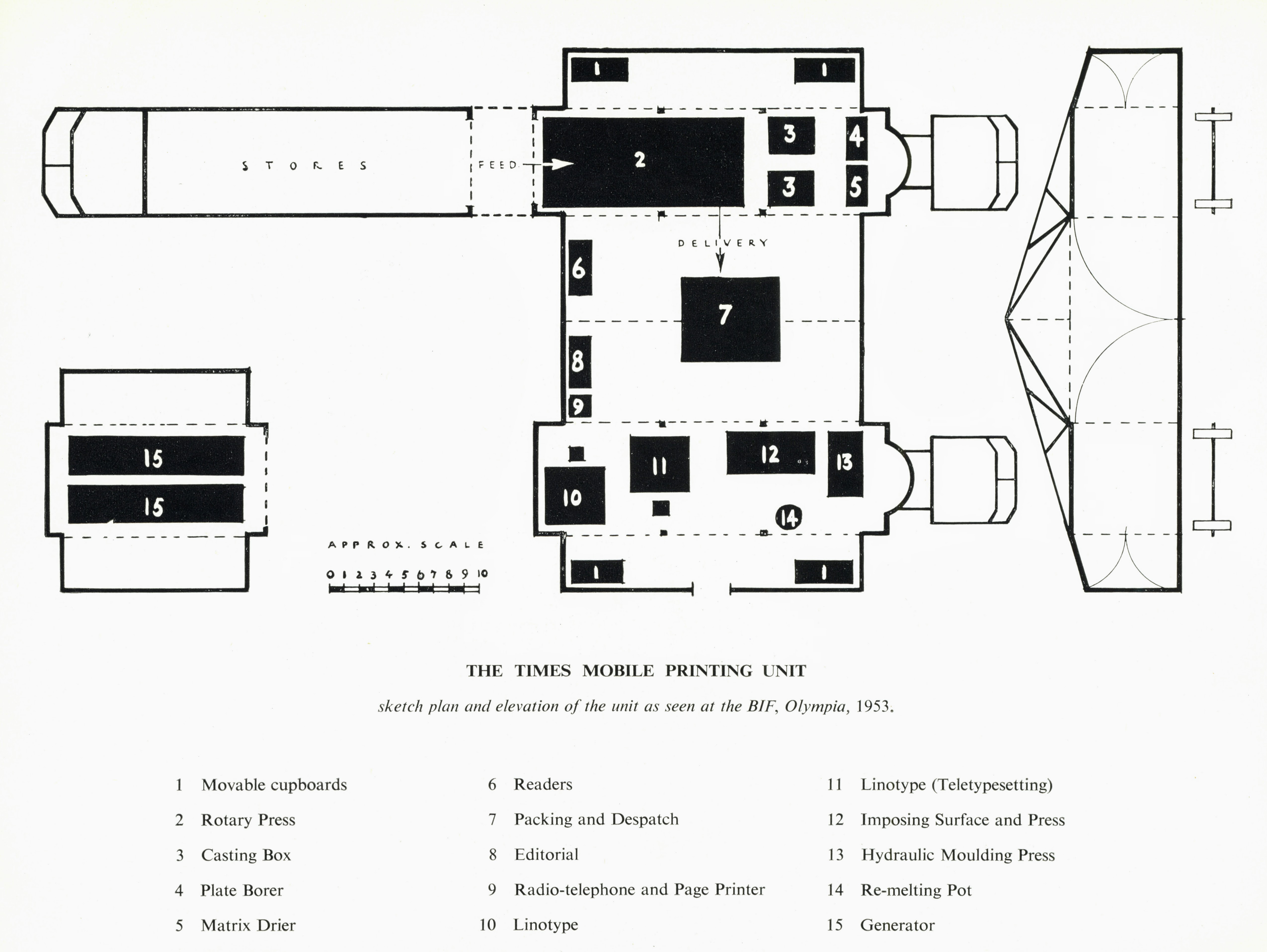
    It appears that the plan for a mobile works was cre­at­ed in 19511, and was shown off to the pub­lic at the British Indus­tries Fair at Olympia in 19532.

    “The Times” Is the only dai­ly news­pa­per in the Eng­lish lan­guage with an unbro­ken con­ti­nu­ity for the past 168 years, and the unit is built to ensure pro­duc­tion and pub­li­ca­tion even if the main print­ing house should be destroyed, for instance by ene­my action.

    Der­ry Jour­nal, 20 Novem­ber 1953

    Transport and Accommodation

    The full com­ple­ment of trans­port and accom­mo­da­tion was made up of —

    • 2 x Ley­land Beaver trac­tors each haul­ing a ​‘semi-trail­er’. This car­ried the main pro­duc­tion parts of the news­pa­per.
    • A Den­nis Lor­ry hold­ing stores of paper and ink, with a trail­er con­tain­ing a diesel engine and gen­er­a­tor to pow­er the print­ing works.
    • 4 x Lan­drovers, for edi­to­r­i­al staff, and to dis­trib­ute the print­ed paper. Once Lan­drover was equipped with radio equip­ment to link with the print­ing works.

    The whole oper­a­tion could be assem­bled by a crew of six to be ready in two hours.

    The process of get­ting ready was to align the two trail­ers, flip down the size walls so they con­nect­ed with each oth­er (pro­vid­ing an open space between the two trail­ers held on jacks), and open­ing the oth­er side of each trail­er. The main void between the two trail­ers was cov­ered with an alu­mini­um frame, heavy can­vas cov­er­ing and strip light­ing installed. In terms of being ​‘bat­tle-ready’, the British Print­er not­ed that ‘…con­struc­tion is such that an effi­cient ​‘black-out’ is obtained.’

    Printing Equipment

    The main press was a Timp­son Rotary press, spe­cial­ly designed and built by them with an out­put at max­i­mum speed of 12,500 copies per hour. Type­set­ting was through two Lino­type machines (although the Read­ing Stan­dard sug­gest­ed Mono­type machines were used). One Lino­type was equipped with tele­type­set­ting equip­ment to be used in con­junc­tion with the radio equip­ment on one of the Lan­drovers.

    Of course, to get from the Lino­type slugs to the rotary press required that a flong be cre­at­ed which was then used to cast a 5/16th of an inch curved met­al plate for use on the rotary press.

    The Emergency Newspaper and Typography

    The edi­tion of The Times was to be a 16″ × 10″ news­pa­per of eight pages, each being four 13em columns wide sep­a­rat­ed by brass col­umn rules. The Lino­type machines includ­ed 7pt and 9pt Times Roman and the asso­ci­at­ed Ital­ic. Head­lines were set in 10pt or 12pt Times Heavy Titling. Since so much extra equip­ment would be need­ed to repro­duce pho­tos, no pro­vi­sion was made for halftones or oth­er illus­tra­tions.

    Testing or Exercising

    The set-up pro­duced news­pa­pers as sou­venirs of the British Indus­tries Fair in 1953, but more curi­ous is the local news­pa­per report from Read­ing in 1955.

    The Read­ing Stan­dard report­ed that in the tiny vil­lage of Sul­ham­stead the whole col­umn of vehi­cles made their way to a farm­yard to set up overnight dur­ing a news­pa­per strike. At the week­end, ​‘boys from Pang­bourne Nau­ti­cal Col­lege and Brad­field Col­lege’ were invit­ed to see the Mobile Print­ing Works in action and they too were pre­sent­ed with news­pa­pers as sou­venirs of their vis­it.

    Final Reflections

    The Times took seri­ous­ly its role as a news­pa­per of record for the UK, and Lon­don’s sus­cep­ti­bil­i­ty to the Blitz and the pos­si­bil­i­ty of nuclear war meant the paper had to look at ways to ensure con­ti­nu­ity of pro­duc­tion.

    While I’ve list­ed the loca­tion as Print­ing House Square, the then-home of The Times, it would have been fool­ish to keep this reserve print­ing plant in such a vul­ner­a­ble loca­tion. It’s intrigu­ing as to where this works was kept and how long for. By 1968 the Indus­tri­al Civ­il Defence Soci­ety had been dis­band­ed and the BBC was well under way with prepa­ra­tions to inform in the case of war. Espe­cial­ly odd is the absence of a nation­al ref­er­ence to the test­ing of the plant in a farm­yard in Berk­shire in 1955.


    References

    1. A News­pa­per on Wheels — Times Mobile Print­ing Unit in Berks Farm­yard (20 May 1955), The Read­ing Stan­dard.
    2. A News­pa­per Office on Wheels — The Times Mobile Print­ing Unit (July 1953), Print In Britain.


    Year and Era

    1951 / Mod­ern

    Object Type

    Oth­er Objects

    Location

    Print­ing House Square, Lon­don


    Sources and More Information

    • The Times Mobile Print­ing Unit, Print In Britain, June 1953

    An Appeal

    If you have some­thing linked to this object, please get in touch.

    Head­er Image: The Der­ry Jour­nal, 30 Novem­ber 1953

  • GreatBigStory.com: The Saguache Crescent

    GreatBigStory.com: The Saguache Crescent

    From greatbigstory.com –

    “The Saguache Cres­cent” news­pa­per in Saguache, Colo., has been print­ing its news the same way since the 1800s. Lay the let­ters. Ink. Press. Pub­lish­er Dean Coombs’ fam­i­ly has had the busi­ness for three gen­er­a­tions, and has helped print out the week­ly broad­sheet on a lino­type since he was 12 years old. See how the news is made the hard way.

    A love­ly video of news­pa­per.

  • Yorkshire Film Archive: Printers’ Ink

    Yorkshire Film Archive: Printers’ Ink

    A won­der­ful film from the York­shire Film Archive of the Tod­mor­den News.  While much is devot­ed to the news gath­er­ing process, there’s a linecast­er of some sort and a Cos­sar Press to do the hard work of print­ing.

  • The Wipers Times

    The Wipers Times

    The BBC will broad­cast a pro­gramme detail­ing the Wipers Times, a trench mag­a­zine made by sol­diers at Ypres in World War I.  I under­stand Tim Hon­nor’s Arab will have star billing!