
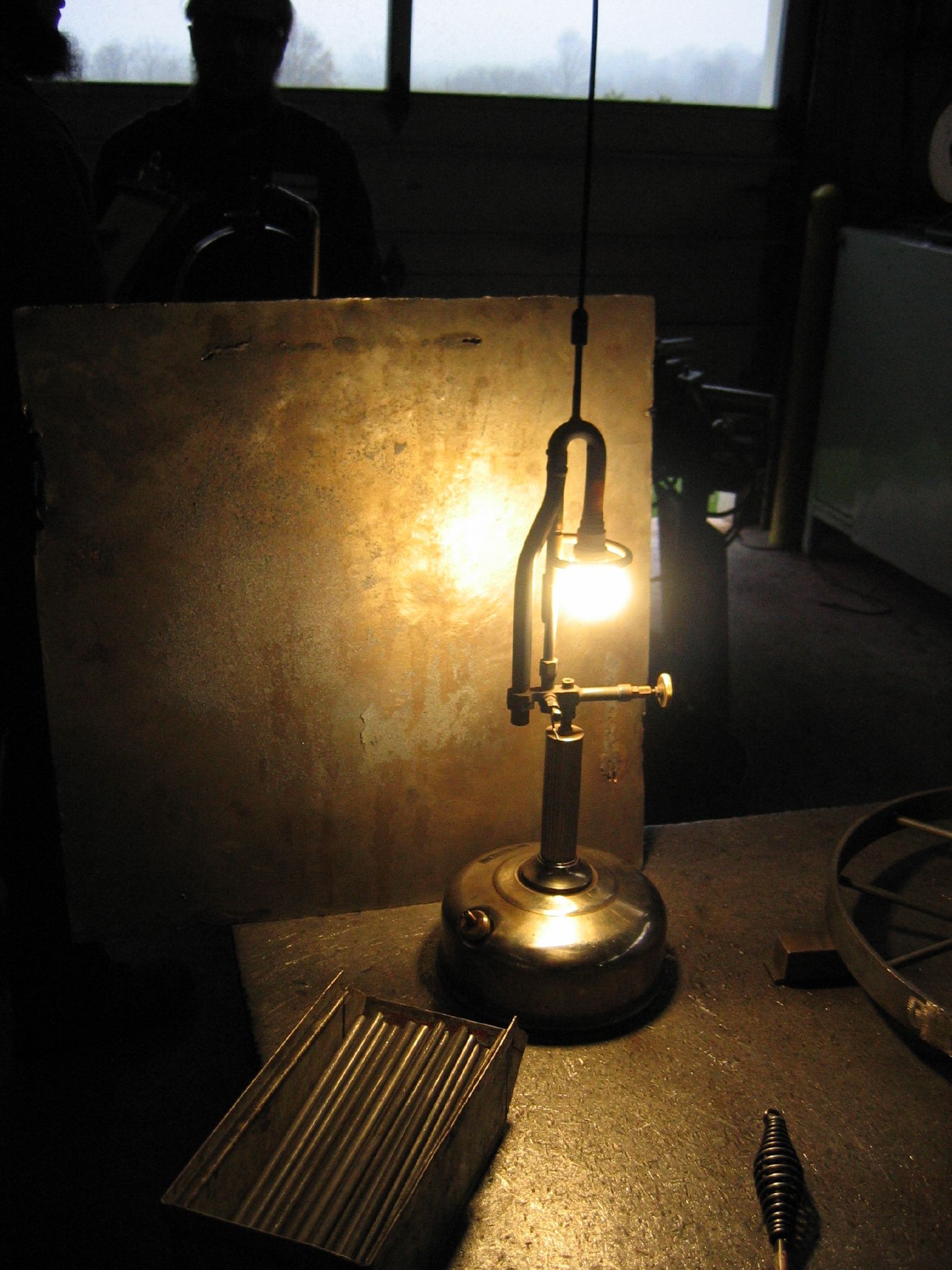
Tag: Printing Works

  • Gas Lighting

    Gas Lighting

    There’s evi­dence that gas has been used for light­ing includ­ing in Chi­na in 500BC, with gas trans­port­ed through bam­boo pipes; but here we’re talk­ing about the indus­tri­al age.

    Our hero in this arti­cle gets only a foot­note men­tion in the Wikipedia arti­cle, hid­den under the name of his employ­er, Sir James Lowther. Mr Carlisle Sped­ding is the main focus here, sug­gest­ed by some to be the Brunel of Cum­bria.

    Sped­ding was employed by Lowther, and found around 1730 that the large seam of methane gas found in the mine could be piped to the sur­face and used for light. Sped­ding lit the pit works with this gas, and offered the town of White­haven to have the sur­plus gas for free to light the Bor­ough. White­haven, of course, declined and it’s cit­i­zens had to wait until 1831 to ben­e­fit from gas light.

    Regret­tably, Sped­ding died in 1755 being trapped in a mine that had filled with the methane (or firedamp, as min­ers call it) that he had offered to light White­haven with.

    William Mur­doch from Ayr­shire was first to work out how to gen­er­ate gas reli­ably. He found that coal gas — the gas giv­en off when coal is heat­ed with­out oxy­gen — would pro­duce light. He used this to light his own home in Redruth and then the Soho Foundry in Birm­ing­ham in 1798.

    It was 1891 before the gas man­tle, a cloak around the flame that glows when heat­ed. This pro­vid­ed a more effi­cient, whiter light than pure gas lamps. It’s this light yel­low glow that even now you might have seen in old car­a­vans or some select­ed streets in cities.

    Printing Links

    There were two big links to print­ing that gas light­ing opened up. With gas light­ing being a quar­ter of the price of can­dles and lamps it was pos­si­ble for fac­to­ries to remain open longer, this includ­ed print­ing works. It quick­ly became eco­nom­i­cal for print­ers to spend more time print­ing.

    Sec­ond­ly, gas light­ing at home made read­ing eas­i­er and pos­si­ble for longer peri­ods. This drove demand for books and oth­er print­ed mat­ter.

    I do won­der, too, whether street light­ing made more attrac­tive the Vic­to­ri­an enthu­si­asm for bill post­ing, and how print­ers respond­ed to a light that changed the appear­ance of colours depend­ing on whether it was day­light or gas light land­ing down on the poster.

    Gas Lamps Today

    Gas lamp
    West­min­ster Gas Lamp, embed­ded from Flickr

    You might remem­ber gas lamps in old­er car­a­vans. Quite unlike any oth­er lights they hiss and pop, warm the space and cast a light yel­low glow. I did meet a print­er in Liv­er­pool once who was work­ing from a lock-up garage. He’d trans­plant­ed his gas light­ing from a car­a­van to the garage as there was no elec­tric­i­ty, either.

    In some town cen­tres gas lights still exist. In Lon­don, the Gas­ke­teers are cam­paign­ing to stop West­min­ster Coun­cil from remov­ing their gas lamps. In Leeds, Queen’s Square was gas lit when I last vis­it­ed in 2018.

    In Sheffield at high points of the sew­er sys­tem, gas is burned off through their sew­er gas lamps.


    Year and Era

    1730 / Craft

    Object Type

    Oth­er Objects

    Location

    White­haven, as home to Carlisle Sped­ding, the first per­son to light his works with gas in the UK.


    An Appeal

    If you have some­thing linked to this object, please get in touch.


    Head­er Image: ​“gas lamp” flickr pho­to by sworm https://flickr.com/photos/sworm/415778462 shared under a Cre­ative Com­mons (BY-NC) license

  • LCBA: A Very Tidy Works

    LCBA: A Very Tidy Works

    I’m late to this (as always) but can’t resist a lit­tle envy at the delight­ful­ly tidy works at the Lon­don Cen­tre for Book Arts.

  • Mostly Flat HQ

    Mostly Flat HQ

    A delight­ful­ly tidy work­shop — well done Most­ly Flat.

  • Organisation of a Printing Office

    Organisation of a Printing Office

    Just to clar­i­fy, there is still no agree­ment on what one should call an estab­lish­ment that pro­duces print­ed arti­cles.  My own view is that a Print­ing Works is the build­ing in which the print­ing is done; and a Print­ing Office is the build­ing in which that work is admin­is­tered and con­trolled.  Oth­ers, espe­cial­ly small mod­ern pri­vate press­es, use oth­er terms like: Stu­dio, Work­shop or even Lab­o­ra­to­ry.

    A print­ing office is nec­es­sary in even the small­est com­mer­cial oper­a­tion whether a one-man out­fit or the vast thou­sand-plus hous­es of the last cen­tu­ry.  Sales, plan­ning and oth­er process­es are essen­tial along with some sys­tem to exe­cute these process­es.  The BFMP said that “…skill­ful and imag­i­na­tive admin­is­tra­tion is essen­tial”.  The tasks can be divid­ed and sub-divid­ed and we look here at the major head­ings and the pur­pos­es of these.  Put to prac­ti­cal use for the small print­er could mean the dif­fer­ent between mak­ing a prof­it or a huge loss.  Nat­u­ral­ly, the process­es here can be tai­lored to high- or low-vol­umes of work and com­plex­i­ty.  The idea of admin­is­ter­ing work relies on a steady flow of sales and enquiries before any of these process­es can be start­ed.

    Estimating

    Most demands for work would be for a new print­ed item (rather than a repeat of an exist­ing order), and so the esti­mate must take the infor­ma­tion avail­able and turn this in to a real­is­tic view of the charge to be made of the work.  Infor­ma­tion might be scant, so the esti­ma­tor has to use some assump­tions and imag­i­na­tion to flesh out some bare require­ments in to a fin­ished arti­cle.  The esti­mate will have to take account of the process­es, size, qual­i­ty, quan­ti­ty and cost of mate­ri­als as well as the type of machine to be used and time need­ed at each stage of the process.  Fur­ther work might be need­ed to encom­pass process­es that have to be per­formed out­side of the firm: out­work.  Exam­ples of this include bind­ing, foil­ing or emboss­ing.

    Order Clerk

    The order clerk’s role is to get the cus­tomer’s needs well-defined and then pro­duce a sched­ule or plan of how the work will be tack­led.  They will take the over­all plan of work and break it down in to indi­vid­ual instruc­tions for dif­fer­ent depart­ments.  This role is the link between the dif­fer­ent depart­ments that exe­cute the work.

    Purchasing

    The right mate­r­i­al at the right time on the best pos­si­ble terms is the pur­pose of the pur­chas­ing area.  They can be com­mis­sioned by the order clerk to buy mate­ri­als for the plan; but they can also be used to buy equip­ment or make oth­er cap­i­tal expense on behalf of the firm.  Exam­ples of com­mon tasks here are the pur­chase of paper and inks; but also type and equip­ment.

    Costing

    Cost­ing is the allo­ca­tion of all expens­es of the busi­ness incurred direct­ly and indi­rect­ly in the pro­duc­tion of jobs.  Small­er print­ers were tra­di­tion­al­ly bad at this activ­i­ty because they could not gath­er accu­rate infor­ma­tion about some of the indi­rect costs like rates, heat­ing and even jan­i­tors.  In miss­ing some of the less obvi­ous costs they under-priced their work and so grad­u­al­ly made mount­ing loss­es that took the firm under.  While this was going on they were under­cut­ting larg­er, but more effi­cient print­ers and they did not like this state of affairs.  The BFMP pub­lished a Fed­er­a­tion Cost­ing Sys­tem that went to incred­i­ble detail about iden­ti­fy­ing, record­ing and allo­cat­ing costs to work.  They empha­sised, though, that this was not an attempt to cre­ate uni­form pric­ing because they said find­ing the cost was one activ­i­ty but the price to the cus­tomer also includ­ed prof­it for the print­er and that was to their dis­cre­tion.

    The essen­tial prin­ci­ples of cost­ing, and some illus­tra­tions, are:

    • Iden­ti­fy the direct costs of a job.  Obvi­ous exam­ples include time to print and set the work; along with paper and ink.  Less obvi­ous exam­ples include stor­age costs for that par­tic­u­lar job (cov­er­ing space but also met­al tied-up in that job) and pack­ag­ing
    • Add to that a pro­por­tion of the indi­rect costs like inter­est on loans, sales­man­’s expens­es, heat­ing and light­ing, can­teens etc.
    • Indi­rect costs should only be iden­ti­fied where it is impos­si­ble to make the cost direct. As an exam­ple, the floor space of each machine should be used to allo­cate rent and rates to that machine so a com­bined cost of run­ning that machine for an hour is cre­at­ed includ­ing: cap­tial, space, man­pow­er, main­te­nance etc.  In this way there’s no pos­si­bil­i­ty of effi­cient, use­ful machines sub­si­dis­ing old­er machines with­out any­one know­ing

    Pricing and Invoicing

    This process is con­cerned with get­ting a price to charge to the cus­tomer and invoic­ing the cus­tomer accord­ing­ly.  The price will have to account for the costs, but also the orig­i­nal esti­mate and any vari­a­tion in the job as it flows through the works.  Vari­a­tion might come because anoth­er type of paper had to be used to meet the timescales; or because the cus­tomer asked for changes after a proof.

    The typ­i­cal struc­ture of the activ­i­ties of the print­ing estab­lish­ment are shown in the table below.

    Pro­pri­etor or Board of Direc­tors
    Gen­er­al Man­ag­er
    SalesOffice
    Office Man­ag­er
    Works
    Works Man­ag­er
    Finance
    Accoun­tant
    Sales RepsEsti­mat­ingOrdersBuy­ingCost­ingPric­ing & Invoic­ingCom­pos­ingWare­houseMachine DeptBinderyDespatchWagesCashierAccounts