Tag: Ludlow

  • Mostly Flat, Brampton Bryan

    Mostly Flat, Brampton Bryan

    Short let­ter­press cours­es teach­ing the fun­da­men­tals of tra­di­tion­al let­ter­press print­ing to small groups. Dul­cie will share her enthu­si­asm and knowl­edge of this arti­san craft, and show you how to set and print your own designs from a com­pre­hen­sive selec­tion of wood and met­al type, dec­o­ra­tive orna­ments and pic­ture blocks. Cre­ate a set of let­ter­press prints, greet­ings cards, post­cards, coast­ers, busi­ness cards, book­marks or any small print­ed thing that takes your fan­cy. Learn how to use a vari­ety of print­ing press­es, includ­ing flatbed proof press­es, Adana 8×5 table­top platens, a Van­der­cook No. 4 and a floor-stand­ing trea­dle plat­en. Work­shops are tai­lored to suit your aims and abil­i­ty. Please get in touch for more info.

    Upcom­ing dates and full details: http://www.mostlyflat.co.uk/workshops

  • Principles and Operation of the Ludlow

    Principles and Operation of the Ludlow

    Principles

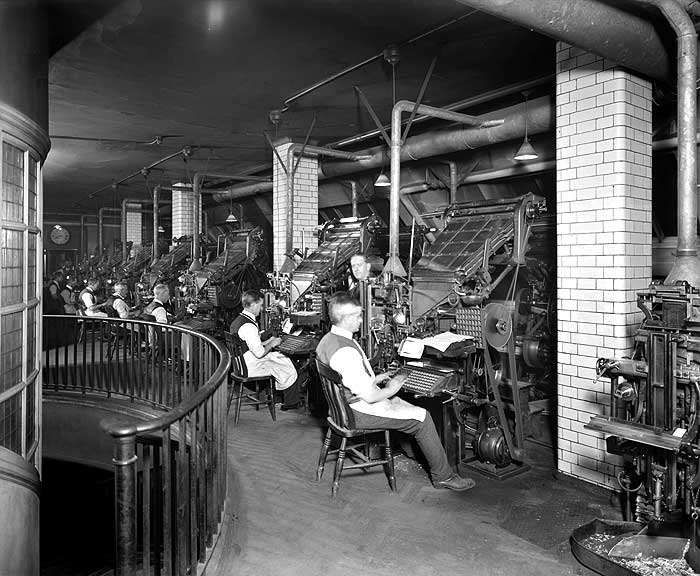
    In com­par­i­son with oth­er type­cast­ing meth­ods, the Lud­low is very sim­ple.  The Lino­type and Inter­type need around 6 feet square in which to oper­ate and demand matri­ces and a mechan­i­cal­ly com­plex machine; the Mono­type needs a sep­a­rate key­board and cast­er.  Both need to stop the machine and make mechan­i­cal changes to change the type face and the length of the line; and both are expect­ed to be super­vised by a spe­cial­ist.  By con­trast the Lud­low was designed to be oper­at­ed by any of the com­pos­ing staff.

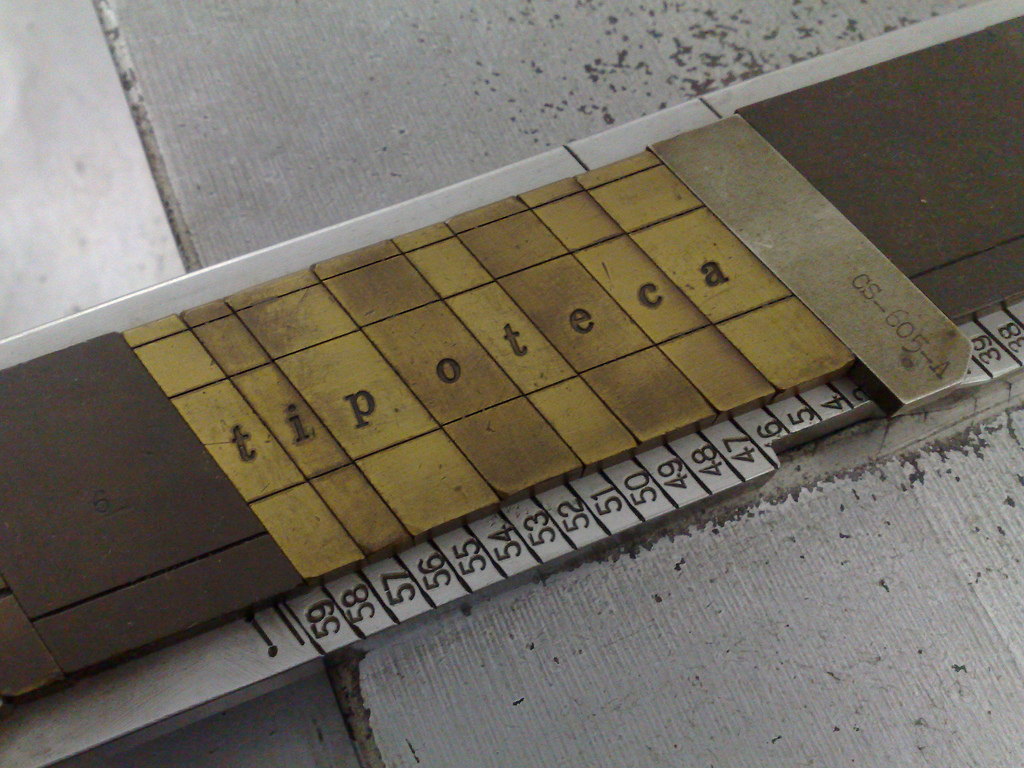
    There are two main activ­i­ties: assem­bling matri­ces and cast­ing.  Matri­ces (or ​‘mats’) are stored in spe­cial slop­ing cab­i­nets, and are col­lect­ed by hand.  Expe­ri­enced users can gath­er more than one mat at a time and because each mat is a uni­form size and easy to han­dle, this process is quick­er than com­pos­ing type from a case.  The mats are assem­bled in a ​‘stick’: a met­al frame with a mov­ing end.  Dif­fer­ent sticks are avail­able for dif­fer­ent pur­pos­es: ordi­nary sticks, jus­ti­fy­ing sticks, ital­ic sticks, long sticks and self-cen­ter­ing sticks.  The mov­ing end is brought tight­ly against the end of the matri­ces and this forms a sin­gle, sol­id line of moulds to receive hot met­al.

    The next step is to insert this in to the machine.  The Lud­low machine resem­bles a large table around 4 feet high with a pot of molten met­al at the back.  The table lid opens up to reveal the work­ings of the machine, based around a main shaft dri­ven by a small motor.  The cams on the shaft invoke a num­ber of oper­a­tions: includ­ing mov­ing the pot, forc­ing hot met­al in to the matri­ces through a mould, remov­ing the pot, trim­ming the edges of the slug and eject­ing it at the front of the machine.  At the same time, elec­tric ele­ments keep the pot of met­al hot, and also cir­cu­late cool water to key parts of the machine.  The oper­a­tor slides the stick in to the machine top and oper­ates a catch to secure the stick but also to release the safe­ty mech­a­nism.  On press­ing a lever under the machine lid, the cycle begins and a new slug of cast type is eject­ed at the front of the machine.  The stick is released and the oper­a­tor can dis­trib­ute the mats back in to the cab­i­net.  A set­ting on the machine front allows for repeat cast­ings to be made: espe­cial­ly use­ful if print­ing two-up or oth­er mul­ti­ples on a sin­gle sheet in a sin­gle impres­sion.

    Because the most com­plex oper­a­tion — the assem­bling of mats — is del­e­gat­ed to a human, it’s pos­si­ble to achieve a much greater flex­i­bil­i­ty than oth­er sys­tems: mul­ti­ple sizes and styles of type can be cast in one oper­a­tion with­out a need to change the mech­a­nism of the machine.

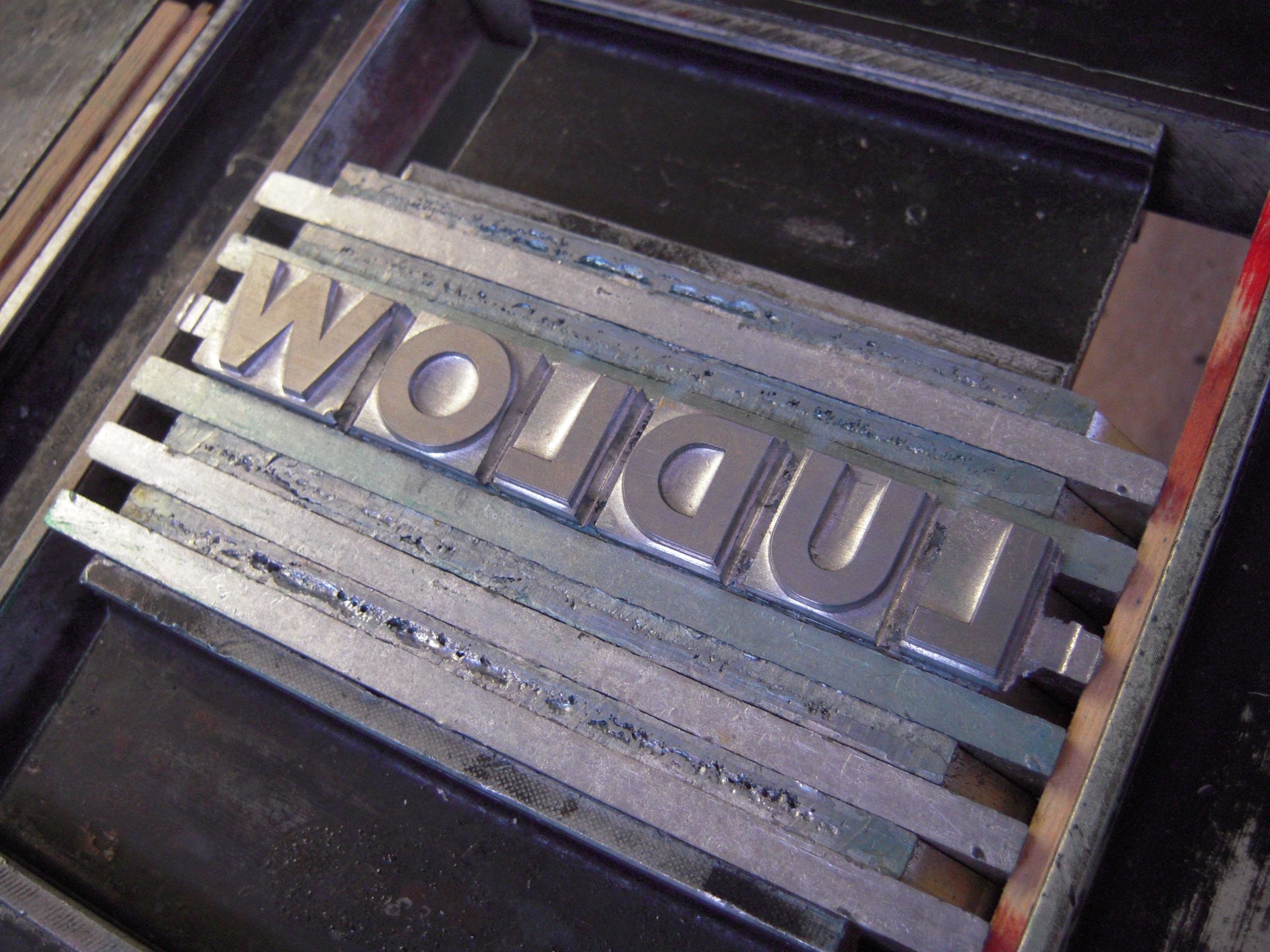
    In terms of out­put, the machine pro­duces every­thing on a sin­gle slug size, typ­i­cal­ly 21 or 22½ ems long by 12 points wide.  Oth­er moulds are avail­able, but this approach helps in han­dling the slugs dur­ing impo­si­tion and lock­up; and avoids the need to change the machine while cast­ing.  Types larg­er than 12pt will over­hang in a ​‘T’ shape: up to 144 pt will sit with just a 12pt sup­port.  To help dur­ing print­ing, ​‘blank’ slugs can be cast to go under the over­hang and sup­port the face.  The face is 0.153″ deep, and so much thick­er than the equiv­a­lent from Lino­type or Inter­type.

    For longer lines of text, spe­cial long sticks are avail­able along with spe­cial stops.  Text is set with stops rough­ly where the slug would end.  The first slug is cast, the stick advanced to the next stop and the sec­ond slug cast and so on.  This pro­duces slugs that might have the face of the text over­hang­ing at the left or right, but a cor­re­spond­ing gap on the next slug.  When assem­bled, the gaps between slugs become invis­i­ble.

    Operation of the Ludlow

    When deal­ing with hot met­al and pow­ered machin­ery, I’d always pre­fer to call on the experts to demon­strate before I start work.  That said, there are some excel­lent guides to using the Lud­low, some online, some off-line.

    Dr. David MacMil­lan has scanned and uploaded some excel­lent Lud­low mate­r­i­al to the Inter­net Archive, they include:

    Also avail­able is the Lud­low Trou­bleshoot­ing Guide from Dave Seat.

    Repairs and Servicing

    The Lud­low was designed to be easy to use and robust.  It’s cru­cial that the machine is kept clean and well lubri­cat­ed to con­tin­ue to per­form.  In the US, Dave Seat is the pre-emi­nent Lud­low mechan­ic, and in the UK it is Kei­th Hard­ing.

    Video Guides from Don Black

    [youtube=http://www.youtube.com/watch?v=25trV8M__k8]

  • Elrod Strip and Rule Caster

    Elrod Strip and Rule Caster

    The Elrod is the part­ner to the Lud­low for pro­duc­ing strip mate­r­i­al: that’s rules, leads and bases for mount­ing plates.  The ben­e­fits are sim­i­lar to the Lud­low: one machine to pro­duce a vari­ety of mate­r­i­al that can nev­er be exhaust­ed.

    Ben­jamin Elrod took inter­est in strip mate­r­i­al from 1917 while he we still a Lino­type oper­a­tor, the basis of his idea being that his machine would cast a con­tin­u­ous strip of mate­r­i­al rather than a sin­gle slug at a time.  He con­duct­ed a num­ber of exper­i­ments with the met­al pot of a Lino­type and extrud­ing mate­r­i­al with pli­ers through a mould.  The pro­ceeds from the sale of this mate­r­i­al fund­ed fur­ther devel­op­ment of the Elrod.   Mr Elrod had approached the Lud­low peo­ple and agreed to sell his machine to the firm in June 1920.  By 1929 elec­tri­cal heat­ing was being used in Elrods.

    Moulds between 12pt and 36pt are ​‘cored’, that is to say the mate­r­i­al has holes in the mid­dle, reduc­ing weight and also met­al used.  Lubri­ca­tion of the mould is achieved by dis­pers­ing oil in the molten met­al, which comes to the sur­face as the met­al cools, thus lubri­cat­ing the mould.  The ​‘pulling mech­a­nism’ drags mate­r­i­al out of the machine, which in the­o­ry might reach an end­less length!

    Andy Tay­lor has pro­vid­ed this excel­lent clip of his Elrod in oper­a­tion.  He adds: ​“just for inter­ests sake its my Mod­el F Elrod cast­ing 36pt low leads for 8 gauge plate mount that as you point out is the max­i­mum size it could achieve. I’ve also got a Mod­el K which could cast up to 18pt.”

  • Ludlow Typography

    Ludlow Typography

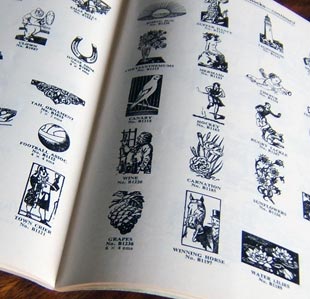
    Ludlow Type Specimen Book
    Lud­low Type Spec­i­men Book

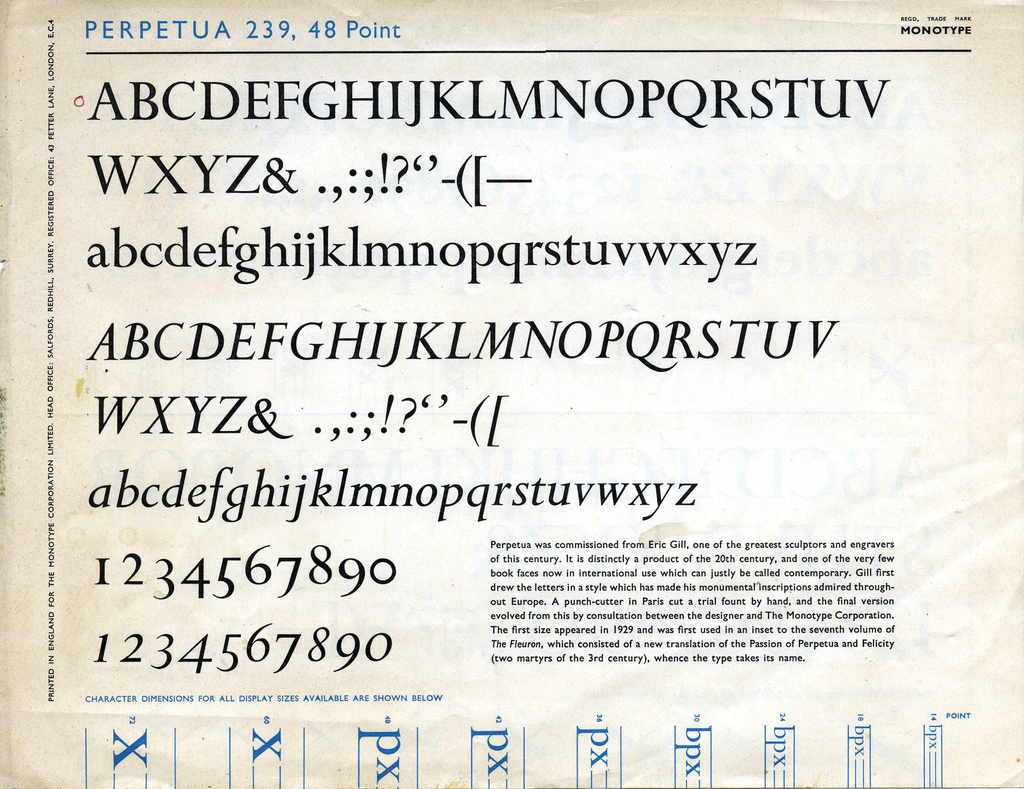
    From the 1920s, Mono­type took the chal­lenge of improv­ing typog­ra­phy very seri­ous­ly and embarked on a pro­gramme of devel­op­ing new faces and reviv­ing clas­sic faces so that the world might be rid of faces like Chel­tenham.  Inter­type and Lino­type were slow to fol­low and con­cen­trat­ed on speed of pro­duc­tion rather than qual­i­ty.  My view is that Lud­low took typog­ra­phy seri­ous­ly, but their small­er mar­ket share meant they did­n’t have the same impact.

    The sys­tem itself had some advan­tages as well as the ital­ics (men­tioned below), the same degree of con­trol was avail­able over spac­ing as in hand com­po­si­tion.  Con­trast this with linecast­ers using adjustable spaces that some­times led to rivers of spaces fol­low­ing through work.

    The name R. Hunter Mid­dle­ton is syn­ony­mous with the Lud­low Cor­po­ra­tion, and he designed some of the fir­m’s most suc­cess­ful faces includ­ing Depl­hi­an Titling, Tem­po (sans serif), Kar­nak (slab serif), and a Gara­mond

    Italics

    Ludlow Italic Matrices
    Lud­low Ital­ic Matri­ces

    Because of the sim­plic­i­ty of the Lud­low sys­tem, they could make amend­ments to the oper­a­tion of the machine rel­a­tive­ly eas­i­ly.  Once such change was to intro­duce ital­ic matri­ces, and a spe­cial ital­ic stick.  A dif­fi­cult prob­lem for line-cast­ing is that ital­ics have a ten­den­cy to encroach on the area of the pre­ced­ing and fol­low­ing let­ters: take the f for exam­ple, which will hang under the ear­li­er char­ac­ter and over the fol­low­ing.  Because most oth­er cast­ing uses rec­tan­gu­lar mats, this can­not eas­i­ly be account­ed for and so the face has to be adjust­ed and weak­ened to fit with­in the con­fines of the mat.  In 1913 Lud­low decid­ed to go with the ital­ic whole­heart­ed­ly and devel­oped matri­ces that slope at a 17° angle and are held in a stick with ends at the same angle.  The result is that an f, for exam­ple, can be cast at that angle and fit neat­ly with the oth­er types at the same angle.  By means of tri­an­gu­lar spaces, roman and ital­ics can mix on the same line.

    Lud­low took full advan­tage of this and devel­oped some beau­ti­ful ital­ics to go with their faces.

    Ruleform

    Know­ing that they were keen to attract the job­bing print­er, Lud­low set out to make the print­ing of ruled formes very easy.  Job­bing print­ers had to pro­duce invoic­es, bills, account sheets and so on, and tra­di­tion­al­ly had used met­al rules sat between lead types to cre­ate the right pat­tern.  This approach tied up mate­r­i­al and took a vast amount of time: imag­ine set­ting mul­ti­ple hor­i­zon­tal and ver­ti­cal rules with some type to cre­ate a petrol sta­tion receipt, for exam­ple.

    Mr Mer­rill of Lud­low devel­oped Rule­form in 1923.  The approach was to cre­ate uni­form-width matri­ces and exploit the slug by cast­ing over­hangs and under­hangs at the top and bot­tom of the same slug.  Using the repeat cast­ing func­tion meant that one line could be set and dupli­cat­ed, and the under­hangs and over­hangs would mesh with each oth­er to cre­ate a whole, sol­id lump for print­ing.

  • The Ludlow System

    The Ludlow System

    The Lud­low peo­ple were very proud indeed of their ​‘sys­tem’, and when one looks at their claims and the sim­ple util­i­ty of the approach I won­der why more print­ers did­n’t use the sys­tem and why it was­n’t more pop­u­lar in the UK.  The sys­tem was descend­ed from try­ing to sim­pli­fy linecast­ing machines, but an even sim­pler approach was embod­ied in the Lud­low.  Pro­duc­tion began in Chica­go in 1912 and by 1919 the Lud­low was in use in 350 offices.

    In print­ers’ terms, the sys­tem was ​‘hand-set’ ​‘slug-line’ com­po­si­tion: this means that for each char­ac­ter need­ed, a brass mould (call a ​‘mat’) need­ed to be col­lect­ed and assem­bled by hand; and the Lud­low machine would be used to cre­ate a sin­gle line of type (a ​‘slug’).  My first impres­sion was this com­bines the worst of hand-set­ting, with the worst of slug com­po­si­tion!  But delve a lit­tle more deeply and even the most ardent scep­tic might be per­suad­ed.

    The major sell­ing point was that even the small­er print­er could be guar­an­teed to have ​“an inex­haustible sup­ply of fresh, clean type” from which to print with a rel­a­tive­ly small out­lay and lim­it­ed tech­ni­cal sup­port.

    This arti­cle, in parts, explores the prin­ci­ples and oper­a­tion of the Lud­low, the typog­ra­phy and the effi­cien­cy of the sys­tem.

    History

    William Reade was approached with the idea for such a machine by Wash­ing­ton I. Lud­low and estab­lished the Lud­low com­pa­ny in 1906.  The first design was based on a two-foot long matrix bar with each char­ac­ter stamped on it.  While that idea proved imprac­ti­cal, the essence of offer­ing a small machine for small­er offices that pro­vid­ed an ever­last­ing sup­ply of type was fixed and devel­op­ment con­tin­ued.  It was Jan­u­ary 1911 when the approach of using sin­gle matri­ces was first pub­licly demon­strat­ed.  The demand soon came not from peo­ple want­i­ng the machine; but peo­ple want­i­ng oth­er matri­ces.  The com­pa­ny had to design spe­cial­ist machines to punch matri­ces in the num­bers need­ed.

    In 1936, McMur­trie not­ed that –

    For many class­es of work it offers unique advan­tages and economies. It has pos­si­bil­i­ties of a still wider field of use­ful­ness. In short, it is a machine which mer­its the care­ful con­sid­er­a­tion of any print­er hav­ing much dis­play com­po­si­tion to pro­duce.

  • Press Here, Coupar Angus

    Press Here, Coupar Angus

    John Eas­son’s print­ing works, open to vis­i­tors.  I can per­son­al­ly vouch for an excel­lent wel­come!  Well worth a vis­it.

  • The Ludlow Typograph

    The Ludlow Typograph

    The Lud­low Typo­graph — more com­monly ​‘the Lud­low’ — is a machine that com­bines hand assem­bly of each char­ac­ter, along with the cast­ing of brand-new type for each line.  The oth­er type found­ing machines used by print­ers were dri­ven by a key­board: the Linotype/Intertype machines hav­ing the key­board built-in; and the Mono­type using a key­board to punch paper tape.

    The prin­ciples behind the Lud­low are sim­ple — the oper­ator col­lects a small brass mould for each char­ac­ter need­ed in the line.  These are assem­bled into a ​‘stick’, a small frame, and the moulds are clamped togeth­er to form a line of moulds.  This stick and moulds are then clamped in to a machine which injects hot met­al into the moulds.  A line of type is cast and ejec­ted from the front of the machine.  The moulds have to be dis­trib­uted back into the rel­ev­ant cas­es by hand.

    Unusu­ally, the Lud­low can cast between 6pt and 228pt type on slugs with­out changes to the machine.  Oth­er sys­tems have to be mod­i­fied with each size change.

    The Lud­low was typ­ic­ally used in two spheres: the news­pa­per and the rub­ber stamp indus­try.  News­pa­pers typ­ic­ally used the Lud­low to pro­duce head­lines to sit with their Inter­type or Lino­type mat­ter.  Rub­ber stamp mak­ers use the machines to pro­duce the ori­gin­als for stamps.

    Model M

    https://www.youtube.com/watch?v=BWUKy7bpAEA&ab_channel=HarryHarrison
    Har­ry Har­ri­son has shared this pro­mo­tion­al video, like­ly from his fam­i­ly con­nec­tion to the Lud­low com­pa­ny. Thanks Har­ry!
  • Type and Typography

    Type and Typography

    Let­ter­press print­ing depends on a raised image, it’s known as a relief pro­cess. Mov­able type was the break­through that allowed print­ers to use and re-use indi­vidual char­ac­ters. When you prac­tice let­ter­press print­ing it’s easy to for­get just how dif­fi­cult it must be for type founders to cre­ate tiny pieces of cast met­al hard enough to with­stand a tre­mend­ous force that are made to tol­er­ances of less than one thou­sandth of an inch.

    Guten­berg of Ger­many is cred­ited with the inven­tion of move­able type around 1450; but records show that both Chi­nese and Kore­an invent­ors had used the idea before the time. Gutenberg’s inven­tion was the first to be exploit­ed and the idea spread rap­idly. There are three key stages in found­ing type –

    • Punch­cut­ting: cre­at­ing a three-dimen­sion­al rep­res­ent­a­tion of the let­ter in the end of a bar of met­al. This skilled work requires a num­ber of oth­er punch­es and tools to be used to cre­ate the punch, and then it be sub­ject to harden­ing. Mod­ern-day equi­val­ents of punch­es can be seen in DIY stores to mark met­al equip­ment with ini­tials.
    • Cre­at­ing the Mat­rix: this step takes the punch, and strikes it in a soft­er met­al to make a neg­at­ive mould. The met­al is usu­ally brass
    • Cast­ing: this is fill­ing the mould with mol­ten type met­al and remov­ing the cast type

    Type Found­ing in the Print­ing Eco­nomy in the UK

    Type found­ing is a spe­cial­ist indus­try need­ing artis­tic and design skills in equal meas­ure with engin­eer­ing prowess and abil­ity to work in some of the very heavy aspects of indus­try. The indus­try was cen­tred around the demand in Fleet Street, Lon­don; but oth­er sig­ni­fic­ant type founders worked where tech­nical expert­ise was great­est-for exam­ple Steph­en­son, Blake of Shef­field.

    The key con­straint for print­ers was that type from a foundry had to be assem­bled by hand before print­ing could begin. This com­pos­i­tion activ­ity took a great deal of time and tied up cap­ital in the type need­ed. As the 19th cen­tury grew to a close peo­ple we very keen to auto­mate this part of the process-work began to look at pro­du­cing type in the order it was need­ed. That’s to say go dir­ectly from the copy to the met­al type with no sort­ing or com­pos­ing pro­cess in between.

    There became two fam­il­ies of type: foundry type (gen­er­ally hard­er qual­ity) that was pro­duced in the great foundries; and com­pos­i­tion type (slight­ly soft­er qual­ity) that was pro­duced from copy either by a spe­cial­ist firm, or even by the print­er him­self.

    UK Type Foundries

    The UK had a num­ber of very influ­en­tial foundries. While ear­ly met­al type from the con­tin­ent (in par­tic­u­lar Dutch type) was con­sidered super­ior, the UK caught up and great names like Caslon, Fig­gins and Steph­en­son, Blake were estab­lished. The large num­ber of small foundries gave way to a smal­ler num­ber of large foundries. The last of the Eng­lish Foundries, Steph­en­son, Blake of Shef­field stopped trad­ing in Decem­ber 2004. That foundry alone had acquired Charles Reed and Sons in 1905, and H. W. Caslon and Co in 1937.

    Com­pos­i­tion Type

    Allow­ing print­ers to cast their own type was a key dri­ver behind devel­op­ments in com­pos­i­tion type. There were two broad approach­es: build a com­plete line of type from a machine; or build indi­vidual char­ac­ters in the cor­rect order from the machine.

    Lino­type and Inter­type took a sim­ilar approach: the oper­ator sat at a key­board and typed the copy. While copy was being typed the matri­ces (type moulds) were assem­bled with­in the machine. Once a line was com­pleted the moulds were filled with hot type met­al and the res­ult­ing ​‘slug’ was forced from the machine, being trimmed and shaped in the pro­cess. The Lud­low Typo­graph was sim­ilar, but the matri­ces were assem­bled by hand.

    Mono­type adop­ted a dif­fer­ent tack. They split the oper­a­tion between key­ing the copy and cast­ing the type. Copy was typed on a Mono­type Key­board pow­ered by com­pressed air which punched holes in a paper tape. The tape was then tak­en to a cast­ing machine  which used the paper tape to pos­i­tion a case of matri­ces and cast a sin­gle piece of type for each key­stroke on the paper tape. The advant­age of this approach was to allow for cor­rec­tion after com­pos­i­tion had been pro­duced by the machine.

    In mod­ern times, Mono­type machines can be con­trolled by com­puter–allow­ing the dir­ect pro­duc­tion of met­al type from a com­puter key­board.

    • Photopolymer

      Photopolymer

      The clever inven­tion, just too late to make a dif­fer­ence to let­ter­press’ demise, but that keeps some print­ers hap­py today

    • Choosing Typefaces

      Choosing Typefaces

      A start­ing point for the age-old prob­lem of choos­ing a house face

    • The Point System

      The Point System

      How did we in the Eng­lish-speak­ing world arrive at 0.01387” as one point?

    • Type Synopses

      Type Synopses

      The obscure join between maths and print­ing — mak­ing sure each let­ter is in the right pro­por­tions

    • Type Founders

      Type Founders

      Oth­er UK type founders

    • Linotype and Intertype Salvage

      Linotype and Intertype Salvage

      A guide — in note form — to sal­vaging a Inter­type or Lino­type

    • The Monotype System

      The Monotype System

      The sys­tem that spawned a great name in let­ter­press and the typog­ra­phy we use today

    • The Ludlow Typograph

      The Ludlow Typograph

      The less-pop­u­lar broth­er of the Intertype/Linotype and the Mono­type sys­tem

    • Elrod Strip and Rule Caster

      Elrod Strip and Rule Caster

      The machine used by small­er print­ers to cast new ​‘strip mate­r­i­al’

    • Woodletter or Poster Types

      Woodletter or Poster Types

      Big­ger type to pro­duce those won­der­ful inky let­ter­press posters

    • Finding Second-Hand Type

      Finding Second-Hand Type

      How to find and buy sec­ond-hand type

    Fur­ther Information